
[论文解读] Large Language Models Produce Responses Perceived to be Empathic
本论文表明,GPT-4 Turbo、Llama2 与 Mistral 生成的回应在多种日常情境中被感知为比人类撰写的回应更具同理心,且各自具有不同的语言风格。
Large Language Models (LLMs) have demonstrated surprising performance on many tasks, including writing supportive messages that display empathy. Here, we had these models generate empathic messages in response to posts describing common life experiences, such as workplace situations, parenting, relationships, and other anxiety- and anger-eliciting situations. Across two studies (N=192, 202), we showed human raters a variety of responses written by several models (GPT4 Turbo, Llama2, and Mistral), and had people rate these responses on how empathic they seemed to be. We found that LLM-generated responses were consistently rated as more empathic than human-written responses. Linguistic analyses also show that these models write in distinct, predictable ``styles", in terms of their use of punctuation, emojis, and certain words. These results highlight the potential of using LLMs to enhance human peer support in contexts where empathy is important.
研究动机与目标
- 评估大语言模型在日常情境中是否能够生成具同理心的回应。
- 比较模型生成的回应与人类撰写的回应在感知同理心方面的差异。
- 识别不同模型在表达同理心的语言风格方面的差异。
提出的方法
- 开展两项研究(样本量分别为 N=192 和 N=202),评定评审者对 Reddit 帖子给出的具同理心和合适性回应的评价。
- 在研究1中将三种模型(GPT-4 Turbo、Llama2、Mistral)与人类撰写的回应进行比较;在研究2仅比较大语言模型(LLMs)。
- 使用基础提示和同理心水平提示来诱发不同的同理心回应;以5点量表测量合适性与同理心程度。
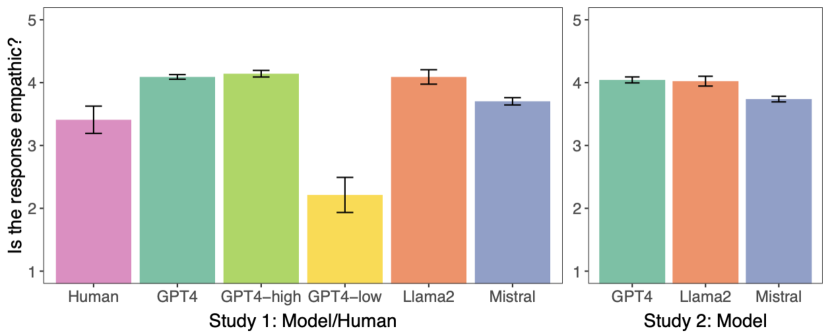
实验结果
研究问题
- RQ1大语言模型是否在日常领域产生的回应被感知为比人类撰写的回应更具同理心?
- RQ2不同的LLMs是否呈现出影响感知同理心的不同同理风格?
- RQ3通过提示提高或降低同理心是否会改变对LLM回应的感知同理心?
主要发现
- 在研究1中,LLM生成的回应被一致评为比人类撰写的回应更具同理心。
- 在研究1中,GPT-4 与 Llama2 产生的同理水平相近,均高于 Mistral。
- 在研究2中,GPT-4 与 Llama2 的同理心水平被评为等同且高于 Mistral;语言学分析显示了模型特有的风格差异(如人称代词、标点、表情符号等)。
- 尽管有 100–150 字的指导,模型回应仍常长于提示预期,可能是由于用户偏好更长的回复。
- 词袋模型及 LIWC 分析能够以显著准确度预测模型身份与同理心水平。
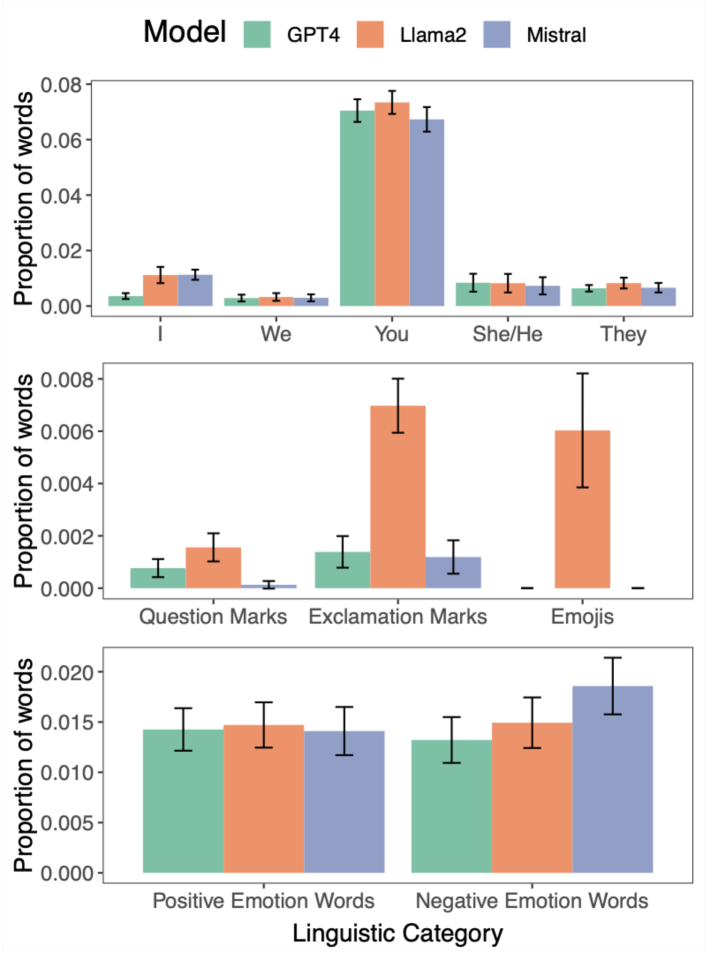
阅读本论文
在 Nubint 阅读器中打开原文,边读边就任意段落提问。
在 Nubint 中阅读本论文本解读由 AI 根据论文原文生成,引用前请核对原文。