
[论文解读] Large language models surpass human experts in predicting neuroscience results
大型语言模型在 BrainBench 上超过了人类神经科学专家,BrainGPT(LoRA 微调)进一步提升;模型会校准置信度并能够跨摘要整合信息。
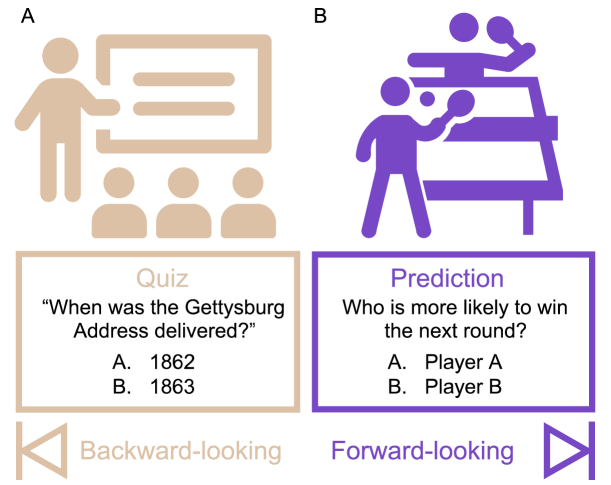
Scientific discoveries often hinge on synthesizing decades of research, a task that potentially outstrips human information processing capacities. Large language models (LLMs) offer a solution. LLMs trained on the vast scientific literature could potentially integrate noisy yet interrelated findings to forecast novel results better than human experts. To evaluate this possibility, we created BrainBench, a forward-looking benchmark for predicting neuroscience results. We find that LLMs surpass experts in predicting experimental outcomes. BrainGPT, an LLM we tuned on the neuroscience literature, performed better yet. Like human experts, when LLMs were confident in their predictions, they were more likely to be correct, which presages a future where humans and LLMs team together to make discoveries. Our approach is not neuroscience-specific and is transferable to other knowledge-intensive endeavors.
研究动机与目标
- 激发研究:通过利用海量文献来预测大型语言模型是否能够预测实验性神经科学结果。
- 评估通用大型语言模型在神经科学摘要上的前瞻性预测能力相对于人类专家。
- 评估模型置信度与前瞻性预测准确性之间的关系。
- 探究专门的神经科学微调(BrainGPT)是否提升预测表现。
提出的方法
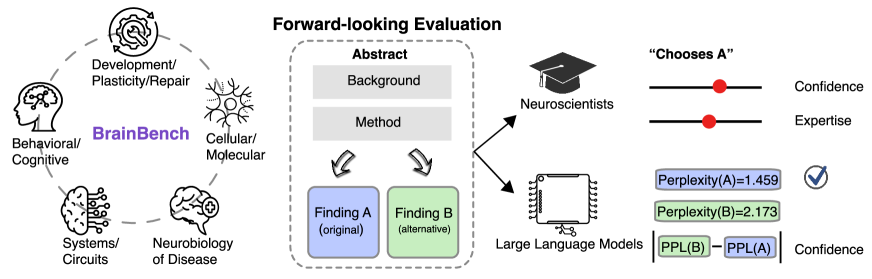
- 创建 BrainBench,这是一个前瞻性基准,使用五个领域的《神经科学期刊》中的原始摘要与改写摘要对。
- 评估多种通用型大型语言模型和人类专家在挑选原始摘要上的表现。
- 通过比较困惑度对预测进行评分;若原始摘要的困惑度低于改写摘要则选择原始摘要。
- 通过置信度(困惑度差)与准确度的相关性来评估校准。
- 利用 LoRA 用神经科学数据微调一个预训练模型(Llama-2-7B)以创建 BrainGPT,并衡量性能变化。
实验结果
研究问题
- RQ1大型语言模型是否能在前瞻性基准上比人类专家更好地预测神经科学研究结果?
- RQ2专门的神经科学微调(BrainGPT)是否在前瞻性预测性能上超越基础 LLMs?
- RQ3LLM 的预测是否经过校准,即更高的置信度是否与更高的准确性相关?
- RQ4LLMs 是否能够跨摘要整合信息(方法、背景),而不仅仅依赖局部文本来预测结果?
主要发现
- 大型语言模型平均准确率为 81.4%,人类专家为 63.4%,前者优于后者。
- 人类专家中前 20% 的准确率为 66.2%,仍低于 LLM 的表现。
- 较小的模型(例如 Llama2-7B、Mistral-7B)与较大模型表现相当。
- 聊天/指令微调的变体表现逊于基础模型,表明会话对齐可能损害科学推理。
- BrainGPT(LoRA 微调)在 BrainBench 上比基础模型提升了 3%。
- LLMs 整合整份摘要的信息以实现更优预测,而不仅仅是局部结果段落。
- LLMs 的置信度与准确性呈正相关(预测已校准)。
- BrainBench 项目未显示记忆信号,表明模型对新项具泛化能力。
阅读本论文
在 Nubint 阅读器中打开原文,边读边就任意段落提问。
在 Nubint 中阅读本论文本解读由 AI 根据论文原文生成,引用前请核对原文。