
[论文解读] Learned harmonic mean estimation of the Bayesian evidence with normalizing flows
该论文提出了一种鲁棒的学习型调和平均估计器,该估计器使用 normalizing flows 作为内部目标分布,从后验样本中估计贝叶斯证据,并在真实值和嵌套采样方面展示了准确性,同时提供了一个开源实现。
We present the learned harmonic mean estimator with normalizing flows - a robust, scalable and flexible estimator of the Bayesian evidence for model comparison. Since the estimator is agnostic to sampling strategy and simply requires posterior samples, it can be applied to compute the evidence using any Markov chain Monte Carlo (MCMC) sampling technique, including saved down MCMC chains, or any variational inference approach. The learned harmonic mean estimator was recently introduced, where machine learning techniques were developed to learn a suitable internal importance sampling target distribution to solve the issue of exploding variance of the original harmonic mean estimator. In this article we present the use of normalizing flows as the internal machine learning technique within the learned harmonic mean estimator. Normalizing flows can be elegantly coupled with the learned harmonic mean to provide an approach that is more robust, flexible and scalable than the machine learning models considered previously. We perform a series of numerical experiments, applying our method to benchmark problems and to a cosmological example in up to 21 dimensions. We find the learned harmonic mean estimator is in agreement with ground truth values and nested sampling estimates. The open-source harmonic Python package implementing the learned harmonic mean, now with normalizing flows included, is publicly available.
研究动机与目标
- 在宇宙学中激励贝叶斯模型比较,并指出对灵活证据估计的需求。
- 通过引入 normalizing flows 来扩展学习型调和平均估计器,以提升鲁棒性和可扩展性。
- 通过基准问题和一个类似 DES 的宇宙学示例,展示准确性和鲁棒性。
- 提供一个开源实现,便于结合各种采样技术进行使用。
提出的方法
- 使用 normalizing flows(real NVP 和有理二次样条流)作为学习型调和平均估计器中重要性采样的内部目标分布。
- 通过对后验样本最小化前向 KL 发散(最大似然)来训练该流。
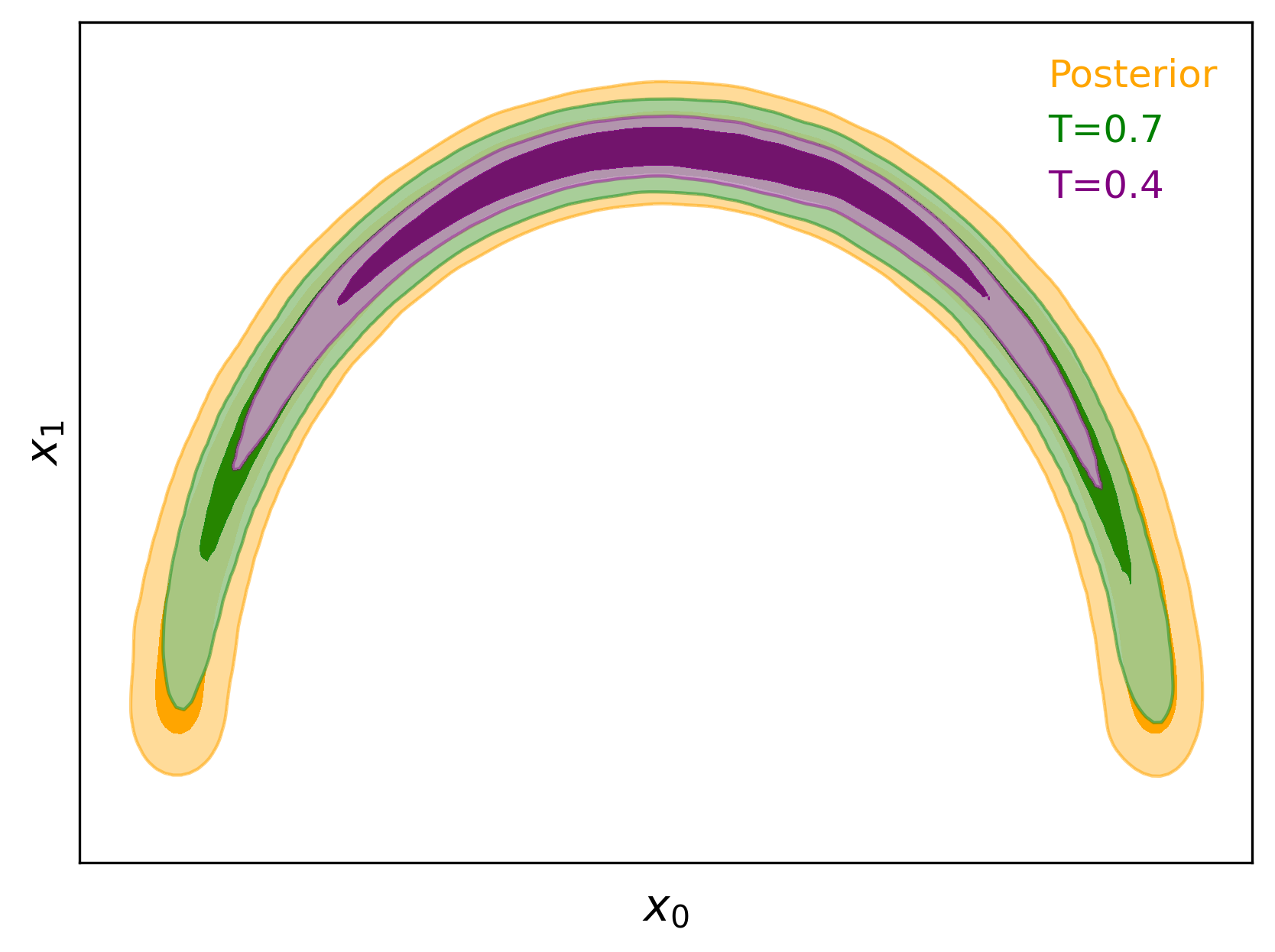
- 通过降低基分布的方差(温度)来浓缩学习密度,从而确保目标保持在后验之内。
- 通过对浓缩流使用学习型调和平均估计器来计算贝叶斯证据,并在对数空间提供误差估计。
- 在流训练和推断之前对数据进行标准化;在标准化空间中通过雅可比调整密度。
- 在 harmonic Python 包中提供实现,使用 JAX 和辅助库实现可扩展计算。
实验结果
研究问题
- RQ1经过 normalizing-flow 增强的学习型调和平均估计器是否能给出与真值和嵌套采样一致的贝叶斯证据值?
- RQ2在高维环境(高达 21 维)以及不同的采样策略下,该估计量的表现如何?
- RQ3该方法对流模型架构和温度浓缩的变化是否鲁棒?
- RQ4该方法能否有效地与宇宙学分析和基于模拟的推理工作流集成?
- RQ5伴随的开源实现的实际性能和可靠性如何?
主要发现
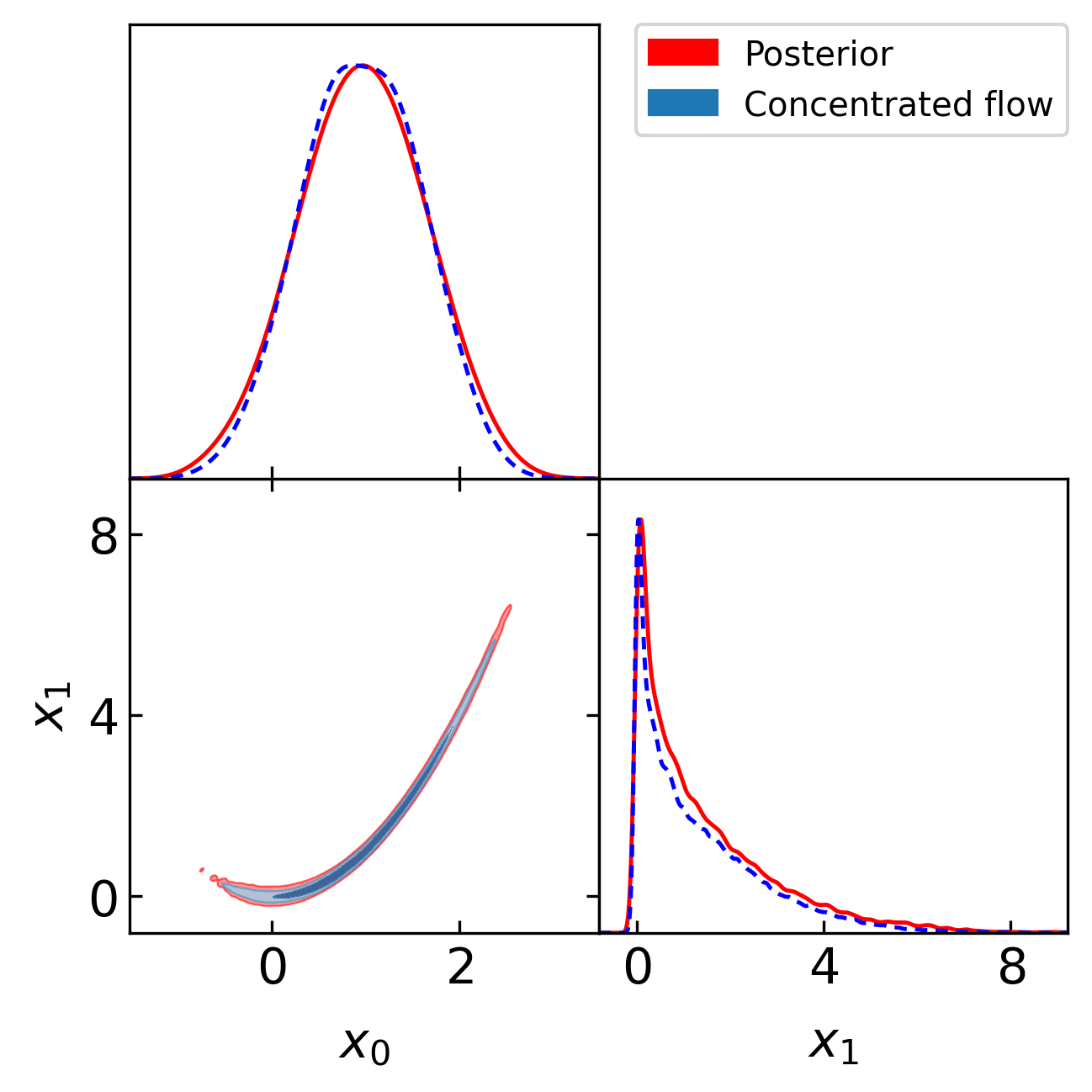
- 具有 normalizing flows 的学习型调和平均估计器与真值和嵌套采样估计值一致。
- normalizing flows 提供比先前简单的 ML 模型更鲁棒、灵活且可扩展的内部目标分布。
- 该方法在基准问题和一个类似 DES 的宇宙学示例中,在高达 21 维的情形下仍然有效。
- 该方法对采样策略具有不可知性,可与任何 MCMC 或变分推断输出一起使用。
- 一个开源的 harmonic Python 包实现了该方法,包含基于流的变体和基于 GPU 的计算。
阅读本论文
在 Nubint 阅读器中打开原文,边读边就任意段落提问。
在 Nubint 中阅读本论文本解读由 AI 根据论文原文生成,引用前请核对原文。