
[论文解读] Learning from models beyond fine-tuning
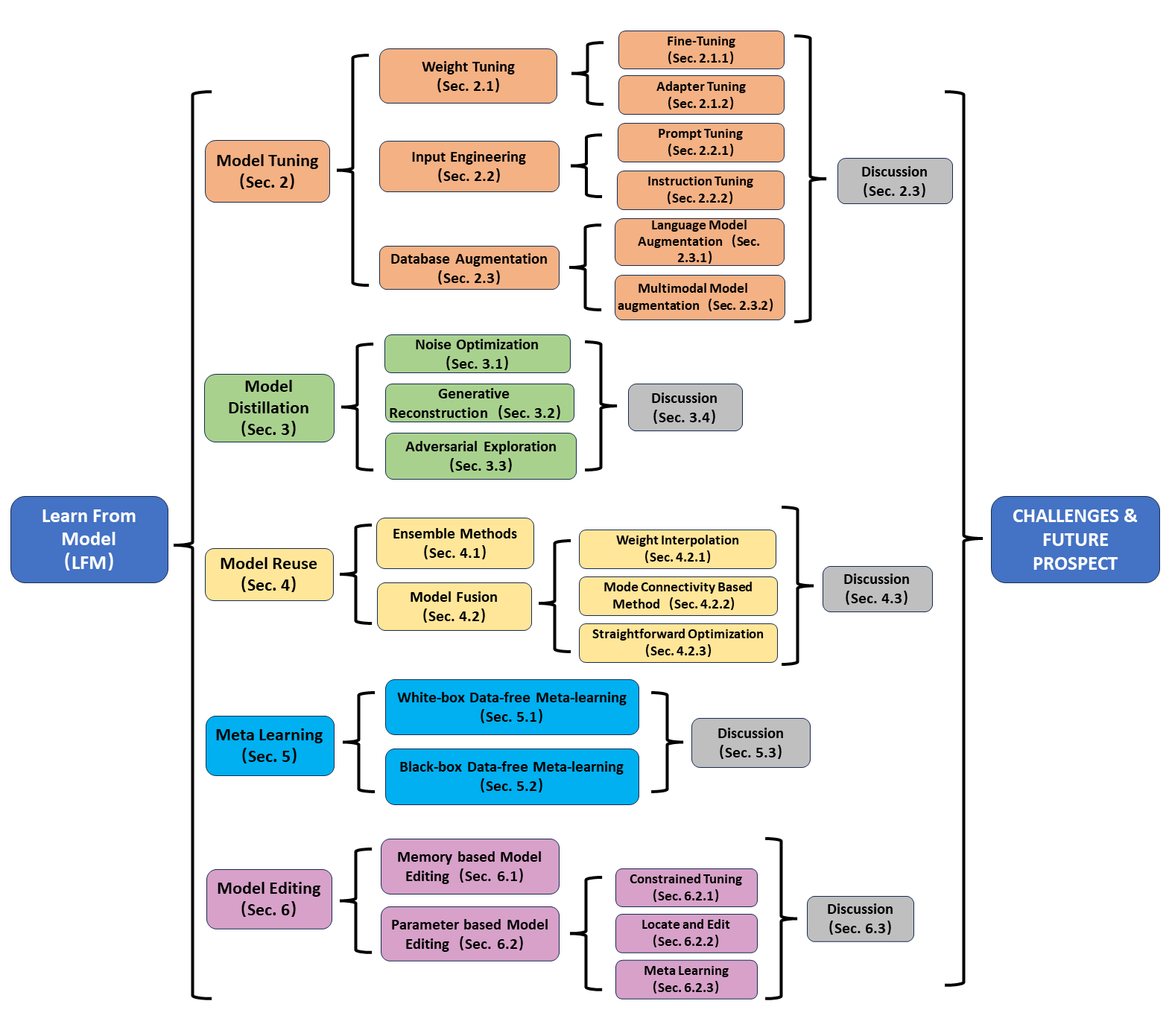
一份全面综述,介绍 Learn From Model (LFM) 范式,将基于 FM 的方法分为模型微调、蒸馏、复用、元学习和编辑,以实现从模型学习而非从数据学习。
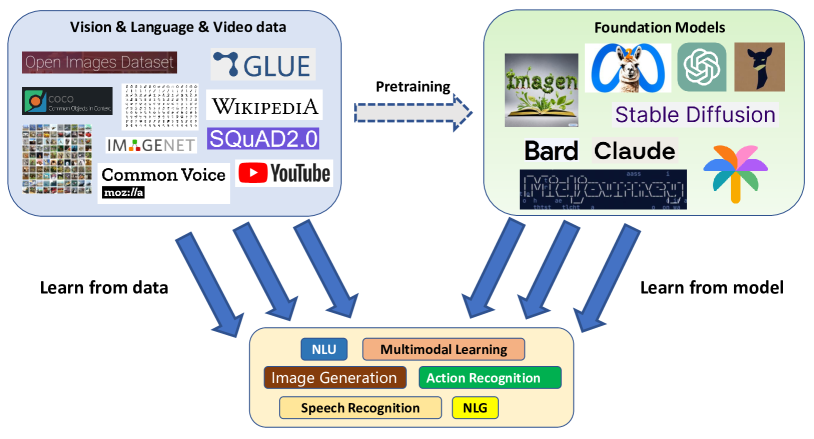
Foundation models (FM) have demonstrated remarkable performance across a wide range of tasks (especially in the fields of natural language processing and computer vision), primarily attributed to their ability to comprehend instructions and access extensive, high-quality data. This not only showcases their current effectiveness but also sets a promising trajectory towards the development of artificial general intelligence. Unfortunately, due to multiple constraints, the raw data of the model used for large model training are often inaccessible, so the use of end-to-end models for downstream tasks has become a new research trend, which we call Learn From Model (LFM) in this article. LFM focuses on the research, modification, and design of FM based on the model interface, so as to better understand the model structure and weights (in a black box environment), and to generalize the model to downstream tasks. The study of LFM techniques can be broadly categorized into five major areas: model tuning, model distillation, model reuse, meta learning and model editing. Each category encompasses a repertoire of methods and strategies that aim to enhance the capabilities and performance of FM. This paper gives a comprehensive review of the current methods based on FM from the perspective of LFM, in order to help readers better understand the current research status and ideas. To conclude, we summarize the survey by highlighting several critical areas for future exploration and addressing open issues that require further attention from the research community. The relevant papers we investigated in this article can be accessed at https://github.com/ruthless-man/Awesome-Learn-from-Model
研究动机与目标
- 定义 Learn From Model (LFM) 范式及其动机。
- 在五个领域(tuning、distillation、reuse、meta-learning、editing)下对基于 FM 的方法进行分类与分析。
- 突出 LFM 在下游任务中的优势、局限性和实际考量。
- 识别 LFM 的未来方向与未解决的问题,以指导研究与实践。
提出的方法
- 给出一个分层的 LFM 分类法,涵盖五个核心领域:模型调优、模型蒸馏、模型复用、元学习和模型编辑。
- 在每个领域总结代表性方法(如微调、适配器、提示调优、指令调优、检索/增强、无数据蒸馏等)。
- 将 LFM 与传统的从数据学习进行对比,强调数据隐私、成本和知识迁移方面。
- 讨论如数据访问受限、计算与模型稳定性等挑战,并提出在损失设计、记忆检索权衡以及定制化检索指标方面的方向。
- 综合面向未来的 LFM 应用展望与未解决问题,以促进进一步研究。
实验结果
研究问题
- RQ1什么构成 Learn From Model,以及它与从数据学习有何不同?
- RQ2LFM 方法的主要类别及其各自的权衡是什么?
- RQ3基础模型中 LFM 的关键未解问题与未来方向是什么?
主要发现
- LFM 提供了一个通过接口研究基础模型的系统框架,使其在数据和计算量少于完全重新训练的情况下实现适应。
- 该综述整合了五大 LFM 范式——模型调优、蒸馏、复用、元学习和编辑,提供全面的分类和方法概览。
- 基于适配器的和基于提示的调优在可训练参数更少、过拟合风险降低的情况下也能达到有竞争力的性能。
- 通过数据库增强和多模态检索的外部知识可以在不完全重新训练模型的情况下提升模型能力与时效知识。
- 本文讨论包括损失函数设计、检索-记忆与效率的平衡,以及需要定制化检索指标等未来方向。
阅读本论文
在 Nubint 阅读器中打开原文,边读边就任意段落提问。
在 Nubint 中阅读本论文本解读由 AI 根据论文原文生成,引用前请核对原文。