
[论文解读] Lessons from the Trenches on Reproducible Evaluation of Language Models
为稳健、可重复的语言模型评估提供最佳实践,并介绍语言模型评估工具箱(lm-eval)以在任务和模型之间编排、再现和扩展 LM 评估。
Effective evaluation of language models remains an open challenge in NLP. Researchers and engineers face methodological issues such as the sensitivity of models to evaluation setup, difficulty of proper comparisons across methods, and the lack of reproducibility and transparency. In this paper we draw on three years of experience in evaluating large language models to provide guidance and lessons for researchers. First, we provide an overview of common challenges faced in language model evaluation. Second, we delineate best practices for addressing or lessening the impact of these challenges on research. Third, we present the Language Model Evaluation Harness (lm-eval): an open source library for independent, reproducible, and extensible evaluation of language models that seeks to address these issues. We describe the features of the library as well as case studies in which the library has been used to alleviate these methodological concerns.
研究动机与目标
- 识别在评估大型语言模型时的常见挑战(准确性与语义等价性、基准有效性、实现的可重复性)。
- 提出提高 LM 评估严格性与透明度的最佳实践(提示、输出、不确定性和定性分析)。
- 描述语言模型评估工具箱(lm-eval)的设计与能力,以实现可重复、可扩展的评估。
提出的方法
- 概述关键问题:模型输出中的语义等价性与句法变异,以及人类评分与自动评分的局限性。
- 讨论评估报告的最佳实践,包括共享精确的提示、避免跨论文结果复制、提供模型输出、定性分析以及不确定性测量。
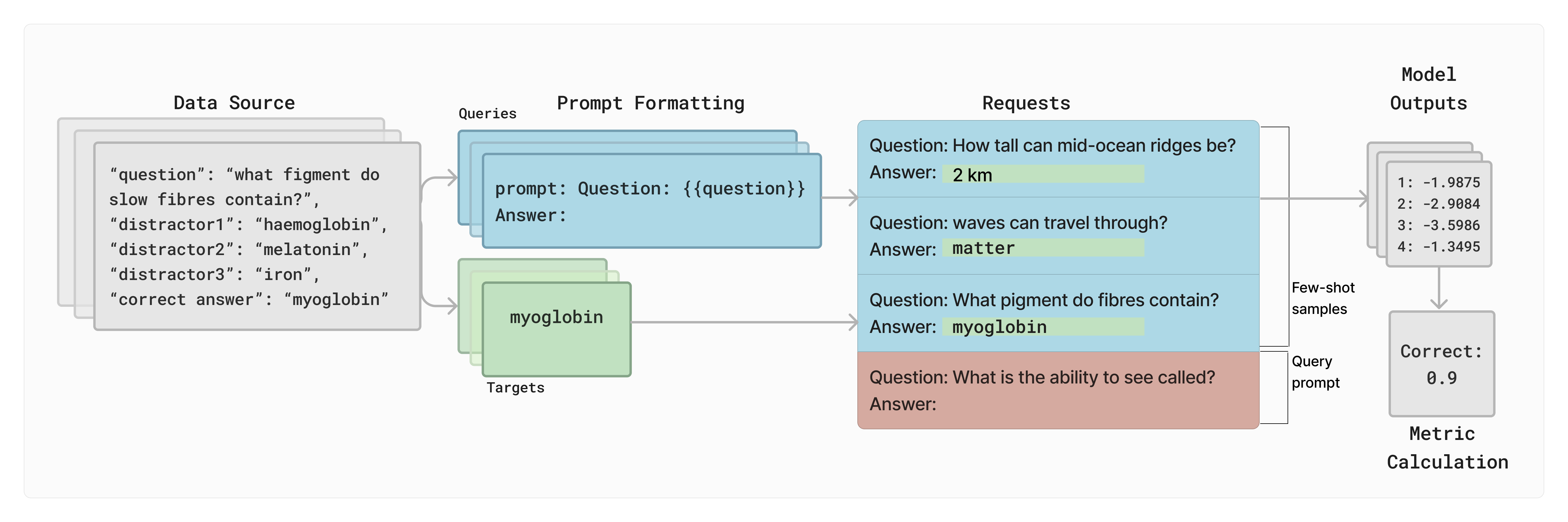
- 介绍 lm-eval 的架构与接口,包括任务类、LM API,以及三种核心请求类型(条件对数似然、困惑度和生成)。
- 解释 lm-eval 如何通过版本化任务和标准化评估工作流来强制实现可重复性。
- 提供案例研究(BigScience 提示分布;评估设置敏感性)以展示 lm-eval 在揭示评估鲁棒性和提示效应方面的能力。
实验结果
研究问题
- RQ1评估设置选择如何影响跨基准的语言模型性能指标?
- RQ2哪些最佳实践可以减轻评估偏见并提高 LM 基准测试的可重复性?
- RQ3像 lm-eval 这样的编排库如何实现对不同模型与任务的公平、可扩展且透明的 LM 评估?
主要发现
- 评估结果对提示和评估设置高度敏感,因此需要标准化、可重复的工具。
- 共享精确的提示、代码和模型输出可显著提升可重复性并实现公平比较。
- lm-eval 提供了一个模块化、可扩展的框架,具有任务抽象和简单的 LM 接口,统一基准间的评估。
- 促进定性分析和不确定性报告(标准误、引导法)有助于提高分数的可解释性。
- 案例研究显示提示分布和评估方法显著影响报告结果,强调构建健全评估生态系统的必要性。
阅读本论文
在 Nubint 阅读器中打开原文,边读边就任意段落提问。
在 Nubint 中阅读本论文本解读由 AI 根据论文原文生成,引用前请核对原文。