
[论文解读] Life-Cycle Emissions of AI Hardware: A Cradle-To-Grave Approach and Generational Trends
本稿草案介绍对五个 Google TPU 的 cradle-to-grave LCA,提出 Compute Carbon Intensity (CCI),并显示从 TPU v4i 到 v6e 的 CCI 提升 3 倍,在 24/7 清洁能源情景下提升更明显。
Specialized hardware accelerators aid the rapid advancement of artificial intelligence (AI), and their efficiency impacts AI's environmental sustainability. This study presents the first publication of a comprehensive AI accelerator life-cycle assessment (LCA) of greenhouse gas emissions, including the first publication of manufacturing emissions of an AI accelerator. Our analysis of five Tensor Processing Units (TPUs) encompasses all stages of the hardware lifespan - from raw material extraction, manufacturing, and disposal, to energy consumption during development, deployment, and serving of AI models. Using first-party data, it offers the most comprehensive evaluation to date of AI hardware's environmental impact. We include detailed descriptions of our LCA to act as a tutorial, road map, and inspiration for other computer engineers to perform similar LCAs to help us all understand the environmental impacts of our chips and of AI. A byproduct of this study is the new metric compute carbon intensity (CCI) that is helpful in evaluating AI hardware sustainability and in estimating the carbon footprint of training and inference. This study shows that CCI improves 3x from TPU v4i to TPU v6e. Moreover, while this paper's focus is on hardware, software advancements leverage and amplify these gains.
研究动机与目标
- 量化 AI 加速器及其附属主机在整个生命周期内的温室气体排放。
- 首次公开 AI 加速器制造阶段的排放数据。
- 引入 Compute Carbon Intensity (CCI) 作为一个公平、以性能归一化的碳指标。
- 提供详细、可复制的 LCA 方法学,以促进在硬件设计领域的更广泛应用。
- 比较 TPU 各代之间的排放,以理解性能与碳排放之间的权衡。
提出的方法
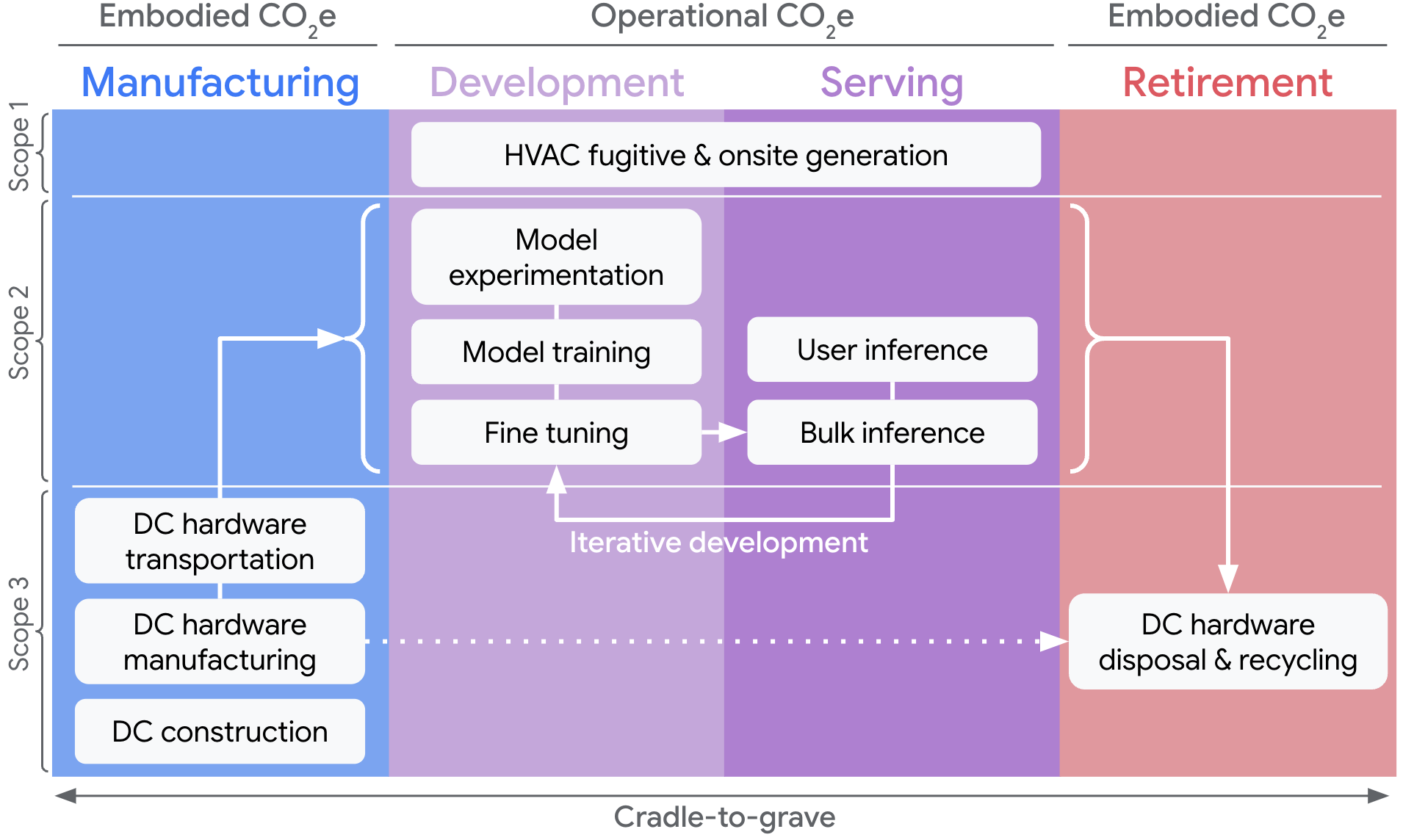
- 采用 cradle-to-grave 的 LCA 边界,涵盖原材料、制造、数据中心建设、运行(开发、训练、部署/服务)以及生命周期结束。
- 使用 Google 的第一方数据来衡量 TPU 全部设备的运行能耗与排放。
- 将 Compute Carbon Intensity (CCI) 定义并应用为每 ExaFLOP 的 gCO2e,包含体现在和运营的分量。
- 在市场基础 (MB) 与基于地点 (LB) 的电力核算下区分排放,并包括 24/7 小时清洁能源匹配情景。
- 通过运行时计数器测量使用的 FLOPs,并与测得的能量相结合以计算运营 CCI。
- 在比较 TPU 各代时,采用倾向评分加权来校正舰队工作循环差异。
- 提供类似 LCA 教程的附录,详述工具、假设和程序。
实验结果
研究问题
- RQ1Google AI 硬件加速器(TPUs)及其附属主机的 cradle-to-grave 温室气体排放是多少?
- RQ2体现在和运营排放如何贡献于不同代 TPU 的总生命周期排放?
- RQ3一个归一化、以硬件为焦点的碳指标(CCI)能否公平地比较不同性能水平的 AI 加速器?
- RQ4不同的电力核算方法(MB 与 LB 与 24/7 CFE)如何影响报告的排放和减排策略?
- RQ5从 TPU v4i/v5e 到 v6e 在制造、运行与生命周期表现方面的排放趋势是什么?
主要发现
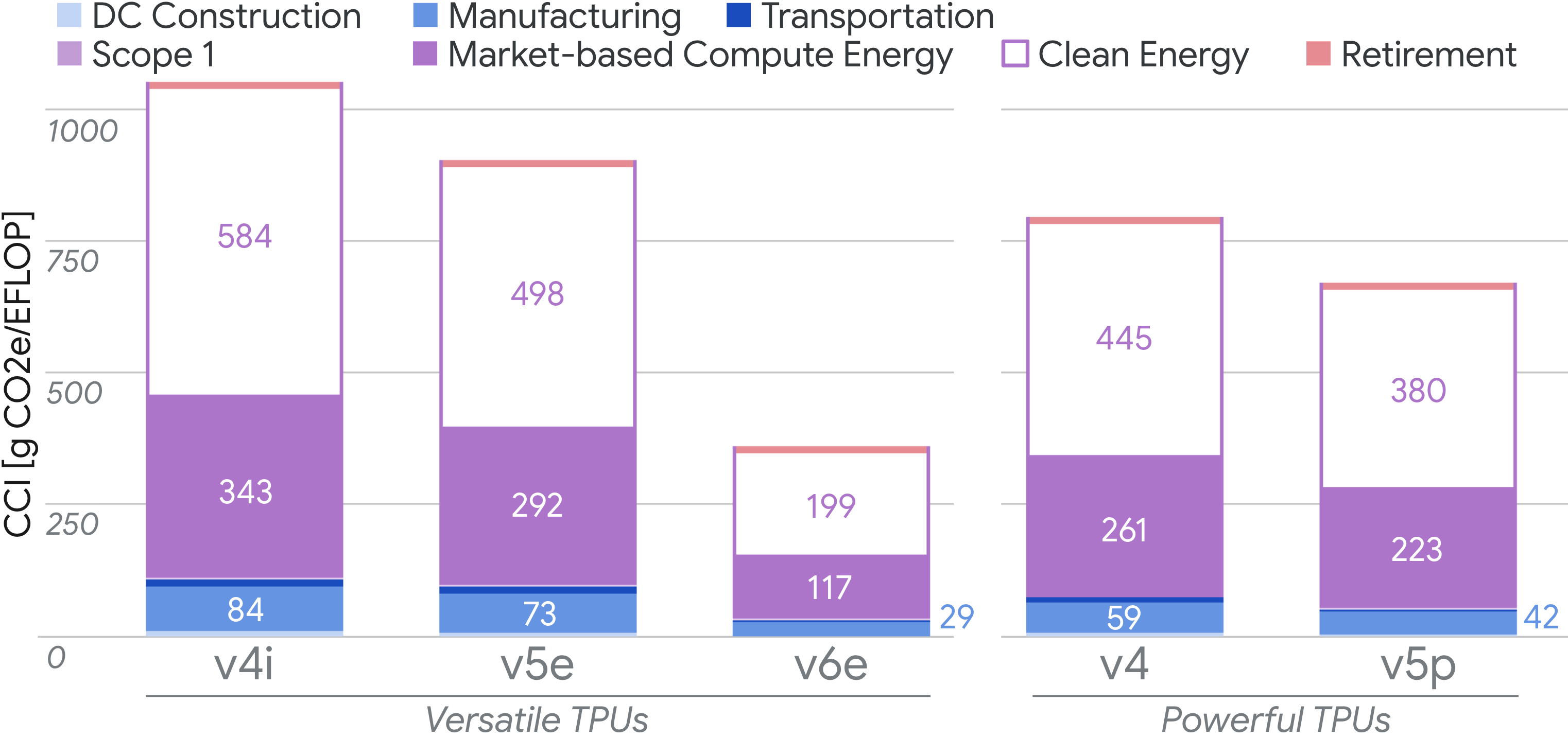
- Compute Carbon Intensity (CCI) 从 TPU v4i 到 TPU v6e 提升 3 倍。
- 运营用电排放主导着硬件隐含排放,在生命周期排放中约占 ~70%(MB)到 ~90%(LB)。
- MB 核算通过清洁能源购买降低了运营排放的报告值,而 24/7 小时 CFE 匹配提供了更严格、现实的减排图景。
- 制造阶段排放随新代增大,因为更大的 ASIC 芯片和更多内存,但性能提升带来单位计算的排放降低。
- 随着代际提升,体现在 CCI 下降(例如在各变体中为 38–114 gCO2e/10^18 FLOPs),而运营端 CCI 也随着硬件和能源策略的改善而改善。
- 在假设的 90% CFE 情景下,总 CCI 显著下降,强调清洁能源采购对生命周期排放的影响。
阅读本论文
在 Nubint 阅读器中打开原文,边读边就任意段落提问。
在 Nubint 中阅读本论文本解读由 AI 根据论文原文生成,引用前请核对原文。