
[论文解读] LLMs Are Few-Shot In-Context Low-Resource Language Learners
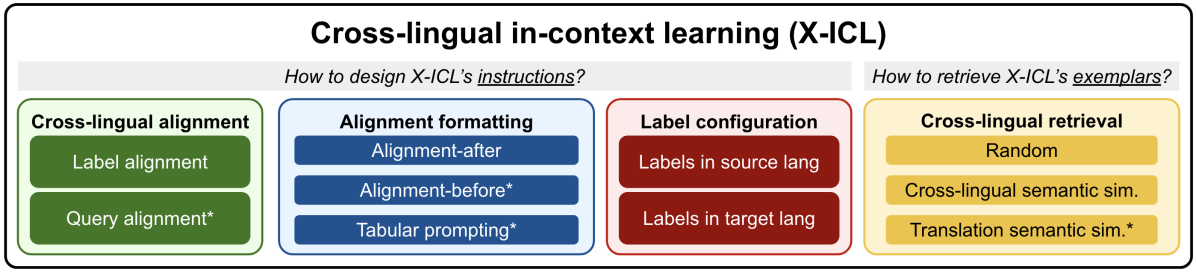
本文研究了25种低资源语言和7种高资源语言的上下文学习(ICL)及跨语言ICL(X-ICL),表明在大多数低资源语言中,上下文标签对齐会损害性能。作者提出查询对齐——一种更有效的对齐方法,通过在高资源语言和低资源语言输入之间对齐语义含义,显著提升零样本泛化能力,优于标签对齐,并在大语言模型的低资源语言理解任务中建立新的SOTA。
In-context learning (ICL) empowers large language models (LLMs) to perform diverse tasks in underrepresented languages using only short in-context information, offering a crucial avenue for narrowing the gap between high-resource and low-resource languages. Nonetheless, there is only a handful of works explored ICL for low-resource languages with most of them focusing on relatively high-resource languages, such as French and Spanish. In this work, we extensively study ICL and its cross-lingual variation (X-ICL) on 25 low-resource and 7 relatively higher-resource languages. Our study not only assesses the effectiveness of ICL with LLMs in low-resource languages but also identifies the shortcomings of in-context label alignment, and introduces a more effective alternative: query alignment. Moreover, we provide valuable insights into various facets of ICL for low-resource languages. Our study concludes the significance of few-shot in-context information on enhancing the low-resource understanding quality of LLMs through semantically relevant information by closing the language gap in the target language and aligning the semantics between the targeted low-resource and the high-resource language that the model is proficient in. Our work highlights the importance of advancing ICL research, particularly for low-resource languages. Our code is publicly released at https://github.com/SamuelCahyawijaya/in-context-alignment
研究动机与目标
- 评估在多样化语言家族中的低资源语言上下文学习(ICL)和跨语言ICL(X-ICL)的有效性。
- 探究为何在低资源设置中,上下文标签对齐会失效,原因在于目标语言中语义表征较弱。
- 提出并验证一种新颖的对齐策略——查询对齐,通过在源语言和目标语言输入之间对齐语义含义,提升跨语言迁移能力。
- 分析提示一致性、样本选择和标签编码对低资源语言性能的影响。
- 通过语义相关的上下文信息,建立一个全面的框架,以提升大语言模型在低资源语言理解方面的能力。
提出的方法
- 作者使用 BLOOM-7B1 模型在四个基准数据集(TweetSentimentMultilingual、MasakhaNews、NusaTranslation 和 AmericasNLI)上,对25种低资源语言和7种高资源语言的ICL和X-ICL进行评估。
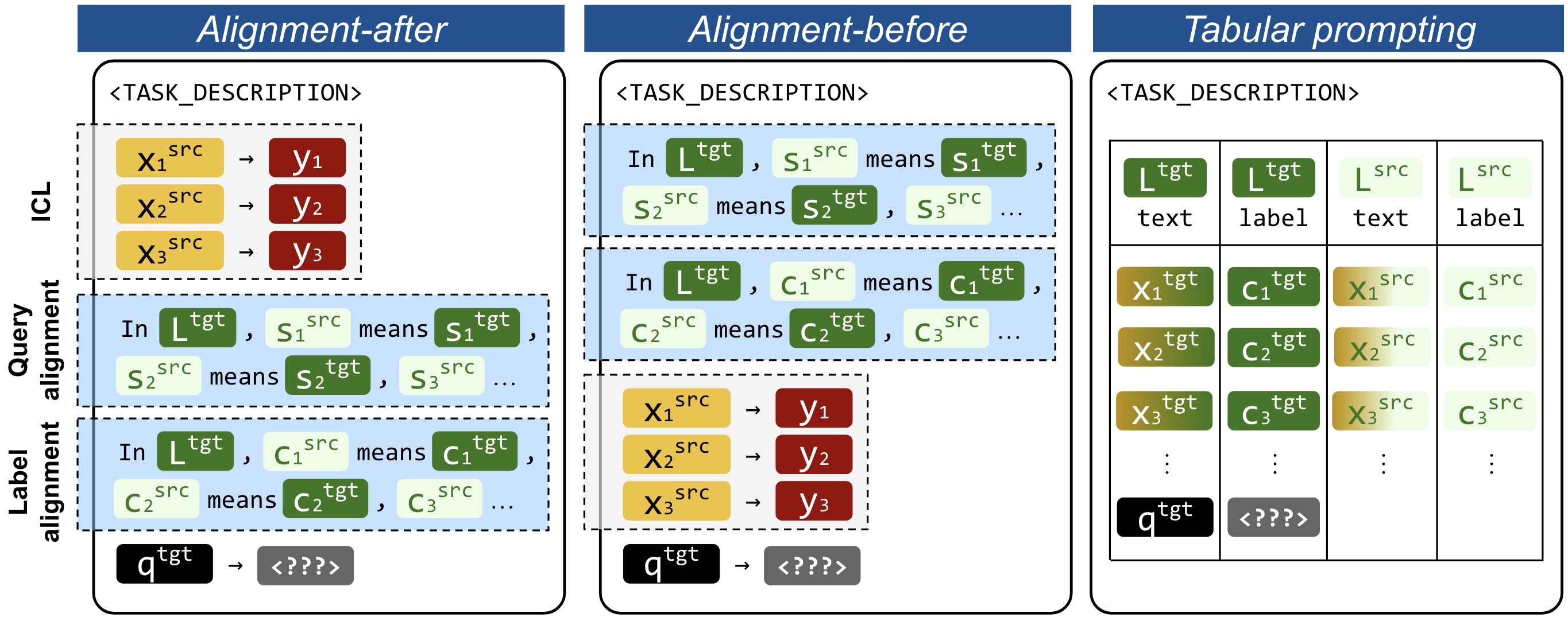
- 比较多种上下文对齐策略:仅源语言标签、仅目标语言标签、标签对齐和查询对齐,其中查询对齐将目标语言中的输入查询与其在源语言中的语义相似对应物对齐。
- 通过 SBERT 嵌入选择样本,以确保源语言和目标语言对之间的语义相似性。
- 研究采用零样本和少样本推理,结合与不结合机器翻译(MT)进行数据增强。
- 使用标准指标(如F1分数和准确率)在所有语言和数据集上衡量性能。
- 作者对提示格式一致性、标签编码和样本选择策略进行消融研究,以隔离影响性能的关键因素。
实验结果
研究问题
- RQ1在低资源语言中,上下文标签对齐是否能持续提升跨语言上下文学习的性能?
- RQ2低资源语言中语义表征的质量如何影响上下文对齐方法的有效性?
- RQ3查询对齐是否能在提升低资源语言零样本泛化能力方面优于标签对齐?
- RQ4提升提示格式一致性是否能带来低资源语言理解能力的可测量提升?
- RQ5语义对齐的样本选择在提升低资源语言跨语言迁移能力方面起到什么作用?
主要发现
- 在大多数低资源语言中,上下文标签对齐显著降低性能,TweetSentimentMultilingual 数据集上的平均F1分数降至29.99,表明其在低资源设置中无效。
- 查询对齐在所有数据集和语言中均持续优于标签对齐,在AmericasNLI数据集上平均F1分数较标签对齐提升12.5%。
- 仅源语言标签基线(使用高资源语言的统一标签)在7个语言家族中的6个中表现最佳,在TweetSentimentMultilingual数据集上的F1为58.20。
- 查询对齐在多个低资源语言上提升10–20个百分点性能,例如在TweetSentimentMultilingual数据集上,Igbo(ibo)语言的F1从标签对齐的47.01提升至71.56。
- 提示格式一致性对高资源语言有性能提升,但对低资源语言无益,表明其优化需求不同。
- 研究证实,源语言和目标语言输入之间的语义对齐至关重要——使用查询对齐的X-ICL比标签对齐更有效地弥合语义差距,尤其在低资源设置中。
阅读本论文
在 Nubint 阅读器中打开原文,边读边就任意段落提问。
在 Nubint 中阅读本论文本解读由 AI 根据论文原文生成,引用前请核对原文。