
[论文解读] LMCanvas: Object-Oriented Interaction to Personalize Large Language Model-Powered Writing Environments
LMCanvas 提出了一种基于画布的、面向对象的界面,使写作者能够通过创建、连接和排列文本块、模型块和流水线块,个性化大型语言模型(LLM)驱动的写作工具。该系统支持模块化写作、可自定义的 LLM 配置,以及灵活的 LLM 流水线组合,从而创建出量身定制的写作环境,减少工具切换,并支持迭代式、以用户为中心的提示工程。
Large language models (LLMs) can enhance writing by automating or supporting specific tasks in writers' workflows (e.g., paraphrasing, creating analogies). Leveraging this capability, a collection of interfaces have been developed that provide LLM-powered tools for specific writing tasks. However, these interfaces provide limited support for writers to create personal tools for their own unique tasks, and may not comprehensively fulfill a writer's needs -- requiring them to continuously switch between interfaces during writing. In this work, we envision LMCanvas, an interface that enables writers to create their own LLM-powered writing tools and arrange their personal writing environment by interacting with "blocks" in a canvas. In this interface, users can create text blocks to encapsulate writing and LLM prompts, model blocks for model parameter configurations, and connect these to create pipeline blocks that output generations. In this workshop paper, we discuss the design for LMCanvas and our plans to develop this concept.
研究动机与目标
- 为解决写作者缺乏支持以创建符合其独特写作工作流程的定制化 LLM 驱动工具的问题。
- 通过提供统一、可组合的写作环境,减少频繁切换界面的需求。
- 通过模块化、可重用的组件,支持个性化提示工程和参数配置。
- 探索模块化、具备历史感知的文本块以及可视化输出容器如何提升写作效率与创造力。
- 研究交互机制,以改善开放性、创造性写作任务中的提示工程。
提出的方法
- 该界面采用画布隐喻,用户可创建并连接三种块类型:用于写作和提示的文本块,用于 LLM 超参数的模型块,以及用于生成输出的流水线块。
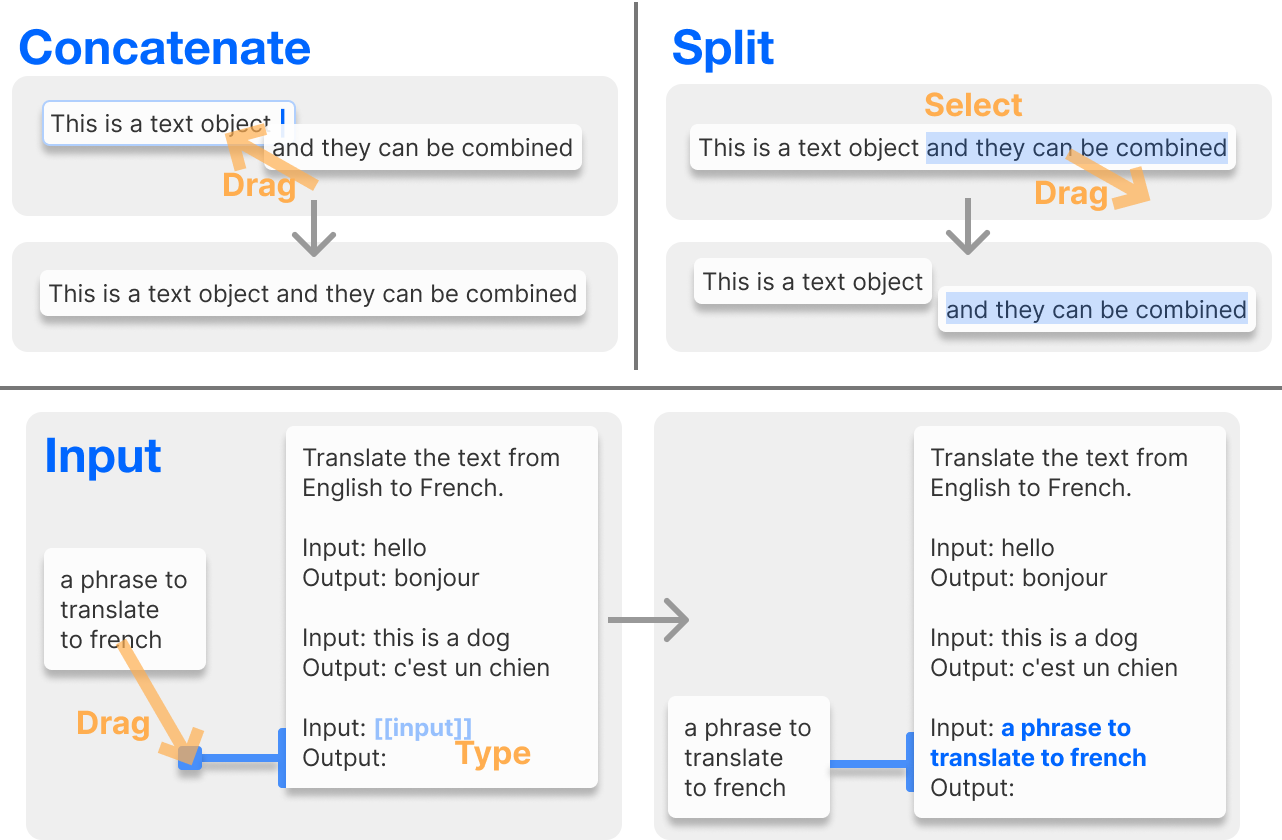
- 文本块用于存储写作内容、提示、示例和生成内容,支持模块化组织与版本控制。
- 模型块允许用户配置并保存 LLM 参数(例如,温度、最大 token 数),并在不同流水线中重复使用。
- 通过将一个文本块(输入)与一个模型块(配置)连接,可创建流水线块,触发 LLM 生成,并将结果作为新文本块输出。
- 流水线块的输出可通过拖拽方式连接到其他文本块(用于延续写作)或连接到其他流水线的输入端口(用于链式处理)。
- 该界面支持高级交互功能,例如将选中文本替换为流水线输出,以及为每个文本块实现模块化的历史追踪。
实验结果
研究问题
- RQ1写作者如何在不依赖预构建、固定界面的前提下,有效组合个性化的 LLM 驱动工具?
- RQ2哪些交互模式能够支持在写作环境中灵活、可重用且可组合的 LLM 流水线?
- RQ3模块化文本块与可配置模型块如何支持迭代式提示工程与工作流程个性化?
- RQ4可视化输出容器与历史追踪在增强写作者对 LLM 辅助写作过程中的控制力与反思能力方面发挥什么作用?
- RQ5该界面如何支持在开放性、创造性写作任务中实现高效的提示工程?
主要发现
- LMCanvas 原型成功实现了核心块类型——文本块、模型块和流水线块,以及基本交互功能,如连接、生成和拖拽组合。
- 模块化设计使写作者能够将写作、提示和生成内容组织为离散、可管理的单元,减轻因工具切换带来的认知负担。
- 通过模型块实现的动态模型配置重用,使写作者能够高效地测试和比较不同的 LLM 设置。
- 通过将多个输入与多个配置配对,流水线块可同时生成多个输出,支持探索性写作。
- 该界面支持将画布中任意选中文本替换为流水线输出,提升与现有写作工作流程的集成度。
- 初步发现表明,为每个文本块实现的模块化历史追踪,使写作者能够检查、回滚并反思过去的生成结果与输入配置。

阅读本论文
在 Nubint 阅读器中打开原文,边读边就任意段落提问。
在 Nubint 中阅读本论文本解读由 AI 根据论文原文生成,引用前请核对原文。