
[论文解读] Local Law 144: A Critical Analysis of Regression Metrics
本文批判性地评估了纽约市本地法律144号对自动化招聘工具所强制要求的回归偏差度量指标,认为所提出的基于均值和基于中位数的度量无法检测分布偏差。本文提出了两种改进的度量指标——AucDI 和 PfDI——它们对所有阈值上的公平性进行聚合,通过理论和现实世界示例证明,这些指标能更好地捕捉隐藏偏差,尤其是在极端分位数处。
The use of automated decision tools in recruitment has received an increasing amount of attention. In November 2021, the New York City Council passed a legislation (Local Law 144) that mandates bias audits of Automated Employment Decision Tools. From 15th April 2023, companies that use automated tools for hiring or promoting employees are required to have these systems audited by an independent entity. Auditors are asked to compute bias metrics that compare outcomes for different groups, based on sex/gender and race/ethnicity categories at a minimum. Local Law 144 proposes novel bias metrics for regression tasks (scenarios where the automated system scores candidates with a continuous range of values). A previous version of the legislation proposed a bias metric that compared the mean scores of different groups. The new revised bias metric compares the proportion of candidates in each group that falls above the median. In this paper, we argue that both metrics fail to capture distributional differences over the whole domain, and therefore cannot reliably detect bias. We first introduce two metrics, as possible alternatives to the legislation metrics. We then compare these metrics over a range of theoretical examples, for which the legislation proposed metrics seem to underestimate bias. Finally, we study real data and show that the legislation metrics can similarly fail in a real-world recruitment application.
研究动机与目标
- 评估纽约市本地法律144号所提出的两种偏差度量指标在基于回归的自动化就业决策工具(AEDTs)中的可靠性。
- 证明基于均值和基于中位数的度量无法检测到偏差,尤其是在偏差集中在特定分数阈值时。
- 提出并验证两种新的公平性度量指标——AucDI 和 PfDI——它们对所有可能阈值上的偏差进行聚合,以提供更全面的公平性评估。
- 在真实招聘数据上比较所有度量指标的表现,表明法律规定的度量指标在实践中可能低估偏差。
提出的方法
- 提出AucDI,该度量通过计算所有比例阈值下差异影响曲线下的面积,对整个分数分布中的公平性信息进行聚合。
- 引入PfDI,一种基于概率的度量,用于估计在随机选择的阈值下实现公平结果(DI ≥ 0.8)的可能性,并可选择性地引入先验信息以增强上下文鲁棒性。
- 将这两种度量应用于具有已知偏差的理论分布,证明其在法律度量失效时仍能检测到偏差。
- 在真实招聘数据上评估所有度量指标(包括MeanDI、MedDI、ThreshDI、AucDI和PfDI),以比较其敏感性和可靠性。
- 使用基于分位数的领域变换方法,以增强对异常值的鲁棒性,并提高在不同数据环境下的度量稳定性。
- 考虑替代的二值化策略(如Top-K选择、固定分数阈值),并根据应用背景讨论度量设计中的权衡。
实验结果
研究问题
- RQ1纽约市本地法律144号所强制要求的回归偏差度量指标——MeanDI 和 MedDI——是否能可靠地检测AEDT输出中的分布偏差?
- RQ2是否可以通过在所有阈值上聚合公平性的替代度量指标,检测到MeanDI 和 MedDI 所遗漏的偏差?
- RQ3AucDI 和 PfDI 在真实招聘数据上的表现如何,相较于现有度量指标?
- RQ4阈值选择策略(如固定分数、Top-K、基于分位数)在公平性度量可靠性中起什么作用?
- RQ5在真实应用中,Kolmogorov-Smirnov检验等统计检验是否能补充基于度量的公平性评估?
主要发现
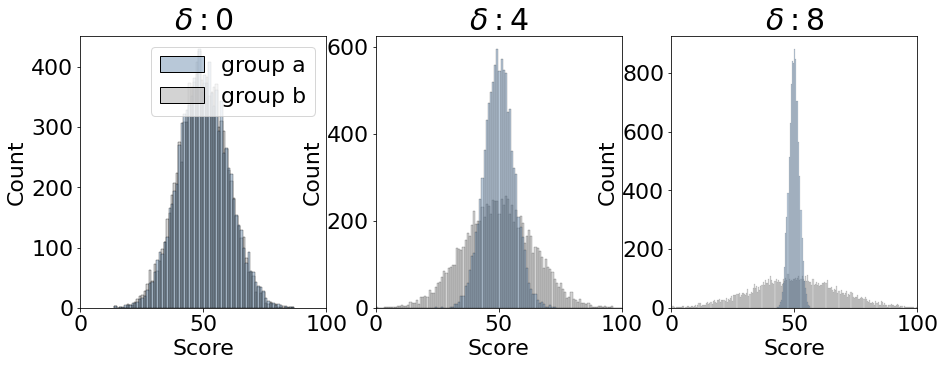
- 基于组均值比率的MeanDI度量始终低估偏差,即使在明显存在偏差的情境下也极少触发。
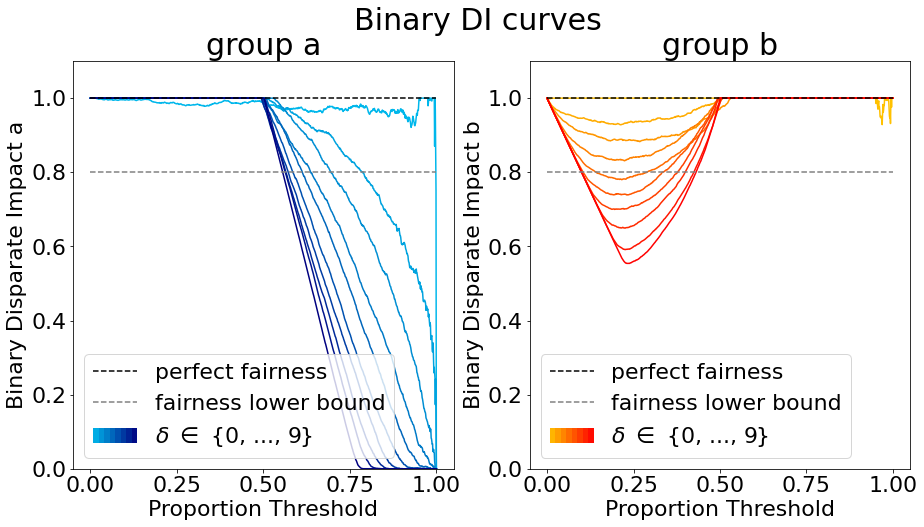
- 基于中位数以上比例的MedDI度量无法检测到仅在较高分数阈值(如前10%或5%候选人)出现的偏差。
- AucDI通过在所有比例阈值上聚合差异影响,有效检测到分布偏差,对隐藏偏差模式表现出强敏感性。
- PfDI比其他度量指标标记出更多偏差案例,并产生更极端的值,表明其对跨阈值公平性违规具有更高敏感性。
- 在真实世界数据中,法律规定的度量指标未能检测到仅在特定分位数处显现的偏差,而AucDI和PfDI则能一致地检测到此类偏差。
- 本研究结论认为,使用多种度量指标——尤其是AucDI和PfDI——对于全面的公平性评估至关重要,因为没有任何单一度量能捕捉所有形式的偏差。
阅读本论文
在 Nubint 阅读器中打开原文,边读边就任意段落提问。
在 Nubint 中阅读本论文本解读由 AI 根据论文原文生成,引用前请核对原文。