
[论文解读] LuSEE 'Night': The Lunar Surface Electromagnetics Experiment
LuSEE Night 是一项在月球远端进行的低频无线电天文学实验,设计在 50 MHz 带宽下穿越 14-Earth-day lunar night 运行,使用正交 6 m 短筒型电偶极天线和一个 4 通道 Nyquist 基带频谱仪,在 EMI 免干扰环境中观测 50 MHz 以下的全球无线电天空。
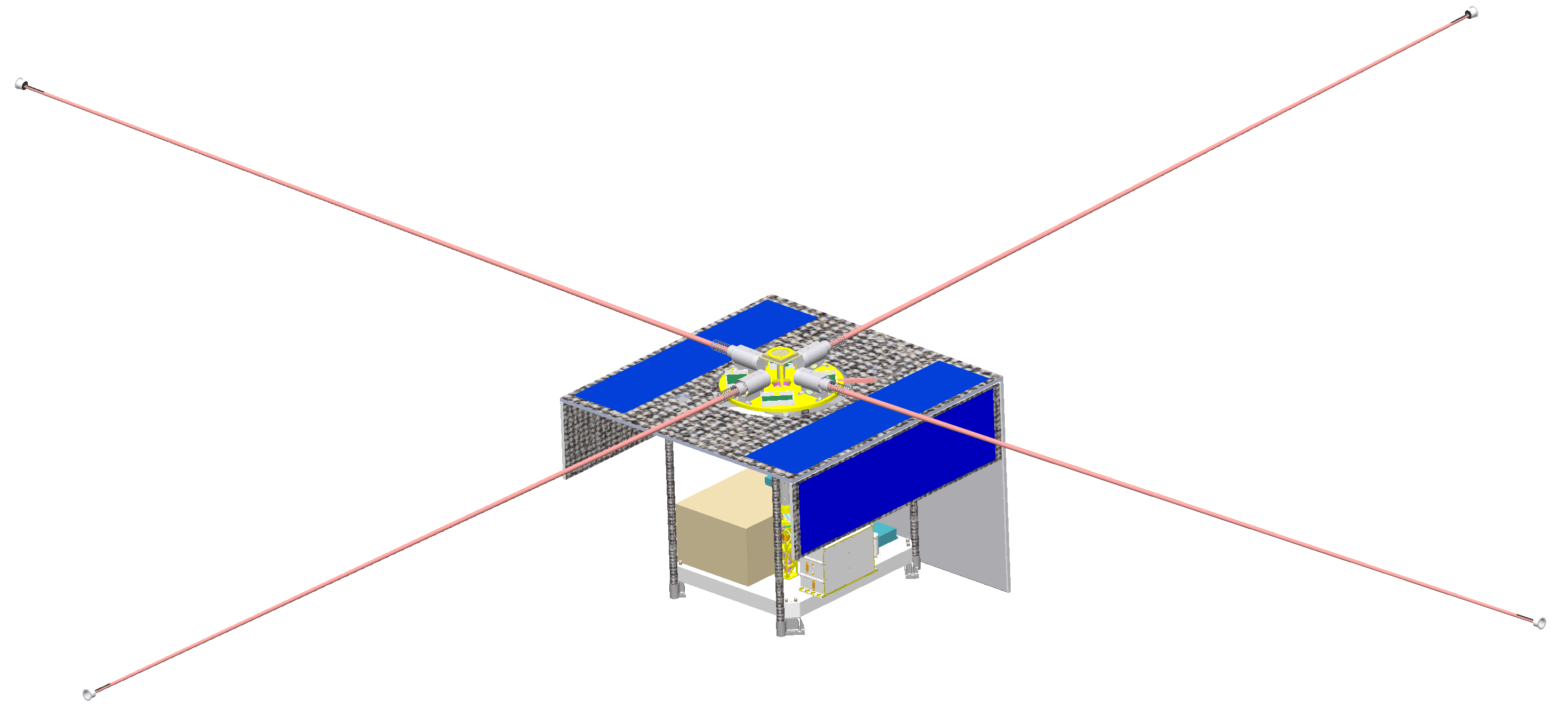
The Lunar Surface Electromagnetics Explorer 'LuSEE Night' is a low frequency radio astronomy experiment that will be delivered to the farside of the Moon by the NASA Commercial Lunar Payload Services (CLPS) program in late 2025 or early 2026. The payload system is being developed jointly by NASA and the US Department of Energy (DOE) and consists of a 4 channel, 50 MHz Nyquist baseband receiver system and 2 orthogonal $\sim$6m tip-to-tip electric dipole antennas. LuSEE Night will enjoy standalone operations through the lunar night, without the electromagnetic interference (EMI) of an operating lander system and antipodal to our noisy home planet.
研究动机与目标
- 在清洁的月球远端环境中表征 50 MHz 以下的全球无线电天空。
- 评估在月球夜间长时间进行低频射电观测在没有着陆器 EMI 的情况下的可行性。
- 提供校准与系统表征,为未来的月球射电天文学工作提供支持。
- 为高红移 21 cm 宇宙学(Dark Ages)的前景源建模提供数据,帮助区分前景。
- 为未来的 LuSEE 类任务的设计与运营提供经验教训。
提出的方法
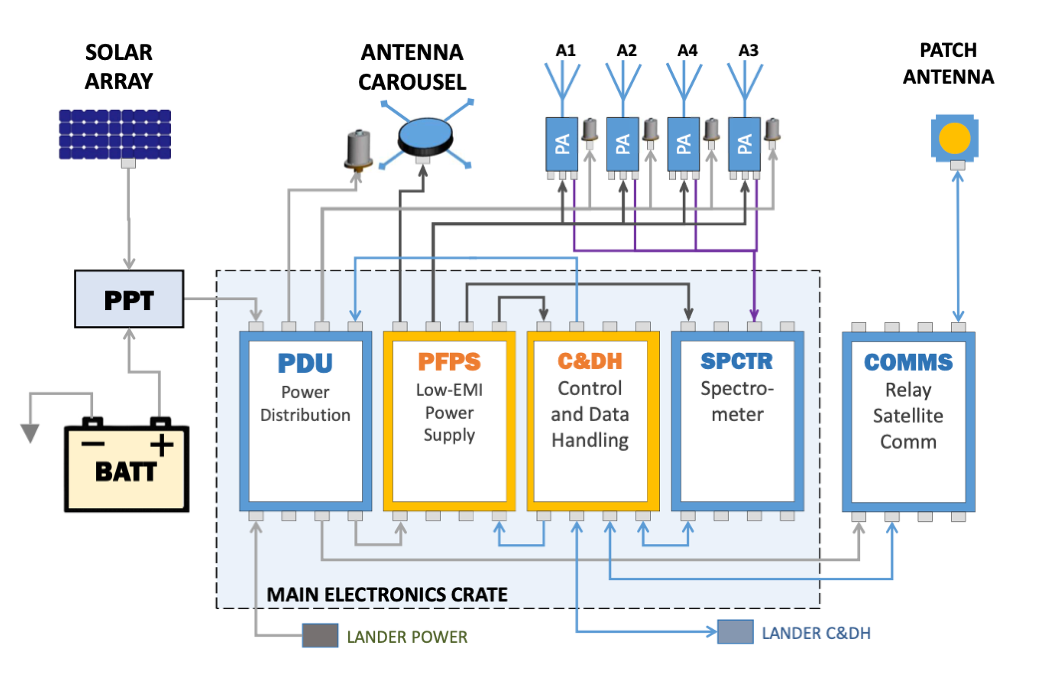
- 部署一个 4 通道、50 MHz 的 Nyquist 基带接收系统。
- 使用两根正交的 ~6 m 端对端电偶极天线,在旋转转台上进行方位研究。
- 以 102.4 Msamples/sec 记录四路单端天线电压,并使用基于 FPGA 的频谱仪计算自相关与互相关谱。
- 通过互相关计算斯托克斯参数以避免天线散粒噪声。
- 采用具有稳定开关频率的 DC-DC 转换器,以便数字信号处理并降低电源噪声。
- 配备大容量电池以度过月夜,以及 DCB 与着陆器的 C&DH 和通信接口。
实验结果
研究问题
- RQ1从月球远端观测,50 MHz 以下的全局低频无线电天空光谱是什么样的?
- RQ2月球环境( EMI 免干扰、地平线、月壤)如何影响测量与光谱色度相对于地球基准或其他月球实验?
- RQ3LuSEE Night 能否为高红移 21 cm 宇宙学(Dark Ages)相关的前景模型与校准策略提供信息?
主要发现
- LuSEE Night 将在月球夜间通过 ~40 kg 电池和旋转天线转台进行原位校准研究。
- 频谱仪以 102.4 Msamples/sec 采样,并使用互相关产生光谱信息及潜在的斯托克斯参数。
- 有效载荷架构与 Parker Solar Probe 的仪器遗产相似,针对月球环境和 EMI 免干扰观测进行了改造。
- 提出远场校准源(FFCS)概念(CS-4),在约 50 天地球日内完成约 30 次通道的天线模式与系统响应校准。
- 着陆点和热设计考虑旨在最小化地面电波干扰与热挑战,使长期自治运行成为可能。
阅读本论文
在 Nubint 阅读器中打开原文,边读边就任意段落提问。
在 Nubint 中阅读本论文本解读由 AI 根据论文原文生成,引用前请核对原文。