
[论文解读] Machine Learning in Digital Forensics: A Systematic Literature Review
本论文系统性地回顾了2010–2021年数字取证中机器学习的应用,发现基于CNN的深度学习主导图像取证领域,且该领域显著增长,拥有608项初级研究。
Development and exploitation of technology have led to the further expansion and complexity of digital crimes. On the other hand, the growing volume of data and, subsequently, evidence is a severe challenge in digital forensics. In recent years, the application of machine learning techniques to identify and analyze evidence has been on the rise in different digital forensics domains. This paper offers a systematic literature review of the research published in major academic databases from January 2010 to December 2021 on the application of machine learning in digital forensics, which was not presented yet to the best of our knowledge as comprehensive as this. The review also identifies the domains of digital forensics and machine learning methods that have received the most attention in the previous papers and finally introduces remaining research gaps. Our findings demonstrate that image forensics has obtained the greatest benefit from using machine learning methods, compared to other forensic domains. Moreover, CNN-based models are the most important machine learning methods that are increasingly being used in digital forensics. We present a comprehensive mind map to provide a proper perspective for valuable analytical results. Furthermore, visual analysis has been conducted based on the keywords of the papers, providing different thematic relevance topics. This research will give digital forensics investigators, machine learning developers, security researchers, and enthusiasts a broad view of the application of machine learning in digital forensics.
研究动机与目标
- Identify how ML applications in digital forensics have evolved over time.
- Determine geographic distribution of ML-for-DF research.
- Explore publication venues and databases hosting ML in DF research.
- Analyze commonly used keywords and topics to map thematic trends.
- Identify ML methods and DF domains most affected by ML applications.
提出的方法
- Perform a structured systematic literature review following Kitchenham and Charters guidelines.
- Search ACM DL, IEEE Xplore, ScienceDirect, and SpringerLink with specified ML and DF keywords.
- Apply inclusion/exclusion criteria (peer-reviewed, empirical ML in DF, 2010–2021).
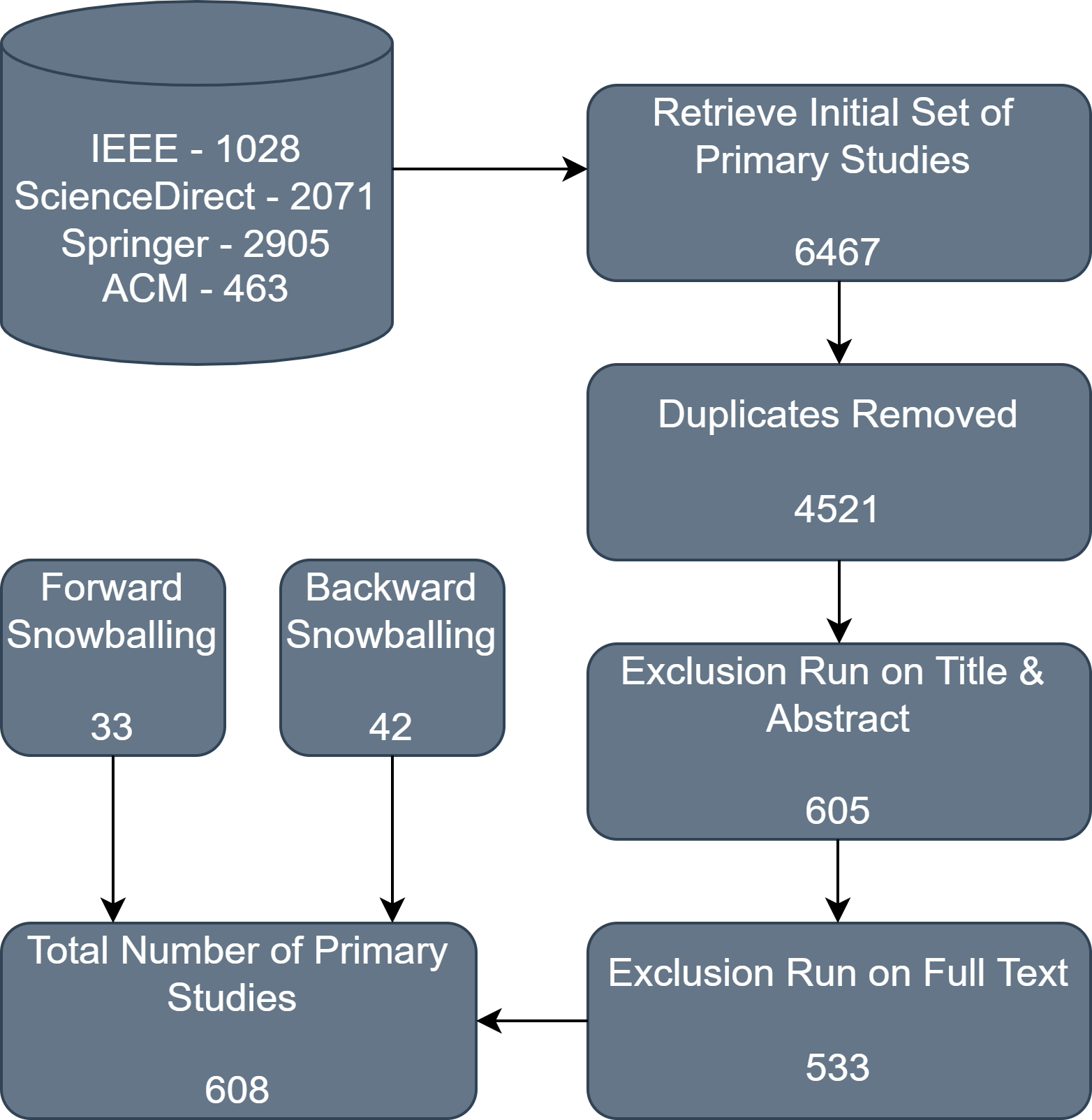
- Use forward and backward snowballing to reach 608 primary studies.
- Extract context, qualitative, and quantitative data from included studies for analysis.
- Produce a mind map and keyword network analysis to summarize relationships between ML methods and DF domains.
实验结果
研究问题
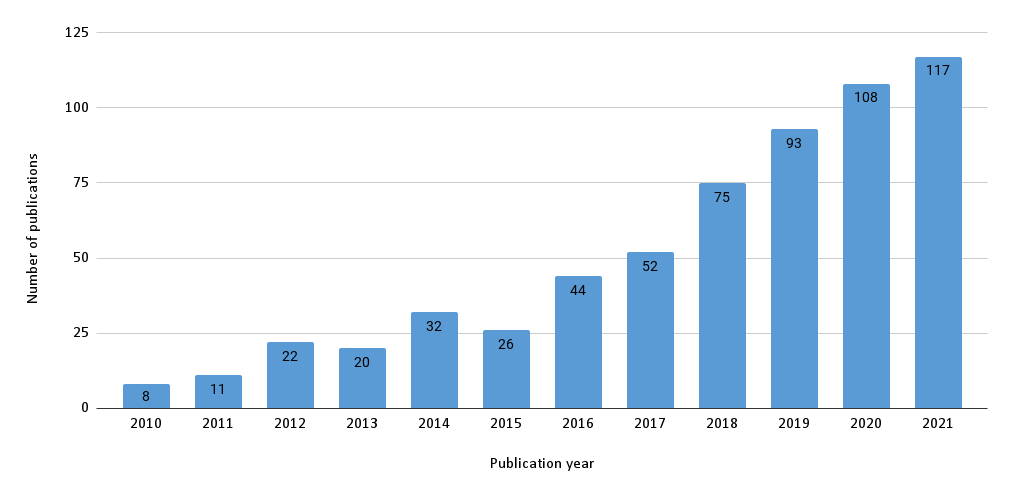
- RQ1RQ1: How have ML-for-DF publications spread across years from 2010 to 2021?
- RQ2RQ2: How is ML-for-DF research distributed geographically by country of the first author?
- RQ3RQ3: What are the most popular publication venues and databases for ML in digital forensics?
- RQ4RQ4: What are the most commonly used keywords and how are they related across studies?
- RQ5RQ5: Which ML methods are used in digital forensics and in which DF domains?
主要发现
- A total of 608 primary studies were identified up to December 2021.
- Publication activity rose sharply after 2016, with ML in DF gaining substantial attention.
- China, India, and the USA are the top contributing countries; Europe accounts for about 18%.
- Conference venues dominate publication output, and Elsevier journals account for roughly 47% of journal papers.
- Image forensics is the most investigated DF domain (about 62% of works).
- CNN-based and deep learning methods are the most frequently used ML techniques, especially in image forensics, with CNN-related terms prevalent in keywords.
阅读本论文
在 Nubint 阅读器中打开原文,边读边就任意段落提问。
在 Nubint 中阅读本论文本解读由 AI 根据论文原文生成,引用前请核对原文。