
[论文解读] Mamba in Speech: Towards an Alternative to Self-Attention
这篇论文将双向 Mamba(BiMamba)作为自注意在 Transformer 和 Conformer 的替代方案进行语音处理的研究,结果显示 BiMamba(尤其是 ExtBiMamba)通过引入更高的非线性,在语音增强和语音识别任务中表现出色。
Transformer and its derivatives have achieved success in diverse tasks across computer vision, natural language processing, and speech processing. To reduce the complexity of computations within the multi-head self-attention mechanism in Transformer, Selective State Space Models (i.e., Mamba) were proposed as an alternative. Mamba exhibited its effectiveness in natural language processing and computer vision tasks, but its superiority has rarely been investigated in speech signal processing. This paper explores solutions for applying Mamba to speech processing by discussing two typical speech processing tasks: speech recognition, which requires semantic and sequential information, and speech enhancement, which focuses primarily on sequential patterns. The experimental results confirm that bidirectional Mamba (BiMamba) consistently outperforms vanilla Mamba, highlighting the advantages of a bidirectional design for speech processing. Moreover, experiments demonstrate the effectiveness of BiMamba as an alternative to the self-attention module in the Transformer model and its derivates, particularly for the semantic-aware task. The crucial technologies for transferring Mamba to speech are then summarized in ablation studies and the discussion section, offering insights for extending this research to a broader scope of tasks.
研究动机与目标
- 在语音任务中推动用基于状态空间的 Mamba 替代多头自注意(MHSA)。
- 考察双向 Mamba 变体(InnBiMamba 和 ExtBiMamba)在语音中的全局依赖建模。
- 在 Transformer 与 Conformer 架构中评估 Mamba/BiMamba 替代 MHSA 的效果,覆盖 ASR 和 SE 数据集。
- 找出BiMamba 的非线性在何时能提升语音中高层语义信息的捕获。
提出的方法
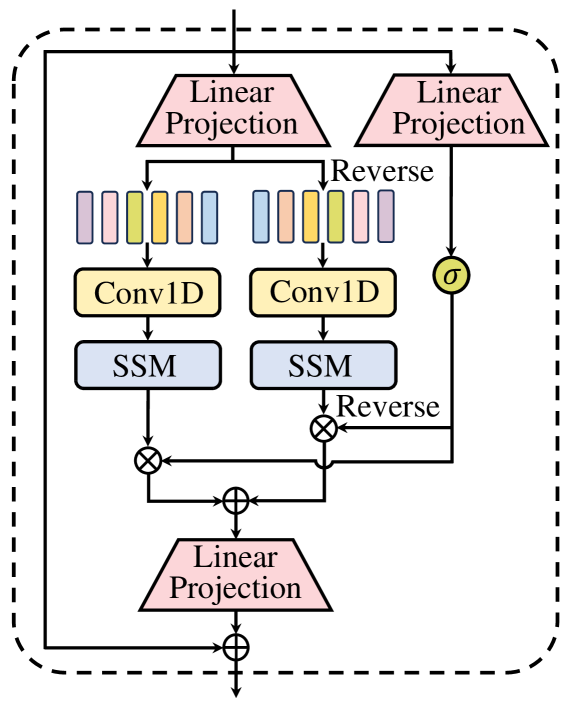
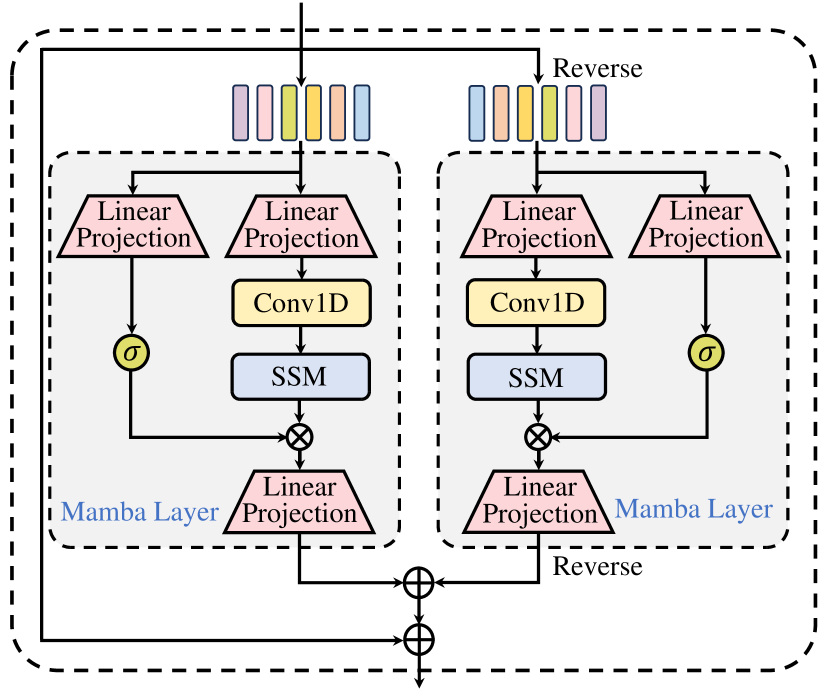
- 评审并改编选择性状态空间模型(Mamba),用于双向处理以建模语音中的全局依赖。
- 提出两种 BiMamba 设计:内部双向 Mamba(InnBiMamba)和外部双向 Mamba(ExtBiMamba)。
- 在 Transformer 与 Conformer 编码器中用 Mamba/BiMamba 替代 MHSA,以评估在 SE 和 ASR 任务上的性能。
- 引入额外的非线性特征(FFN 残差、Swish 激活、Macaron 风格的 FFN),以实现高层语义表示。
- 进行消融研究,探讨非线性、FFN 和残差连接对 ASR 性能的作用。
实验结果
研究问题
- RQ1双向 Mamba 是否能在 SE 和 ASR 任务中像 MHSA 那样高效地捕捉语音中的全局依赖,甚至更好?
- RQ2在各数据集和架构中,用 ExtBiMamba 替代 MHSA 时,是否始终优于 InnBiMamba?
- RQ3BiMamba 学习语音中高层语义信息需要哪些非线性和架构增强?
- RQ4将 MHSA 替换为 Mamba/BiMamba 如何影响训练/推理速度和相对于 Transformer/Conformer 的参数效率?
- RQ5BiMamba 是否在语义感知任务(ASR)上比在低级谱任务(SE)更具优势?
主要发现
- 双向 BiMamba 变体在语音任务中优于原生 Mamba,且常常超过装有 MHSA 的基线。
- ExtBiMamba 通常比 InnBiMamba 略有更好表现,并提升训练与推理速度。
- 在 Conformer 中用 ExtBiMamba 替代 MHSA(ConExtBiMamba)在 ASR 基准上等同或超越最先进的 Branchformer 结果。
- 独立的 BiMamba 模型在 SE(低级谱信息)上表现强劲,但若不与 FFN 与残差连接交互则在 ASR 上表现不佳。
- 消融研究表明,非线性(FFN、Swish、残差连接)以及 A 矩阵中的高斯噪声能提升 ConExtBiMamba 的性能和鲁棒性,尤其在小数据集上。
- 总的来说,基于 BiMamba 替代 MHSA 在需要更高层次抽象(语义)信息的场景中最为有效,而不仅仅是低级处理。
阅读本论文
在 Nubint 阅读器中打开原文,边读边就任意段落提问。
在 Nubint 中阅读本论文本解读由 AI 根据论文原文生成,引用前请核对原文。