
[论文解读] Managing Cold-start in The Serverless Cloud with Temporal Convolutional Networks
本文提出一种基于时间卷积网络(TCN)的新型集成策略,可提前10–15分钟预测函数实例到达时间,从而实现对无服务器云环境中冷启动问题的主动缓解,支持基础设施与函数级别的资源预分配。在真实世界的Azure Functions数据集上,TCN在时间序列模型中表现优于其他模型,实现了基础设施与函数层之间的低耦合、高内聚的冷启动缓解方案。
Serverless cloud is an innovative cloud service model that frees customers from most cloud management duties. It also offers the same advantages as other cloud models but at much lower costs. As a result, the serverless cloud has been increasingly employed in high-impact areas such as system security, banking, and health care. A big threat to the serverless cloud's performance is cold-start, which is when the time of provisioning the needed cloud resource to serve customers' requests incurs unacceptable costs to the service providers and/or the customers. This paper proposes a novel low-coupling, high-cohesion ensemble policy that addresses the cold-start problem at infrastructure- and function-levels of the serverless cloud stack, while the state of the art policies have a more narrowed focus. This ensemble policy anchors on the prediction of function instance arrivals, 10 to 15 minutes into the future. It is achievable by using the temporal convolutional network (TCN) deep-learning method. Bench-marking results on a real-world dataset from a large-scale serverless cloud provider show that TCN out-performs other popular machine learning algorithms for time series. Going beyond cold-start management, the proposed policy and publicly available codes can be adopted in solving other cloud problems such as optimizing the provisioning of virtual software-defined network assets.
研究动机与目标
- 为解决无服务器云环境中因资源分配延迟导致的不可接受的延迟问题,缓解冷启动问题。
- 识别并将现实世界中冷启动管理的挑战转化为数据与模型需求。
- 开发一种端到端的多层解决方案,同时作用于基础设施与函数层面,克服以往研究中聚焦过窄的局限。
- 通过高时间精度预测函数实例到达时间,实现主动资源预分配。
- 提供一个公开可用、可复用的框架,用于冷启动缓解及其他云优化任务。
提出的方法
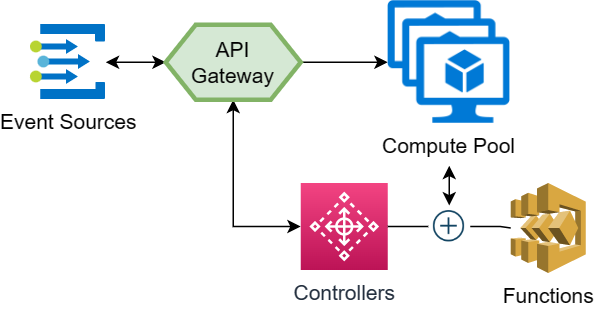
- 采用双模块深度学习流水线,利用TCN预测未来函数实例的名称与到达时间,提前10–15分钟。
- 第一模块(A)基于预测的函数名称与粗粒度系统映射,推断基础设施与工作节点的资源需求。
- 第二模块(B)基于预测的到达时间进行细粒度代码分析,推断依赖关系并优化函数执行。
- 集成策略结合两个模块的输出,通过资源排序与编排调度,预分配最优的工作节点。
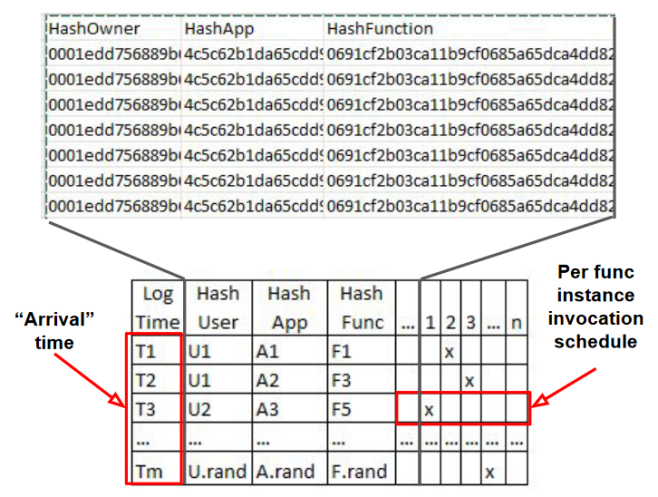
- 系统利用Microsoft Azure Functions Trace 2019数据集中的历史数据训练并验证TCN模型。
- 该策略设计为低耦合、高内聚,支持与现有云管理系统的模块化集成。
实验结果
研究问题
- RQ1深度学习模型能否在无服务器云环境中准确预测函数实例在10–15分钟前的到达?
- RQ2TCN模型在预测FaaS工作负载模式方面,相较于其他时间序列预测方法表现如何?
- RQ3双路径集成策略能否同时有效缓解基础设施与函数层面的冷启动问题?
- RQ4基于预测的主动预分配在多大程度上可减少真实世界无服务器工作负载中的冷启动延迟?
- RQ5所提出的框架能否推广至其他云资源优化问题,而不仅限于冷启动?
主要发现
- TCN模型在真实世界的Azure Functions数据集上,优于其他主流时间序列预测机器学习算法。
- 所提出的集成策略通过提前10–15分钟主动预分配基础设施与优化后的函数资源,成功缓解了冷启动问题。
- 双路径架构(A与B)实现了基础设施与函数层面的协调决策,具有低耦合特性,提升了系统响应能力。
- 通过基于预测到达时间与代码依赖关系的预热机制,系统实现了更高的资源利用率与更低的延迟。
- 模型的预测结果足够稳健,可支持实际部署,且具有潜力用于优化虚拟软件定义网络的资源配置。
- 作者公开发布了源代码,支持可复现性,并可扩展至其他云优化问题。
阅读本论文
在 Nubint 阅读器中打开原文,边读边就任意段落提问。
在 Nubint 中阅读本论文本解读由 AI 根据论文原文生成,引用前请核对原文。