
[论文解读] MiniGPT4-Video: Advancing Multimodal LLMs for Video Understanding with Interleaved Visual-Textual Tokens
MiniGPT4-Video 将 MiniGPT-v2 扩展为通过将视觉标记与每帧字幕交错来处理视频帧序列,在若干视频 QA 基准测试上实现了最先进的结果。
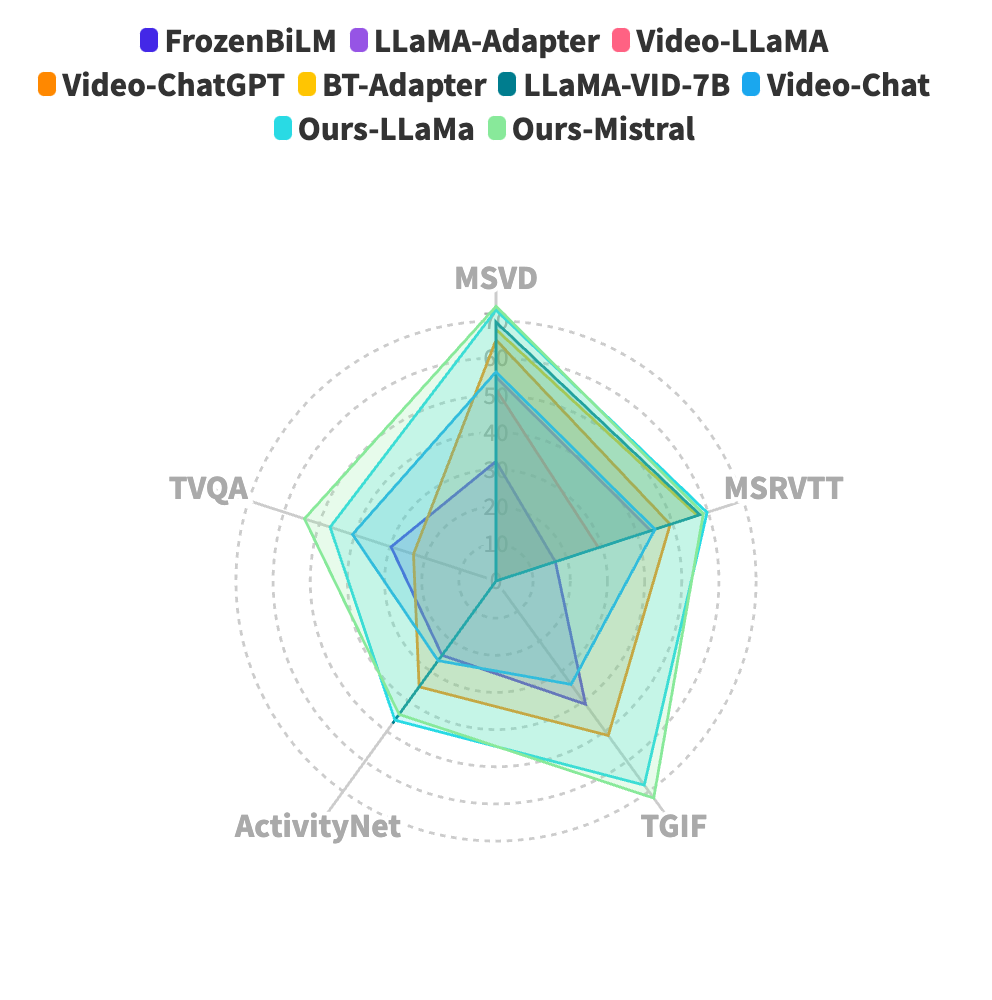
This paper introduces MiniGPT4-Video, a multimodal Large Language Model (LLM) designed specifically for video understanding. The model is capable of processing both temporal visual and textual data, making it adept at understanding the complexities of videos. Building upon the success of MiniGPT-v2, which excelled in translating visual features into the LLM space for single images and achieved impressive results on various image-text benchmarks, this paper extends the model's capabilities to process a sequence of frames, enabling it to comprehend videos. MiniGPT4-video does not only consider visual content but also incorporates textual conversations, allowing the model to effectively answer queries involving both visual and text components. The proposed model outperforms existing state-of-the-art methods, registering gains of 4.22%, 1.13%, 20.82%, and 13.1% on the MSVD, MSRVTT, TGIF, and TVQA benchmarks respectively. Our models and code have been made publicly available here https://vision-cair.github.io/MiniGPT4-video/
研究动机与目标
- 将多模态大型语言模型推进到理解超越静态图像的动态视频内容。
- 将时序视觉信息与文本对话结合用于基于视频的问答。
- 在保持时序动态的前提下,通过交错标记降低每帧的令牌开销。
- 利用每帧字幕来增强多模态理解与推理。
提出的方法
- 用一组 condensed 的视觉标记表征每个采样视频帧(相邻的四个标记合并为一个)。
- 将每帧的视觉标记与由 LLM tokenizer 进行分词的帧字幕串联起来。
- 使用 EVA-CLIP 作为冻结的视觉骨干提取帧特征。
- 通过线性投影层将视觉+字幕标记映射到 LLM 空间。
- 用 LoRA 对 QKV 组件进行高效微调(秩 64,alpha 16)。
- 分阶段训练:图像-文本预训练、带帧采样的视频-文本预训练、以及视频问答指令微调。
实验结果
研究问题
- RQ1一个基于 LLM 的模型如何处理并对齐带有字幕的连续视频帧序列进行推理?
- RQ2在多大程度上将每帧字幕纳入考量能提升多模态视频理解与问答性能?
- RQ3对于视频 LLMs,帧采样、标记化与上下文窗口约束之间存在哪些权衡?
- RQ4在被冻结的视觉骨干配合可学习投影进入 LLM 空间的情况下,是否能获得具有竞争力的视频问答结果?
主要发现
- 该模型在 MSVD、MSRVTT、TGIF、TVQA 上分别比现有的 7B 方法领先 4.22%、1.13%、20.82%、和 13.1% 的性能。
- 字幕在所有基准测试中均提升了性能,包含字幕时取得更高分数。
- 零-shot 开放式和 MCQ 评估在多个视频 QA 数据集上显示出显著优于以往 LVLM 的提升。
- 该方法展示了与 Video-ChatGPT 风格类似的竞争力能力,且仅使用一个交错的视觉-文本标记流。
- 为了在上下文窗口内表示较长视频,帧被下采样以适配 LLM 的上下文限制。

阅读本论文
在 Nubint 阅读器中打开原文,边读边就任意段落提问。
在 Nubint 中阅读本论文本解读由 AI 根据论文原文生成,引用前请核对原文。