
[论文解读] Mitigating Interference of Microservices with a Scoring Mechanism in Large-scale Clusters
本文提出 PISM,一种数据驱动的框架,通过基于其组成和对延迟敏感服务(LCSs)的干扰影响来评分和调度尽力而为作业(BEJs),从而减轻大规模微服务集群中的性能干扰。通过建模 BEJ 组成并预测其对 LCS 响应时间的影响,PISM 将干扰减少高达 41.5%,并将长尾 LCS 吞吐量提升 76.4%。
Co-locating latency-critical services (LCSs) and best-effort jobs (BEJs) constitute the principal approach for enhancing resource utilization in production. Nevertheless, the co-location practice hurts the performance of LCSs due to resource competition, even when employing isolation technology. Through an extensive analysis of voluminous real trace data derived from two production clusters, we observe that BEJs typically exhibit periodic execution patterns and serve as the primary sources of interference to LCSs. Furthermore, despite occupying the same level of resource consumption, the diverse compositions of BEJs can result in varying degrees of interference on LCSs. Subsequently, we propose PISM, a proactive Performance Interference Scoring and Mitigating framework for LCSs through the optimization of BEJ scheduling. Firstly, PISM adopts a data-driven approach to establish a characterization and classification methodology for BEJs. Secondly, PISM models the relationship between the composition of BEJs on servers and the response time (RT) of LCSs. Thirdly, PISM establishes an interference scoring mechanism in terms of RT, which serves as the foundation for BEJ scheduling. We assess the effectiveness of PISM on a small-scale cluster and through extensive data-driven simulations. The experiment results demonstrate that PISM can reduce cluster interference by up to 41.5%, and improve the throughput of long-tail LCSs by 76.4%.
研究动机与目标
- 解决在大规模生产集群中,因共置的尽力而为作业(BEJs)导致延迟敏感服务(LCSs)产生性能干扰的挑战。
- 克服现有方法依赖实时资源监控或基于反馈的调整所导致的高延迟局限性。
- 开发一种可扩展的、主动的干扰缓解框架,适用于高度动态的大规模集群。
- 通过集体组成模式而非单实例指标,表征 BEJs 的干扰潜力,实现其高效调度。
- 通过最小化干扰同时保持高资源利用率,提升 LCS 可靠性和整体集群效率。
提出的方法
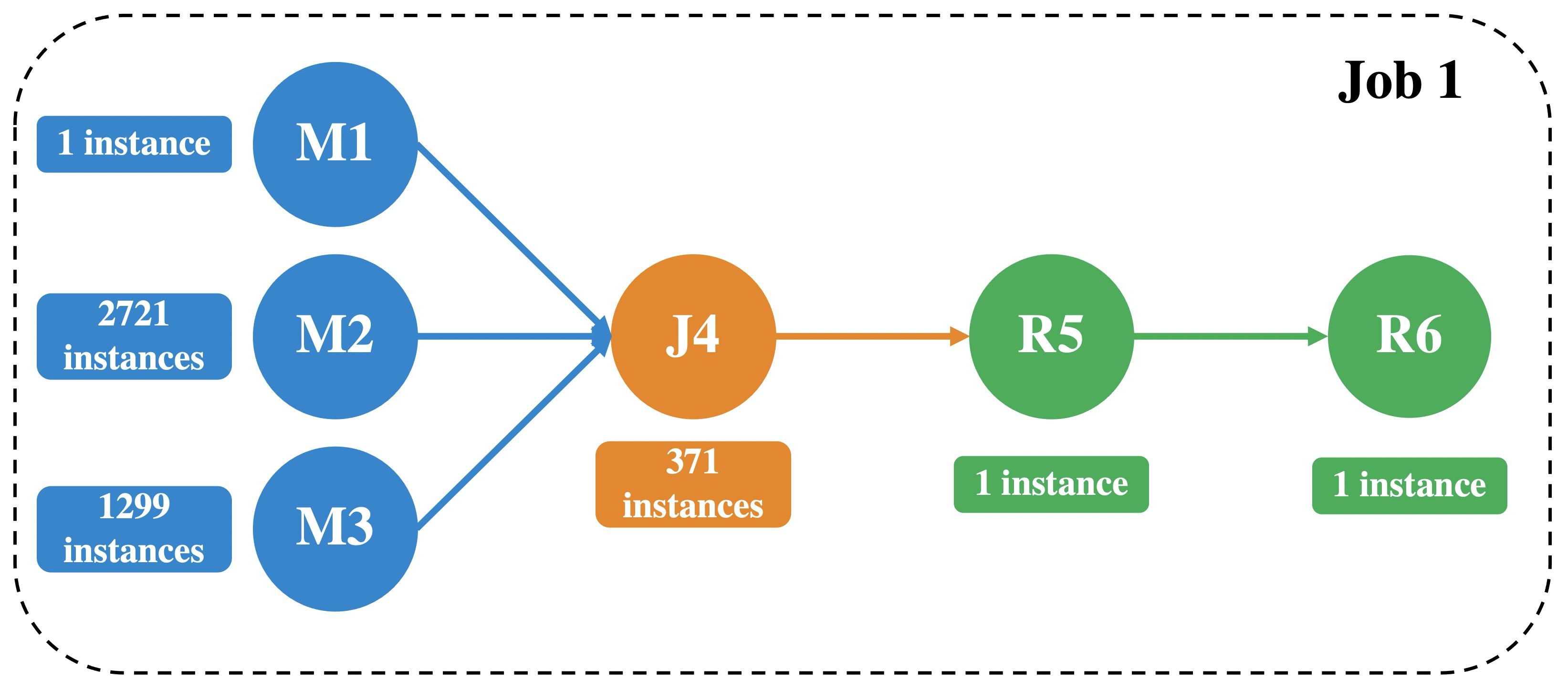
- 基于来自 10,000 台服务器和 12,000 台服务器生产集群的真实追踪数据,提出一种基于数据驱动的 BEJs 特征化与分类方法。
- 利用历史性能数据,建立服务器级别 BEJ 组成与 LCS 响应时间(RT)之间的关系模型。
- 设计一种干扰评分机制,量化 BEJ 组成对 LCS RT 的影响,从而支持主动调度决策。
- 采用基于相关性的加权方法(如 Corr、Fair、CPU-Quota),在多样化服务器工作负载下优化干扰评分预测的准确性。
- 将评分模型集成到调度器中,根据预测的干扰水平优先调度或延迟 BEJ。
- 通过小规模集群实验和基于真实集群追踪的大规模数据驱动仿真,验证该框架。
实验结果
研究问题
- RQ1在大规模共置集群中,BEJ 组成如何影响延迟敏感服务(LCSs)的响应时间?
- RQ2基于 BEJ 组成的、数据驱动的干扰评分机制是否优于依赖实时资源利用率的传统方法?
- RQ3基于干扰评分的主动调度在多大程度上能减少整体集群干扰并提升 LCS 性能?
- RQ4该框架在多样化服务器工作负载和干扰水平下的预测准确性和可扩展性表现如何?
- RQ5干扰缓解对长尾 LCS 和整体集群效率有何影响?
主要发现
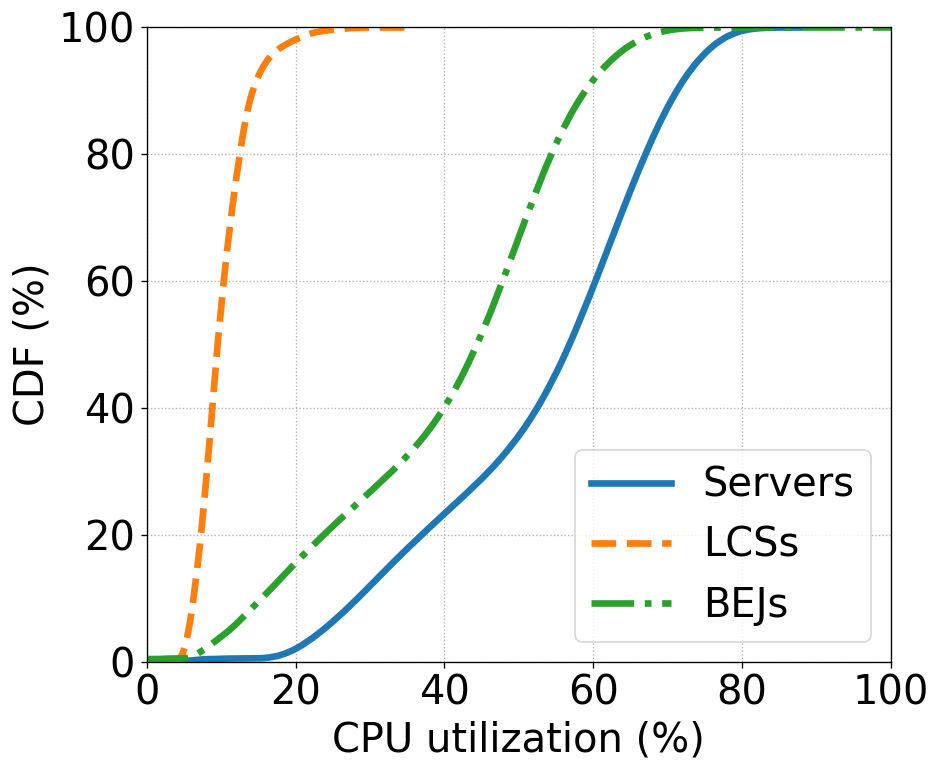
- 尽管 BEJs 属于尽力而为类型,但由于其高重复性和资源竞争,仍是 LCSs 的主要干扰源。
- 即使资源消耗相同,不同的 BEJ 组成也会在 LCSs 上引发显著不同的干扰水平,凸显了基于组成感知调度的必要性。
- 基于 BEJ 组成的干扰预测方法准确率达 75.2%,优于基于 BEJ 利用率的方法(准确率 58.3%)。
- PISM 在仿真中将集群范围内的干扰减少高达 41.5%,展现出强大的缓解潜力。
- PISM 通过减少干扰并防止性能下降,使长尾 LCS 的吞吐量提升 76.4%。
- 该框架将长尾 LCS 性能问题的发生概率降低 82.1%,表明对延迟敏感工作负载具有显著的可靠性提升。
阅读本论文
在 Nubint 阅读器中打开原文,边读边就任意段落提问。
在 Nubint 中阅读本论文本解读由 AI 根据论文原文生成,引用前请核对原文。