
[论文解读] Mixture-of-Agents Enhances Large Language Model Capabilities
本文提出了一种 Mixture-of-Agents (MoA) 框架,该框架使用分层的 LLM 程序集来协作生成并细化回答,在开源模型上在 AlpacaEval 2.0、MT-Bench 和 FLASK 上取得了最先进的结果。
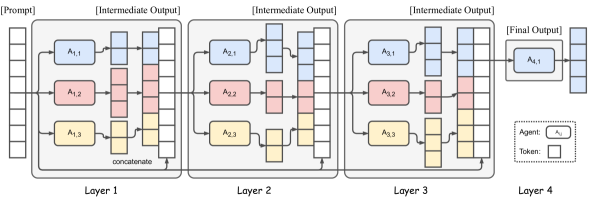
Recent advances in large language models (LLMs) demonstrate substantial capabilities in natural language understanding and generation tasks. With the growing number of LLMs, how to harness the collective expertise of multiple LLMs is an exciting open direction. Toward this goal, we propose a new approach that leverages the collective strengths of multiple LLMs through a Mixture-of-Agents (MoA) methodology. In our approach, we construct a layered MoA architecture wherein each layer comprises multiple LLM agents. Each agent takes all the outputs from agents in the previous layer as auxiliary information in generating its response. MoA models achieves state-of-art performance on AlpacaEval 2.0, MT-Bench and FLASK, surpassing GPT-4 Omni. For example, our MoA using only open-source LLMs is the leader of AlpacaEval 2.0 by a substantial gap, achieving a score of 65.1% compared to 57.5% by GPT-4 Omni.
研究动机与目标
- 证明多模型之间的协作可以提升回答质量,超越单一模型生成。
- 描述模型从其他模型输出中受益的协作现象。
- 开发基于提示、非微调的 MoA 框架,能够与专有模型竞争。
- 在标准基准(AlpacaEval 2.0、MT-Bench、FLASK)上评估 MoA,并分析成本与可扩展性。
提出的方法
- 提出一个分层的 MoA 架构,其中每一层包含多个 LLM 代理,它们接收来自上一层的辅助信息。
- 定义一个 Aggregate-and-Synthesize 提示,用于整合该层中代理的输出。
- 在各层之间复用模型,并使用最终聚合器(例如 Qwen1.5-110B-Chat)生成最终输出。
- 比较单一提案者与多提案者的配置,以研究提案多样性的作用。
- 将 MoA 与 Mixture-of-Experts (MoE) 联系起来,并证明基于提示的模型层级集成方法在无需微调的情况下的合理性。
实验结果
研究问题
- RQ1跨分层阶段的多样化 LLM 混合是否可以在标准基准上超越单模型提示?
- RQ2在 MoA 中,提案者和聚合器扮演怎样的角色,哪些模型最适合担任这些角色?
- RQ3提案者数量和模型多样性如何影响性能与成本?
- RQ4MoA 在质量和效率方面与基于 LLM 的重新排序以及其他集成方法相比如何?
主要发现
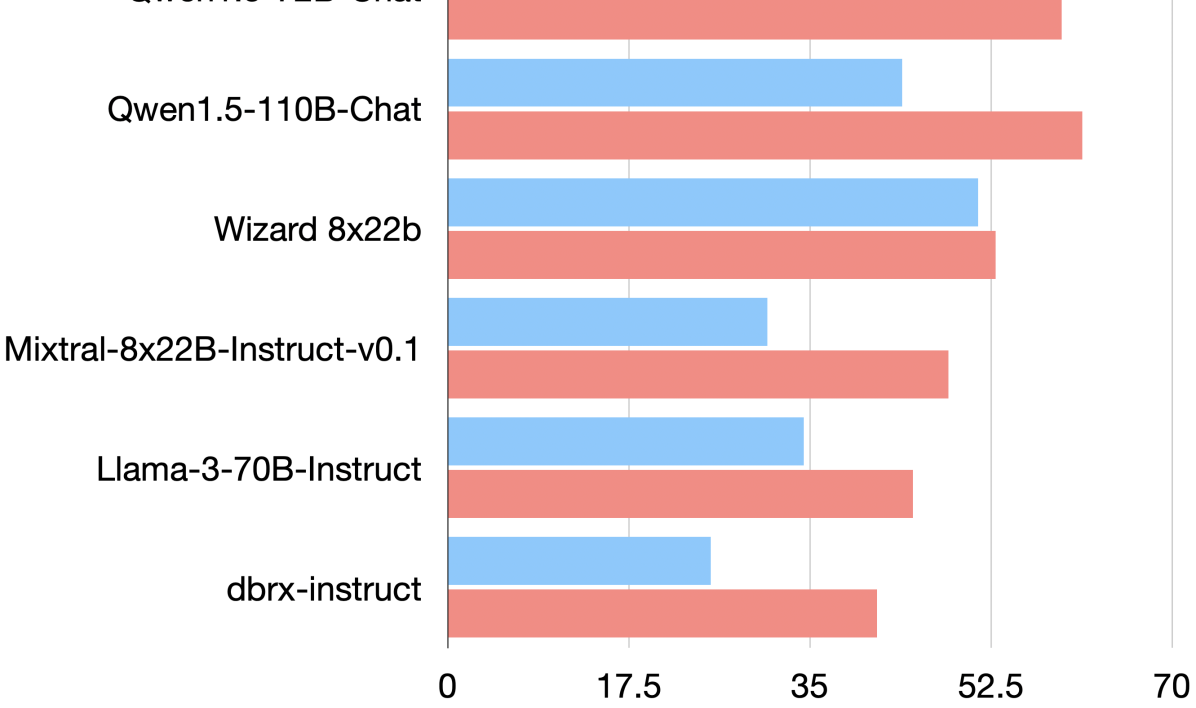
- MoA 采用开源模型在 AlpacaEval 2.0 上实现 65.1% 的 LC 胜率,超过 GPT-4 Omni 的 57.5%。
- 以 GPT-4o 作为最终聚合器的 MoA 达到 65.7% 的 LC 胜率和 78.7% 的 AlpacaEval 2.0 指标胜率。
- MoA-Lite(层数较少)在 AlpacaEval 2.0 上仍比 GPT-4o 高出 1.8 个百分比点。
- 在 MT-Bench 上,MoA 在排行榜上达到最佳表现,总体提升,并且在第一/第二轮分数上表现强劲。
- 在 FLASK 上,MoA 在多项指标上优于仅使用聚合器和 GPT-4 Omni,包括鲁棒性、正确性、效率、事实性和元认知能力。
- MoA 相对于基于 LLM 的排序器基线有提升,这表明对多个提案进行聚合的结果优于选择单一提案。
- 增加提案者数量并确保多样性(不同模型)可持续提升性能,表明扩展宽度是有益的。
- 出现了专门化的模型角色:GPT-4o、Qwen、LLaMA-3 在提案者和聚合器两端都具备较强的适用性,而 WizardLM 在作为提案者时表现出色,但作为聚合器时效果较弱。
- 预算分析表明 MoA 可以在较低成本下接近 GPT-4 Turbo 的性能,MoA-Lite 实现了强势的质量-成本权衡。
阅读本论文
在 Nubint 阅读器中打开原文,边读边就任意段落提问。
在 Nubint 中阅读本论文本解读由 AI 根据论文原文生成,引用前请核对原文。