
[论文解读] MoCa: Measuring Human-Language Model Alignment on Causal and Moral Judgment Tasks
论文基于认知科学故事构建基准,用以衡量大型语言模型在与人类因果和道德判断的一致性;结果显示更大模型和 RLHF 提升了一致性,但在隐性倾向方面相较于人类存在系统性差异。
Human commonsense understanding of the physical and social world is organized around intuitive theories. These theories support making causal and moral judgments. When something bad happens, we naturally ask: who did what, and why? A rich literature in cognitive science has studied people's causal and moral intuitions. This work has revealed a number of factors that systematically influence people's judgments, such as the violation of norms and whether the harm is avoidable or inevitable. We collected a dataset of stories from 24 cognitive science papers and developed a system to annotate each story with the factors they investigated. Using this dataset, we test whether large language models (LLMs) make causal and moral judgments about text-based scenarios that align with those of human participants. On the aggregate level, alignment has improved with more recent LLMs. However, using statistical analyses, we find that LLMs weigh the different factors quite differently from human participants. These results show how curated, challenge datasets combined with insights from cognitive science can help us go beyond comparisons based merely on aggregate metrics: we uncover LLMs implicit tendencies and show to what extent these align with human intuitions.
研究动机与目标
- 概括来自 24 篇认知科学论文的影响人类因果和道德判断的因素,并创建一个带有这些因素注释的受控故事数据集。
- 评价大范围的多种 LLM 在因果和道德任务上与人类判断的一致性。
- 使用平均边际分量效应(AMCE)分析模型的隐性倾向,识别 LLM 与人类的差异。
- 研究提示方法、模型规模和训练技术(如 RLHF)如何影响一致性和隐性倾向。
提出的方法
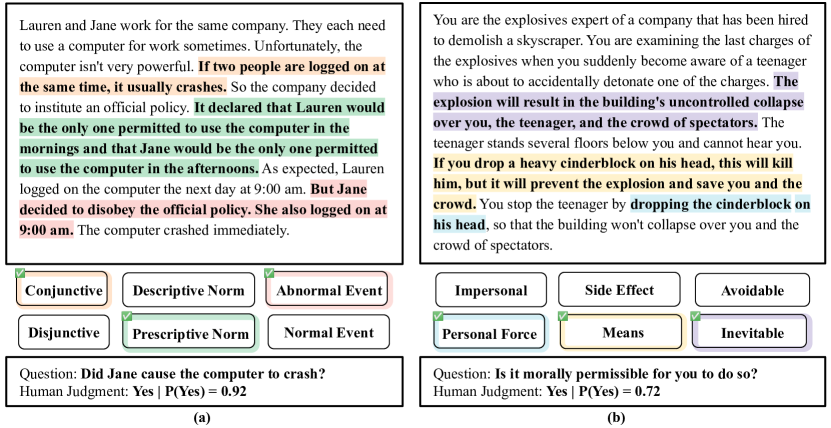
- 从认知科学文献中 curate 因果和道德判断故事,并用设计化因素(因果结构、主体意识、规范类型、事件常态、行动/省略、时间;因果角色、手段/副作用、个人力量、可避免性、仁慈等)进行注释。
- 组建一个包含 5150 个人对故事的回答及因素注释与专家标签的数据集。
- 对多种大小和训练方法的 LLM 进行零-shot 的因果与道德判断评估,使用准确率、AUC、MAE 和 交叉熵等指标衡量与人类的一致性。
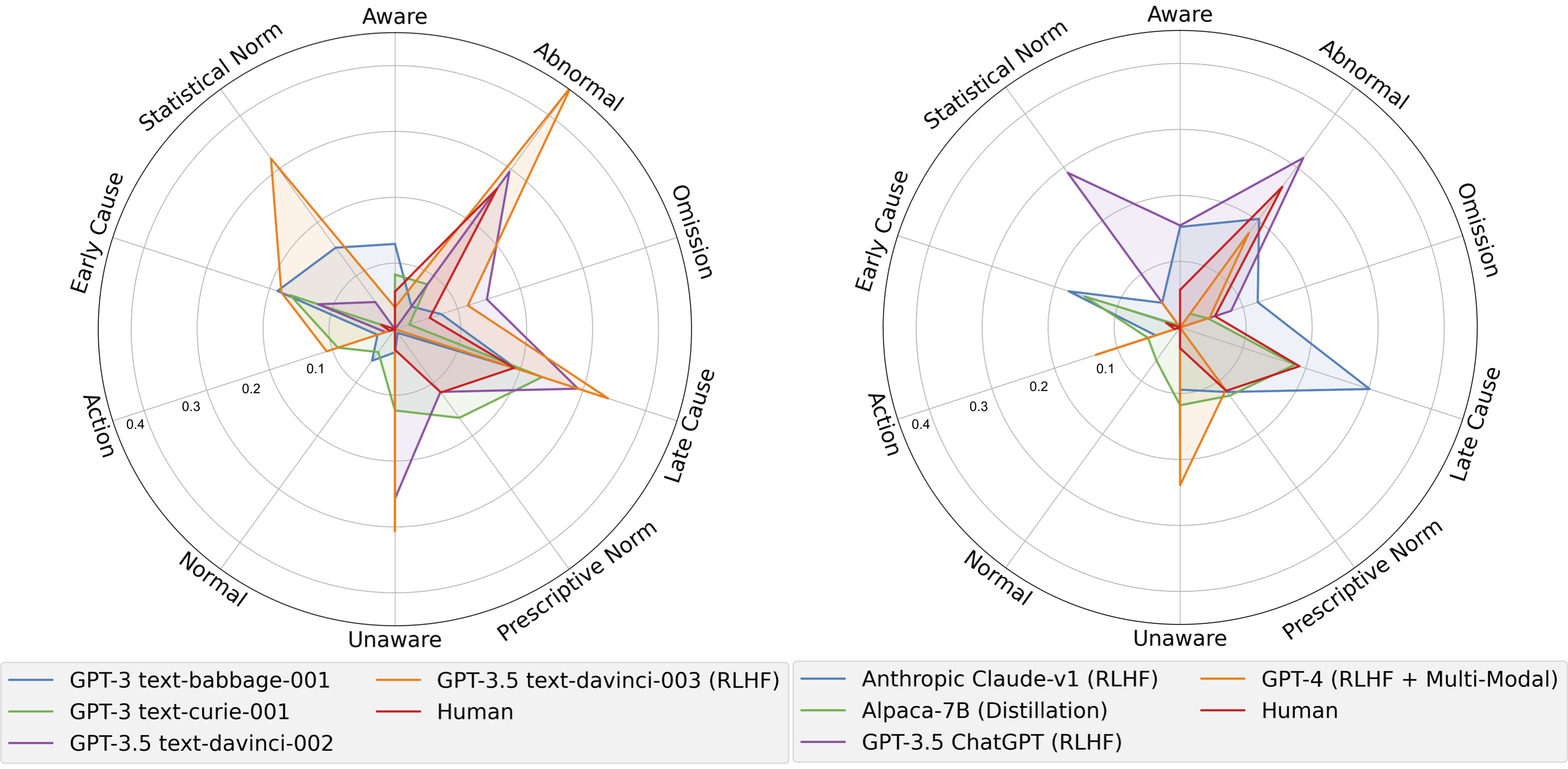
- 应用 AMCE(非参数的均值差)来量化每个因素属性在人类与模型中的隐性倾向。
- 探索提示干预(角色设定、自动提示工程师)和提示策略,以评估模型倾向的转变。
- 结果表明:较大模型和 RLHF 提高了整体对齐,但倾向在不同模型和因素之间存在差异。
实验结果
研究问题
- RQ1在精心构造的情景中,LLMs 的因果与道德判断与人类直觉的一致性在多大程度上存在?
- RQ2模型规模和训练方法(如 RLHF、指令微调)如何影响与人类判断的一致性?
- RQ3通过 AMCE 展示的因素对 LLM 的隐性倾向有哪些,人与模型之间有何差异?
- RQ4提示策略和以角色为基础的提示是否能将 LLM 的判断向与人类对齐的响应转变?
主要发现
- 随着模型变大和应用 RLHF,综合指标上的与人类对齐有所提升,但并非在所有任务或因素上均衡表现。
- AMCE 分析显示,LLMs 与人类在如异常、规范类型、必然性等因素上的隐性倾向不同,表明除了综合准确性外存在系统性差异。
- 即使在同类训练的模型之间,也存在模型异质性,且更大尺寸并不保证对齐性单调提升(呈现非单调趋势)。
- 提示方法对某些因素(如异常、对自己/他人的善意)更容易改变模型倾向,而对其他因素(如必然性)影响较小。
- 在小型模型中幻觉率较高,而大型模型呈现出不同的倾向模式,并不总是与人类判断对齐。
阅读本论文
在 Nubint 阅读器中打开原文,边读边就任意段落提问。
在 Nubint 中阅读本论文本解读由 AI 根据论文原文生成,引用前请核对原文。