
[论文解读] Multi-hop Question Answering
本综述为多跳问答(MHQA)提供了正式定义与系统化组织,分析了现有框架、数据集与评估策略。它识别出关键挑战,如推理链构建、常识知识整合与算术推理,并主张改进评估指标与生成式MHQA方法,以推动构建更鲁棒、可解释的NLP系统。
The task of Question Answering (QA) has attracted significant research interest for long. Its relevance to language understanding and knowledge retrieval tasks, along with the simple setting makes the task of QA crucial for strong AI systems. Recent success on simple QA tasks has shifted the focus to more complex settings. Among these, Multi-Hop QA (MHQA) is one of the most researched tasks over the recent years. In broad terms, MHQA is the task of answering natural language questions that involve extracting and combining multiple pieces of information and doing multiple steps of reasoning. An example of a multi-hop question would be "The Argentine PGA Championship record holder has won how many tournaments worldwide?". Answering the question would need two pieces of information: "Who is the record holder for Argentine PGA Championship tournaments?" and "How many tournaments did [Answer of Sub Q1] win?". The ability to answer multi-hop questions and perform multi step reasoning can significantly improve the utility of NLP systems. Consequently, the field has seen a surge with high quality datasets, models and evaluation strategies. The notion of 'multiple hops' is somewhat abstract which results in a large variety of tasks that require multi-hop reasoning. This leads to different datasets and models that differ significantly from each other and makes the field challenging to generalize and survey. We aim to provide a general and formal definition of the MHQA task, and organize and summarize existing MHQA frameworks. We also outline some best practices for building MHQA datasets. This book provides a systematic and thorough introduction as well as the structuring of the existing attempts to this highly interesting, yet quite challenging task.
研究动机与目标
- 为多跳问答(MHQA)任务建立一个正式且通用的定义,以统一多样化的解释。
- 系统性地组织并总结跨不同知识源的现有MHQA框架、模型与数据集。
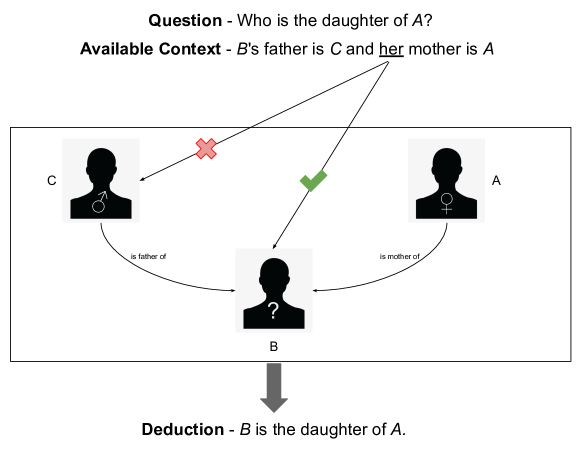
- 识别并解决MHQA中的关键挑战,包括推理链构建、常识知识整合与算术推理。
- 提出改进的评估指标,以兼顾语义相似性、同义词与部分正确性,超越严格的词面匹配。
- 强调生成式MHQA与难度可控的问题生成在支持课程学习与实际应用中的必要性。
提出的方法
- 将MHQA正式定义为一项需在多个上下文(文本、表格、知识图谱)中进行多步推理以推导答案的任务。
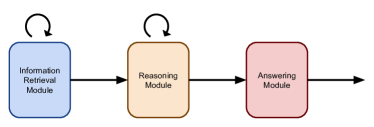
- 根据知识源(如维基百科、知识图谱、表格)与推理类型(如思维链、证据检索)对MHQA框架进行分类。
- 提出推理链的分类体系,区分多跳推理中显式与隐式的中间步骤。
- 推荐按步骤评估策略,以提升模型可解释性并支持细粒度性能分析。
- 提出基于语义的评估指标,如Word Mover’s Distance与Sentence Mover’s Similarity,以处理同义词与部分正确性。
- 主张整合外部知识库(如ConceptNet、WordNet)以增强常识推理,并减少因背景知识缺失导致的模型失效。
实验结果
研究问题
- RQ1何种正式且通用的定义可统一多样化的MHQA任务变体?
- RQ2现有MHQA框架在知识源、推理机制与评估协议方面有何差异?
- RQ3当前MHQA模型的主要失效模式为何?如何通过更优的训练数据与知识整合加以缓解?
- RQ4如何改进评估指标,以兼顾语义相似性与部分正确性,而非仅依赖精确的词面匹配?
- RQ5生成式MHQA与难度可控的问题生成在推动鲁棒、可解释NLP系统方面可发挥何种作用?
主要发现
- 当前MHQA模型常因缺少常识知识而失效,一项研究显示其中16%的失败归因于此类问题。
- 基于词面匹配的评估指标常惩罚语义正确但词面不同的答案(如'U.S.'与'United States'),降低评估可靠性。
- 在WikiHop等数据集中,对地理或时间上接近的答案(如'December 1988'与'January 1989')实施部分评分是实现稳健评估的必要措施。
- 语义匹配技术(如Word Mover’s Distance与Sentence Mover’s Similarity)在提升答案评估效果方面展现出潜力,能捕捉语义而非仅表面形式。
- 算术推理仍是主要挑战,HotpotQA中45%的对比问题为数值型,模型在日期比较或时间计算上常出现失败。
- 针对特定问题类型(如时间型、地理型与计数型)进行针对性优化,可显著提升整体MHQA性能。
阅读本论文
在 Nubint 阅读器中打开原文,边读边就任意段落提问。
在 Nubint 中阅读本论文本解读由 AI 根据论文原文生成,引用前请核对原文。