
[论文解读] Multilingual Holistic Bias: Extending Descriptors and Patterns to Unveil Demographic Biases in Languages at Scale
该论文提出了 MultilingualHolisticBias,即 HolisticBias 数据集的多语言扩展版本,涵盖 50 种语言和 13 个社会人口学维度,共包含 20,459 个句子,采用模板化句子结构和性别化翻译方法,量化机器翻译与多语言句子嵌入中的社会人口学偏见。主要发现显示,在 EN-to-XX 翻译中,男性指代的性能平均高出 8 spBLEU,而在 XX-to-EN 翻译中,男性输入也平均高出 4 spBLEU,表明模型行为中存在系统性性别偏见。
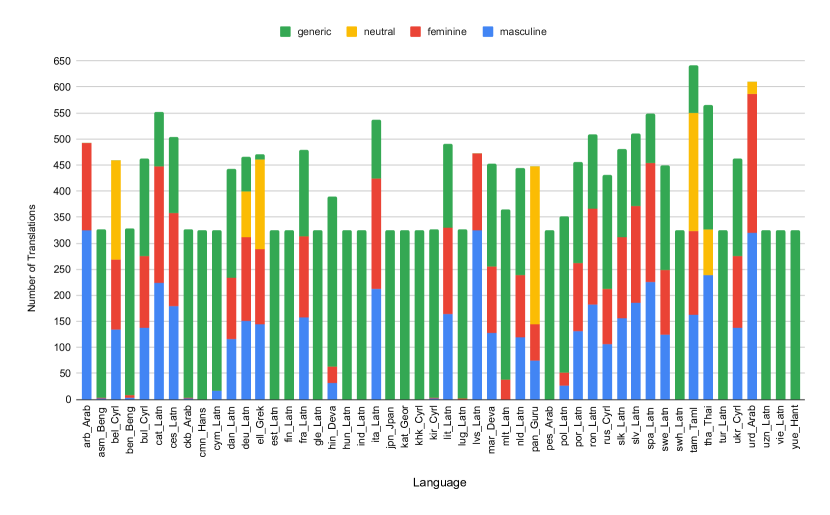
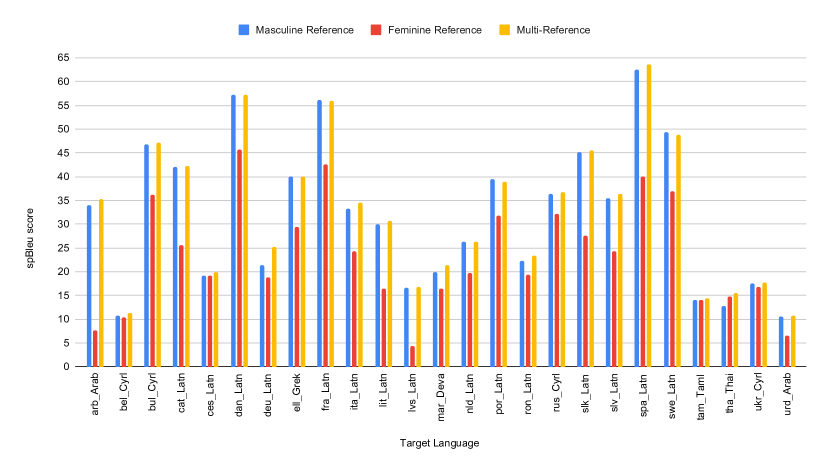
We introduce a multilingual extension of the HOLISTICBIAS dataset, the largest English template-based taxonomy of textual people references: MULTILINGUALHOLISTICBIAS. This extension consists of 20,459 sentences in 50 languages distributed across all 13 demographic axes. Source sentences are built from combinations of 118 demographic descriptors and three patterns, excluding nonsensical combinations. Multilingual translations include alternatives for gendered languages that cover gendered translations when there is ambiguity in English. Our benchmark is intended to uncover demographic imbalances and be the tool to quantify mitigations towards them. Our initial findings show that translation quality for EN-to-XX translations is an average of 8 spBLEU better when evaluating with the masculine human reference compared to feminine. In the opposite direction, XX-to-EN, we compare the robustness of the model when the source input only differs in gender (masculine or feminine) and masculine translations are an average of almost 4 spBLEU better than feminine. When embedding sentences to a joint multilingual sentence representations space, we find that for most languages masculine translations are significantly closer to the English neutral sentences when embedded.
研究动机与目标
- 将 HolisticBias 数据集扩展至 50 种语言和 13 个社会人口学维度,以支持对自然语言处理中社会人口学偏见的大规模评估。
- 通过受控的模板化句子生成方法,量化多语言机器翻译系统中的性别偏见。
- 评估多语言句子表示(如 LaBSE)对翻译句子中性别差异的鲁棒性。
- 为评估和缓解高度多语言 NLP 模型中的社会人口学偏见提供标准化基准。
提出的方法
- 通过将 118 个社会人口学描述词和三个句子模板从英语翻译成 50 种语言构建数据集,尽可能保留性别区分。
- 由人工标注者使用英语源句进行翻译,对具有性别标记的语言分别提供男性和女性参考翻译。
- 通过模型输出与性别特定参考集(男性 vs. 女性)之间的 spBLEU 分数评估翻译质量。
- 使用 LaBSE 生成多语言句子嵌入,并计算英语中性句子与性别化翻译之间的余弦相似度,以评估偏见。
- 通过假设检验(p < 0.01)测试不同语言中嵌入相似度差异的统计显著性。
- 该数据集旨在支持在多种社会人口学维度上对机器翻译系统、句子表示和偏见缓解策略的评估。
实验结果
研究问题
- RQ1机器翻译是否在多种语言中系统性地偏好男性而非女性性别指代?
- RQ2当源语言中的输入句子具有性别差异(男性 vs. 女性)时,多语言翻译模型的性能如何变化?
- RQ3多语言句子嵌入在多大程度上能保持中性英语句子与其男性或女性翻译之间的语义相似性?
- RQ4是否存在某些社会人口学维度(如国籍、能力、宗教)中,基于性别描述符的翻译质量存在显著差异?
- RQ5语言中性别形态的存在如何影响翻译和嵌入模型中性别偏见的可检测性?
主要发现
- 在 EN-to-XX 翻译中,使用男性参考集评估时,性能平均比使用女性参考集高出 8 spBLEU。
- 在 XX-to-EN 翻译中,当源输入为男性时,性能平均提升近 4 spBLEU,表明模型在鲁棒性上存在性别偏见。
- 在大多数语言中,男性翻译与英语中性句子在多语言嵌入空间中的距离显著更近(p < 0.01),优于女性翻译。
- 在所有语言中,国籍维度的翻译质量最高,而文化维度的翻译质量最低。
- 在现代标准阿拉伯语、西班牙语、意大利语和俄语等语言中,嵌入中的性别偏见最为显著,男性与女性翻译之间的平均余弦距离差异最大达到 0.09。
- 该数据集揭示,性别偏见不仅限于性别本身,还延伸至其他维度,如社会经济地位,其中‘百万富翁’(one-percenter)表现出更强的男性刻板印象。
阅读本论文
在 Nubint 阅读器中打开原文,边读边就任意段落提问。
在 Nubint 中阅读本论文本解读由 AI 根据论文原文生成,引用前请核对原文。