
[论文解读] Multimodal Large Language Models: A Survey
定义多模态模型的综述,梳理历史发展、体系结构、数据集,以及构建和评估多模态大型语言模型的实用指南。
The exploration of multimodal language models integrates multiple data types, such as images, text, language, audio, and other heterogeneity. While the latest large language models excel in text-based tasks, they often struggle to understand and process other data types. Multimodal models address this limitation by combining various modalities, enabling a more comprehensive understanding of diverse data. This paper begins by defining the concept of multimodal and examining the historical development of multimodal algorithms. Furthermore, we introduce a range of multimodal products, focusing on the efforts of major technology companies. A practical guide is provided, offering insights into the technical aspects of multimodal models. Moreover, we present a compilation of the latest algorithms and commonly used datasets, providing researchers with valuable resources for experimentation and evaluation. Lastly, we explore the applications of multimodal models and discuss the challenges associated with their development. By addressing these aspects, this paper aims to facilitate a deeper understanding of multimodal models and their potential in various domains.
研究动机与目标
- 定义多模态模型并将其置于多模态研究的历史中。
- 总结多模态LLM的关键架构模式、学习目标与信息融合技术。
- 提供有关知识表示、提示和评估数据集等技术方面的实用指南。
- 回顾当前的数据集、算法,以及来自工业界和学术界的知名模型。
- 讨论应用与挑战,以指导多模态AI的未来研究。
提出的方法
- 定义多模态概念并将同质模态与异质模态分类。
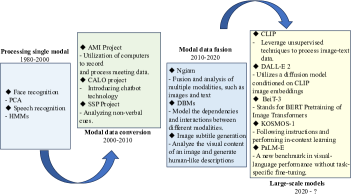
- 概述多模态研究的历史阶段(单一模态、模态转换、融合、大规模模型)。
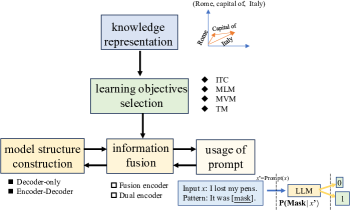
- 提供涵盖知识表示、学习目标、模型构建、信息融合与提示的实用指南。
- 回顾基础和大规模多模态预训练模型及其架构(仅编码器 vs 编码器-解码器)。
- 描述信息融合策略(融合编码器 vs 双编码器)及对推理与检索的影响。
- 以表格形式总结知名模型和开源实现。
实验结果
研究问题
- RQ1是什么定义了多模态模型,它们在历史上如何演变?
- RQ2为构建多模态LLMs,核心技术考虑因素有哪些(表示、目标、融合、提示)?
- RQ3不同的模型架构(仅编码器 vs 编码器-解码器)在各种多模态任务中的比较如何?
- RQ4哪些数据集和算法推动当前多模态模型的开发与评估?
- RQ5哪些应用和挑战影响跨领域部署多模态LLMs?
主要发现
- 多模态模型整合多种数据类型(图像、文本、音频),以克服纯文本LLM的局限。
- 从单一模态到模态转换、融合以及大规模多模态预训练的历史演进路径清晰。
- 学习目标的组合(例如 MLM、ITC、MVM、TM)通常会提升性能,但目标太多可能适得其反。
- 编码器仅模型在检索任务上表现出色,编码器-解码器模型在生成任务上表现优越;融合策略影响推理速度和能力。
- 最近的大型多模态模型(如 CLIP、BEiT-3、KOSMOS-1、PaLM-E)显示跨模态能力和视觉-语言对齐。
- 实际部署依赖提示管理和可扩展的视觉基础模型的模块化使用,以实现灵活的多步视觉推理。
阅读本论文
在 Nubint 阅读器中打开原文,边读边就任意段落提问。
在 Nubint 中阅读本论文本解读由 AI 根据论文原文生成,引用前请核对原文。