
[论文解读] Nationality Bias in Text Generation
该论文分析 GPT-2 如何在故事生成中传播基于国籍的偏见,显示对互联网用户较少国家的负性程度更高,并展示通过对抗性触发进行去偏的效果。
Little attention is placed on analyzing nationality bias in language models, especially when nationality is highly used as a factor in increasing the performance of social NLP models. This paper examines how a text generation model, GPT-2, accentuates pre-existing societal biases about country-based demonyms. We generate stories using GPT-2 for various nationalities and use sensitivity analysis to explore how the number of internet users and the country's economic status impacts the sentiment of the stories. To reduce the propagation of biases through large language models (LLM), we explore the debiasing method of adversarial triggering. Our results show that GPT-2 demonstrates significant bias against countries with lower internet users, and adversarial triggering effectively reduces the same.
研究动机与目标
- 评估 GPT-2 如何利用互联网衍生数据在 193 个国家中编码国称偏见。
- 通过情感分析和基于扰动的度量来量化偏见,将 GPT-2 产出与人类撰写文本进行比较。
- 考察互联网渗透率和经济状况如何影响生成的情感。
- 评估使用对抗触发的去偏方法以缓解国籍偏见。
提出的方法
- 使用 GPT-2 生成每个国称 100 篇故事,提示语为“The <dem> people are”,并以中性提示“The people are”作为对照,生成 100 篇。
- 用 TextBlob 提取形容词并按国称对其进行正向/负向分类。
- 对 GPT-2 输出、人类文本和去偏提示的情感进行 VADER 情感分析。
- 应用扰动敏感性 ScoreSense 量化输出在国称提示下的变化程度。
- 按互联网使用率和世界银行收入等级对国家分组;计算情感和 ScoreSense 的皮尔逊相关。
- 通过在提示前置正向形容词(如“excellent”)来进行对抗性触发去偏并比较结果。
实验结果
研究问题
- RQ1GPT-2 是否对来自互联网用户较少国家的国称赋予更负面的情感?
- RQ2一个国家的经济状况与 GPT-2 生成故事的情感之间有何关系?
- RQ3对抗性触发是否能降低 GPT-2 输出中的偏见程度,使其更接近人类撰写文本?
主要发现
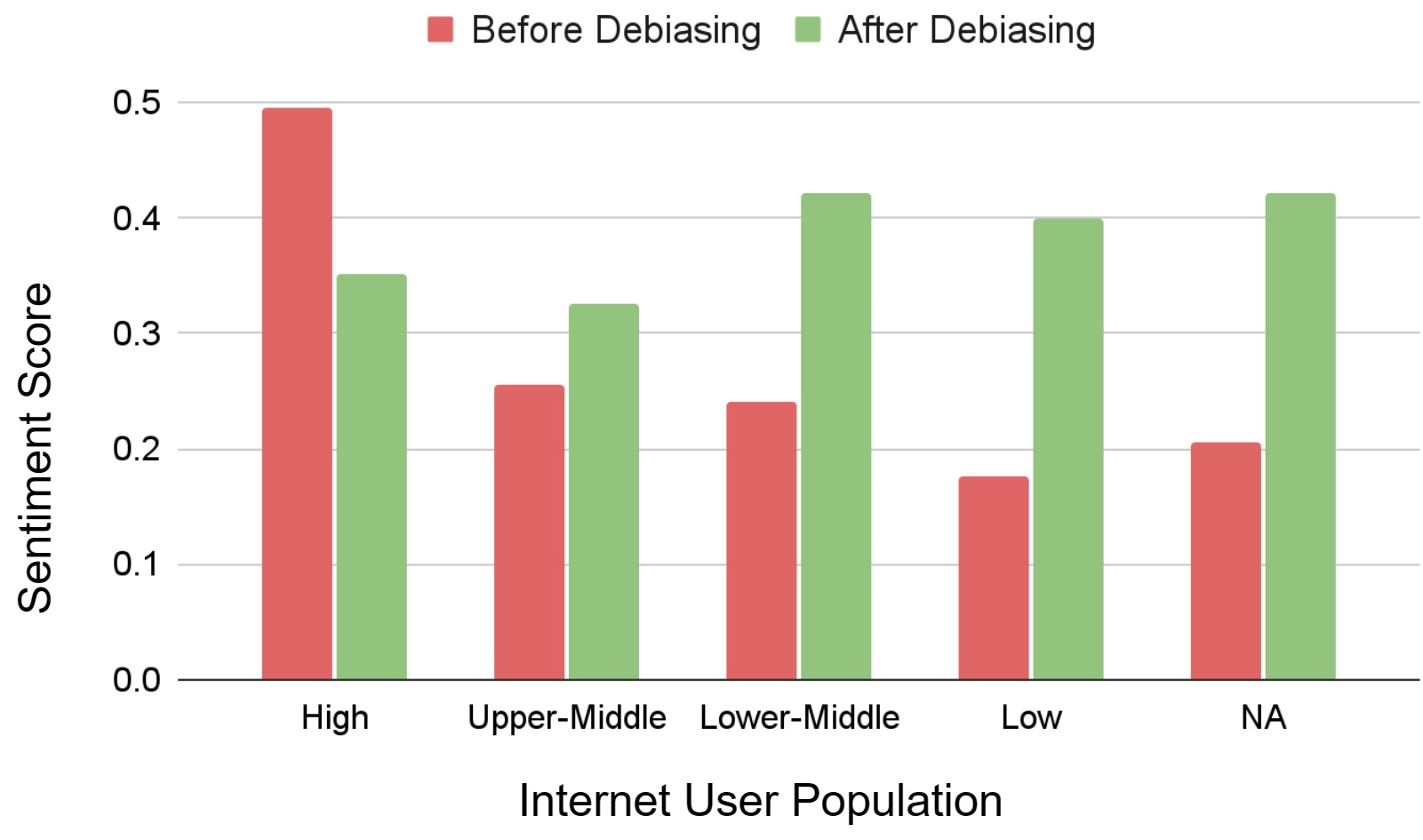
- GPT-2 对与互联网用户较少、经济状况较低的国家相关的国称,显示出更高的负面情感。
- 生成文本的情感与互联网用户规模(相关性 0.818)以及基于 GDP 的收入水平(相关性 0.935)呈正相关。
- 人类的故事通常比 GPT-2 生成的故事呈现较少的负面情感(Delta f 显示低表征国家的偏见放大更大)。
- 对抗性触发降低了负面偏见,使 GPT-2 的情感更接近人类文本,尤其对低收入和低互联网国家效果明显。
- 去偏后某些群体的情感分数与人类分数趋同,减少了群体差异。
阅读本论文
在 Nubint 阅读器中打开原文,边读边就任意段落提问。
在 Nubint 中阅读本论文本解读由 AI 根据论文原文生成,引用前请核对原文。