
[论文解读] NatSGD: A Dataset with Speech, Gestures, and Demonstrations for Robot Learning in Natural Human-Robot Interaction
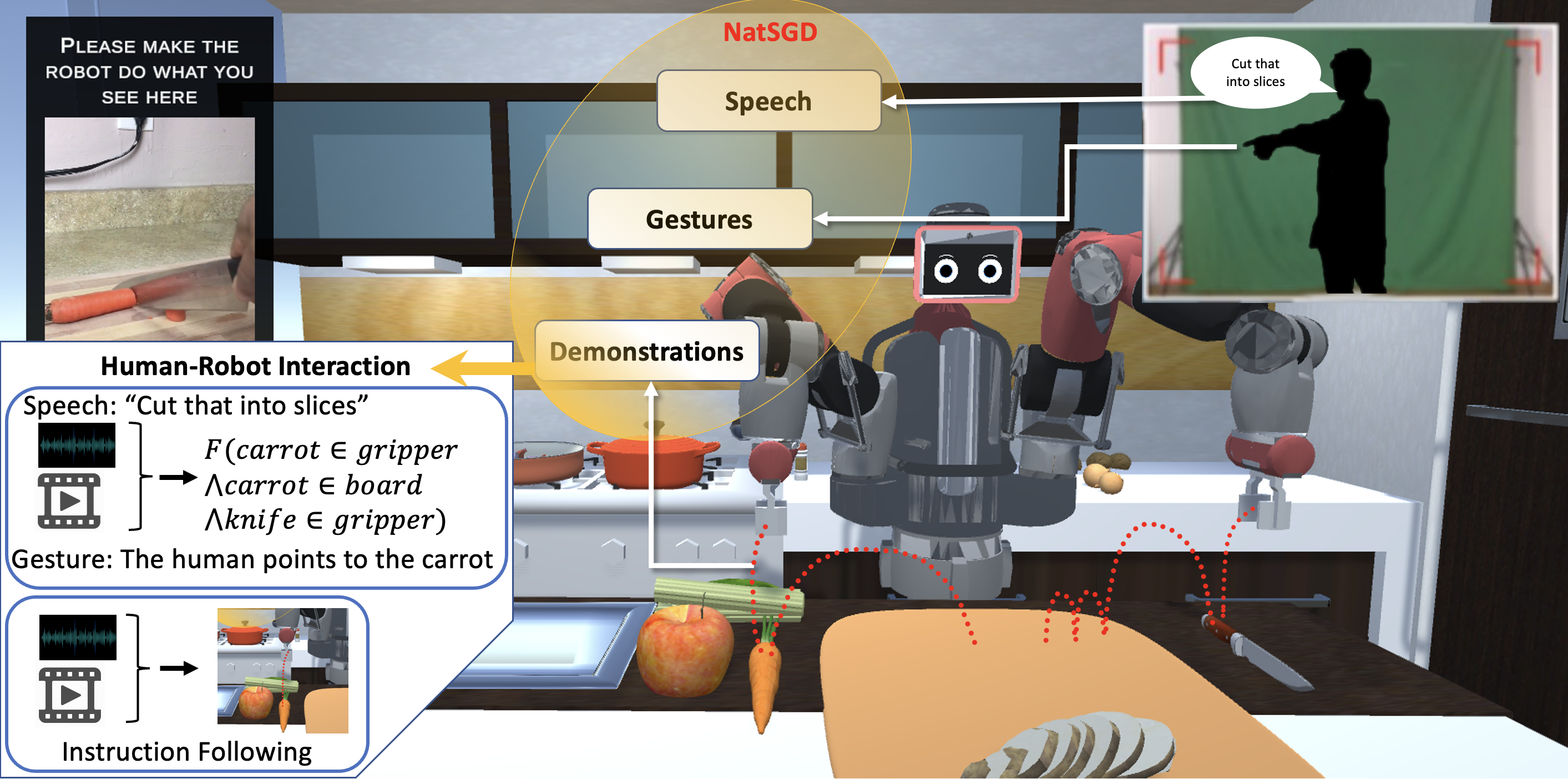
NatSGD 引入了一个新颖的多模态人机交互(HRI)数据集,结合了自然语言、手势和机器人示范轨迹,用于复杂日常任务(如烹饪和清洁)。该数据集使机器人能够通过同步的专家示范学习联合语音-手势指令,显著提升了对任务的理解能力,相较于单模态输入表现更优。数据集配套提供了一个与ROS兼容的逼真仿真环境,适用于强化学习和仿真到现实的迁移研究。
Recent advancements in multimodal Human-Robot Interaction (HRI) datasets have highlighted the fusion of speech and gesture, expanding robots' capabilities to absorb explicit and implicit HRI insights. However, existing speech-gesture HRI datasets often focus on elementary tasks, like object pointing and pushing, revealing limitations in scaling to intricate domains and prioritizing human command data over robot behavior records. To bridge these gaps, we introduce NatSGD, a multimodal HRI dataset encompassing human commands through speech and gestures that are natural, synchronized with robot behavior demonstrations. NatSGD serves as a foundational resource at the intersection of machine learning and HRI research, and we demonstrate its effectiveness in training robots to understand tasks through multimodal human commands, emphasizing the significance of jointly considering speech and gestures. We have released our dataset, simulator, and code to facilitate future research in human-robot interaction system learning; access these resources at https://www.snehesh.com/natsgd/
研究动机与目标
- 为解决缺乏将自然语音、手势和机器人示范轨迹整合于复杂现实任务中的多模态HRI数据集的问题。
- 通过融合显性(语音)和隐性(手势)的人类沟通方式,使机器人能够学习复杂的任务,如烹饪和清洁。
- 提供一个丰富标注的数据集,包含同步的人类和机器人视角数据,涵盖任务子组件、参考对象、手势意图以及身体部位角色。
- 通过统一、可扩展且逼真的数据集与仿真环境,支持联合语音-手势理解系统的发展。
- 弥合以感知为中心的HRI数据集与人类-机器人协作中对任务复杂度感知、行为基础学习的需求之间的差距。
提出的方法
- 开展了一场Wizard-of-Oz实验,参与者与一个被感知为自主的人形机器人交互,通过自然语言和手势发出指令。
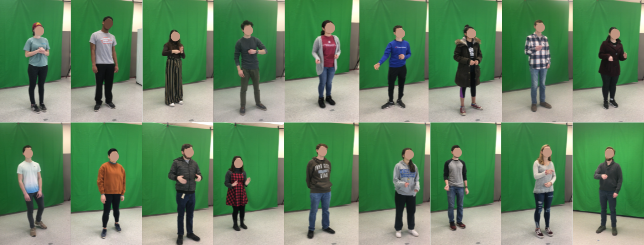
- 从18名参与者处收集了1143条人类指令,涵盖11项动作、20种物体和16种状态,每条指令均配有专家级机器人示范轨迹。
- 利用快速事件视频标注工具(FEVA)进行时间序列标注,标记语音、手势、子任务、参考对象(动作/物体)、手势意图(有意 vs. 无意)以及身体部位使用情况。
- 基于沟通意图对手势进行标注:任务导向型(有意)与非意图型(上下文相关),并将身体部位划分为六类:头部、躯干、左/右手、左/右腿。
- 集成一个具有ROS接口的逼真仿真环境,支持强化学习与仿真到现实的迁移,实现可扩展的训练与评估。
- 提供来自人类和机器人第一视角的同步数据,包括深度图像、物体语义分割结果,以及末端执行器、头部和基座的轨迹。
实验结果
研究问题
- RQ1与单独使用任一模态相比,机器人通过联合处理语音和手势是否能实现更优的任务理解?
- RQ2如何系统性地标注手势意图(有意 vs. 无意)与身体部位使用情况,以支持HRI中的机器学习?
- RQ3在烹饪和清洁等复杂多步骤任务中,引入专家示范轨迹在多大程度上提升了学习效果?
- RQ4如何通过统一的多模态数据集与同步的人类和机器人视角,实现更鲁棒且泛化能力更强的HRI策略学习?
- RQ5上下文相关的非意图手势和副语言特征在人机任务理解中扮演何种角色?它们又该如何建模?
主要发现
- NatSGD是首个将自然语音、手势与同步机器人示范轨迹整合于复杂日常任务(如食物准备和清洁)的多模态数据集。
- 语音与手势的融合显著提升了机器人对任务的理解能力,相较于单模态方法,充分体现了多模态融合的价值。
- 手势标注能够区分有意(任务相关)与非意图(上下文相关)手势,减少歧义并提升模型泛化能力。
- 数据集包含对子任务、物体与动作参考、身体部位角色的详细时间序列标注,支持细粒度的任务表征学习。
- 具备ROS接口的逼真仿真环境支持高效训练与仿真到现实的迁移,加速HRI系统开发。
- 该数据集在轨迹级(示范)与符号级(真实活动)均提供丰富的监督信号,显著增强策略学习与可解释性。
阅读本论文
在 Nubint 阅读器中打开原文,边读边就任意段落提问。
在 Nubint 中阅读本论文本解读由 AI 根据论文原文生成,引用前请核对原文。