
[论文解读] Neural Architecture Search using Particle Swarm and Ant Colony Optimization
本论文将 PSO 和 ACO 作为群体智能方法在 OpenNAS 中进行比较,以自动生成用于图像分类的 CNN 架构,结果发现 PSO 通常在 CIFAR-10 和 Fashion-MNIST 数据集上比 ACO 获得更高的准确率。
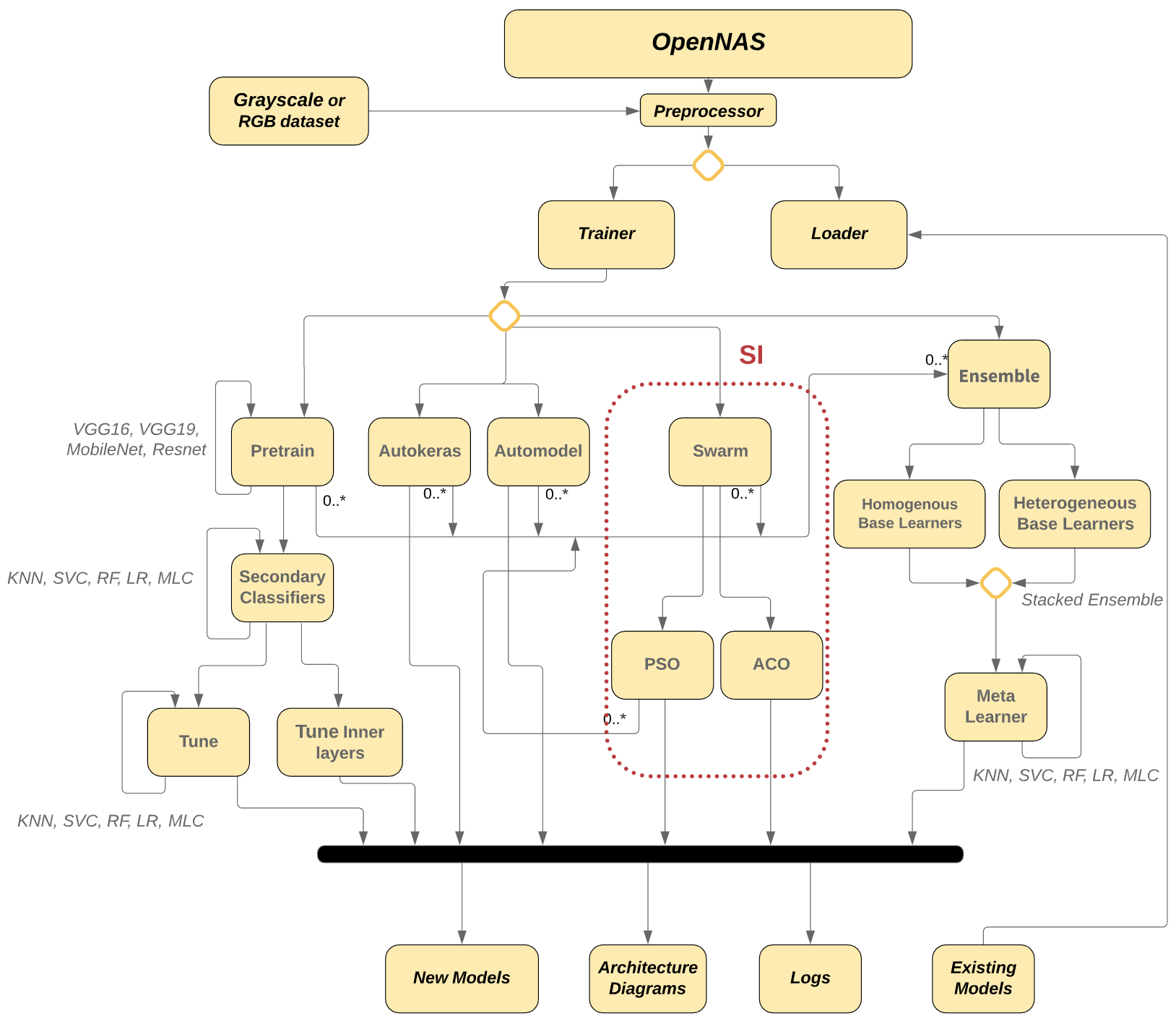
Neural network models have a number of hyperparameters that must be chosen along with their architecture. This can be a heavy burden on a novice user, choosing which architecture and what values to assign to parameters. In most cases, default hyperparameters and architectures are used. Significant improvements to model accuracy can be achieved through the evaluation of multiple architectures. A process known as Neural Architecture Search (NAS) may be applied to automatically evaluate a large number of such architectures. A system integrating open source tools for Neural Architecture Search (OpenNAS), in the classification of images, has been developed as part of this research. OpenNAS takes any dataset of grayscale, or RBG images, and generates Convolutional Neural Network (CNN) architectures based on a range of metaheuristics using either an AutoKeras, a transfer learning or a Swarm Intelligence (SI) approach. Particle Swarm Optimization (PSO) and Ant Colony Optimization (ACO) are used as the SI algorithms. Furthermore, models developed through such metaheuristics may be combined using stacking ensembles. In the context of this paper, we focus on training and optimizing CNNs using the Swarm Intelligence (SI) components of OpenNAS. Two major types of SI algorithms, namely PSO and ACO, are compared to see which is more effective in generating higher model accuracies. It is shown, with our experimental design, that the PSO algorithm performs better than ACO. The performance improvement of PSO is most notable with a more complex dataset. As a baseline, the performance of fine-tuned pre-trained models is also evaluated.
研究动机与目标
- 自动化 CNN 架构搜索以减少手动超参数调优和试错设计。
- 在 OpenNAS 框架中评估群体智能方法(PSO 和 ACO)用于图像分类。
- 在标准数据集(CIFAR-10、Fashion-MNIST)对比微调的预训练模型的性能。
- 提供可配置的 OpenNAS 流水线,整合迁移学习与集成技术。
- 提供关于群体设置如何影响模型准确性与训练时间的指导。
提出的方法
- OpenNAS 系统整合 PSO 与 ACO 作为搜索策略以生成 CNN 架构。
- PSO 与 ACO 的配置定义层类型、超参数与搜索深度以探索架构空间。
- 针对固定轮数训练模型,并使用交叉熵损失评估适应度。
- 实验使用灰度/彩色图像数据集(CIFAR-10 和 Fashion-MNIST),并与预训练基线进行比较。
- 在 OpenNAS 框架内使用微调与迁移学习作为互补方法。
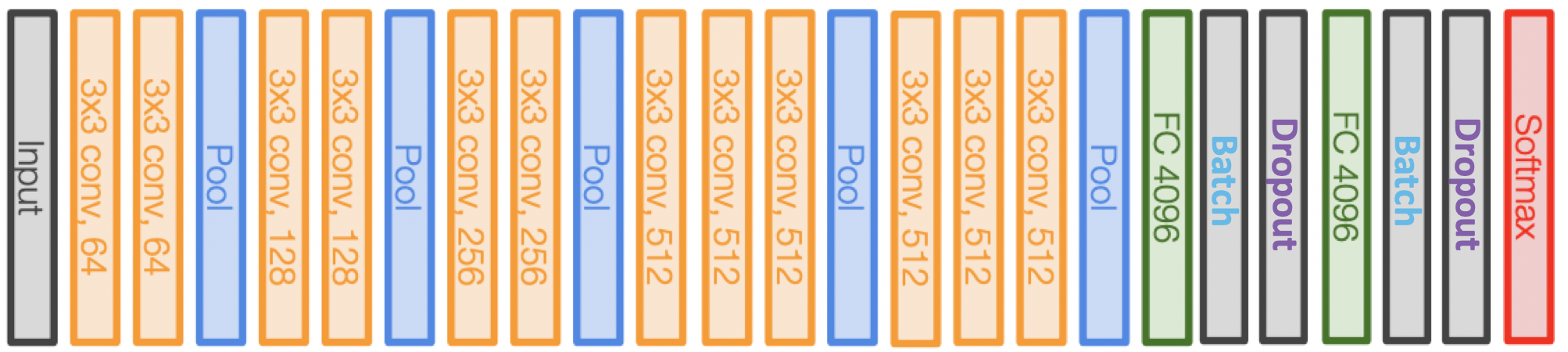
- 环境使用基于 Python 的库(psoCNN、DeepSwarm、AutoKeras)和标准 DL 框架(TensorFlow、Keras)。
实验结果
研究问题
- RQ1PSO 生成的 CNN 架构在 NAS 任务中是否能达到比 ACO 生成的架构更高的分类准确率?
- RQ2在 CIFAR-10 和 Fashion-MNIST 数据集上,PSO 与 ACO 在准确性、可重复性(StDev)和运行时间方面的比较如何?
- RQ3群体设置(种群、迭代/轮次、深度)对模型性能和训练时间有何影响?
- RQ4使用 SI 方法的 OpenNAS 与微调的预训练网络以及现有的 NAS 方法如 DeepSwarm 相比的表现如何?
- RQ5OpenNAS 的集成/迁移学习组件是否能与基于 SI 的搜索互补,从而改进结果?
主要发现
- PSO 获得的模型在所测试的数据集上通常具有比 ACO 获得的模型更高的平均准确率。
- 在 CIFAR-10 上,PSO 的平均准确率约为 85.3%,而 ACO 为 82.2%,在所报道的配置下。
- 在 Fashion-MNIST 上,PSO 和 ACO 的准确率均超过 93%,其中 PSO 常显示出微小的优势。
- PSO 的结果在更复杂数据(CIFAR-10)上显示出更高的准确率提升,相较于 Fashion-MNIST。
- ACO 的结果显示增加蚂蚁数量可以适度提高准确率,但会显著增加运行时间,因此配置至关重要。
- OpenNAS 基于 PSO 的模型在准确性方面与 DeepSwarm 相当或优于,且与某些预训练基线相当甚至更好。
阅读本论文
在 Nubint 阅读器中打开原文,边读边就任意段落提问。
在 Nubint 中阅读本论文本解读由 AI 根据论文原文生成,引用前请核对原文。