
[论文解读] Non-metricity with bounday terms: $f(Q,C)$ gravity and cosmology
本文通过在作用量中将边界项 C 与非度量张量标量 Q 一起引入,公式化对称平行几何中的 f(Q,C) 引力,推导一般场方程,并对三种连接类型的 FRW 宇宙学进行研究,得到几何暗能量成分以及可能的物质–暗能量相互作用,在特定模型中甚至出现 phantom-divide 穿越。
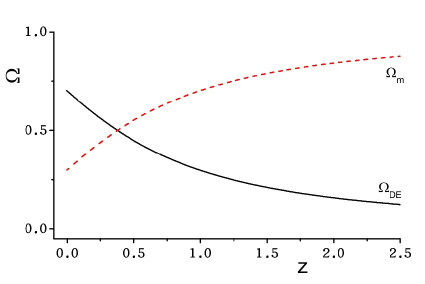
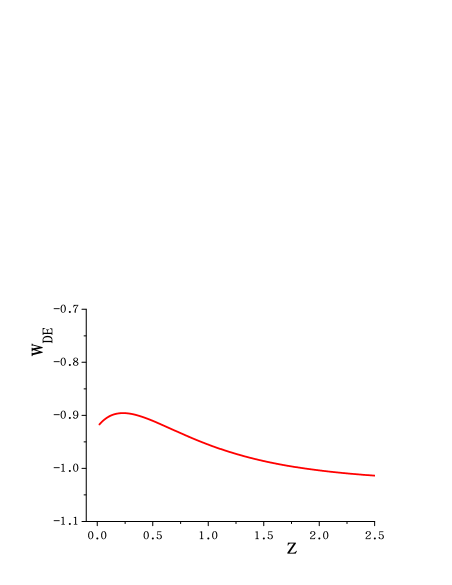
We formulate $f(Q,C)$ gravity and cosmology. Such a construction is based on the symmetric teleparallel geometry, but apart form the non-metricity scalar $Q$ we incorporate in the Lagrangian the boundary term $C$ of its difference form the standard Levi-Civita Ricci scalar $\mathring R$. We extract the general metric and affine connection field equations, we apply them at a cosmological framework, and adopting three different types of symmetric teleparallel affine connections we obtain the modified Friedmann equations. As we show, we acquire an effective dark-energy sector of geometrical origin, which can lead to interesting cosmological phenomenology. Additionally, we may obtain an effective interaction between matter and dark energy. Finally, examining a specific model, we show that we can obtain the usual thermal history of the universe, with the sequence of matter and dark-energy epochs, while the effective dark-energy equation-of-state parameter can be quintessence-like, phantom-like, or cross the phantom-divide during evolution.
研究动机与目标
- 通过在拉格朗日量中同时引入边界项 C 与 Q,介绍并动机化 f(Q,C) 引力。
- 推导对称平行几何中的度量场方程和联(仿射)连接场方程。
- 将理论应用于宇宙学,得到三种对称平行连接下的改正 Friedmann 方程。
- 识别有效的几何暗能量成分及可能的物质–暗能量相互作用。
- 演示一个特定模型,呈现标准宇宙历史并实现 phantom-divide 穿越。
提出的方法
- 提出作用量 S = ∫ (1/2κ) f(Q,C) √(-g) d^4x,进行变分以得到场方程(度量和连接)。
- 在对称平行设定下计算 Q 与 C,推导协变度量场方程(包含 f_Q 与 f_C 项)。
- 定义有效应力–能量张量 T^{eff}_{μν},并展示在 f(Q,C) 引力中通常的爱因斯坦张量与 T^{eff} 的关系。
- 对 FRW 情况进行三种对称平行连接的特殊化,推导相应的 Friedmann 方程(在上下文中为 3.7–3.12)。
- 给出各连接类型的有效暗能量密度与压强 ρ_DE, p_DE 的显式表达式(式(4.10–4.11)、(4.20–4.21)、(4.28–4.29))。
- 通过连接场方程(式(3.17–3.20)、(4.22)、(4.30))讨论能量守恒与可能的物质–暗能量交换。
实验结果
研究问题
- RQ1在 Q 基引力中加入边界项 C 如何改变与 f(Q) 或 f(R) 基理论相比的宇宙动力学?
- RQ2在 FRW 时空下三种对称平行连接所得到的 Friedmann 方程及宇宙学表观有什么?
- RQ3f(Q,C) 引力是否能产生有效的几何暗能量成分并允许与物质相互作用?
- RQ4在什么条件下有效暗能量方程状态方程可以穿过 phantom divide(w_DE = -1)?
主要发现
- f(Q,C) 引力在 FRW 宇宙学中产生有效的几何暗能量成分。
- 对于连接类型 I,Friedmann 方程获得的 ρ_DE 与 p_DE 由式(4.10)–(4.11)给出。
- 连接类型 II 通过 γ 相关项在连续性方程(4.22)中引入有效的相互作用。
- 连接类型 III 产生不同但相关的 ρ_DE, p_DE 结构(4.28–4.29)以及相应的相互作用项(4.30)。
- 一个与类型 II 相关、γ(t) = γ0/a^3(t) 的具体例子给出标准宇宙历史,并使 w_DE 可呈现类暗能量、类拟瞬、或穿越 phantom divide(见图 1–2)。
阅读本论文
在 Nubint 阅读器中打开原文,边读边就任意段落提问。
在 Nubint 中阅读本论文本解读由 AI 根据论文原文生成,引用前请核对原文。