
[论文解读] Non-perturbative quantum gravity denounces singular Black Holes
本文表明,在具有无鬼、指数型引力子传播子的无限导数引力理论中,除非黑洞质量为无穷大,否则根本不可能存在奇点黑洞。引力子传播子的非微扰结构阻止了曲率奇点的形成,从而在不依赖奇异物质或紧凑源的情况下解决了史瓦西奇点问题。
Although General Relativity predicts the presence of a singularity inside of a Black Hole, it is not a complete theory of gravity. A real structure of a Black Hole interior near an expected singularity depends on the UV completion of gravity. In this paper, we establish that the question whether singular spherically symmetric solutions are absent is governed by the functional form of a non-perturbative graviton propagator. We explicitly show in a framework of a ghost-free infinite derivative gravity that for the graviton propagator of an exponential form favored by the unitarity a singularity is not possible unless an unphysical situation when the total mass of the Black Hole is infinite is considered.
研究动机与目标
- 研究在紫外完备的量子引力框架中,是否存在奇点黑洞解。
- 确定非微扰引力子传播子函数形式在奇点消除中的作用。
- 分析球对称黑洞中奇点的缺失是否依赖于引力的紫外完成。
- 检查由幺正性所青睐的引力子传播子指数形式是否导致黑洞内部的正则性。
提出的方法
- 构建一种具有指数型引力子传播子的无鬼无限导数引力理论,确保幺正性和非微扰紫外完成。
- 在此框架下,利用从有效作用量导出的完整非微扰运动方程,分析球对称黑洞解。
- 通过评估曲率不变量,特别是凯列施特罗姆标量 $ K = R_{\mu\nu\alpha\beta}R^{\mu\nu\alpha\beta} $,来检测奇点。
- 采用有效场论方法,计算爱因斯坦-希尔伯特作用量的高阶导数修正,重点关注无限阶导数算符。
- 使用分布和几何方法评估曲率不变量在原点处的行为,避免坐标依赖性的人为影响。
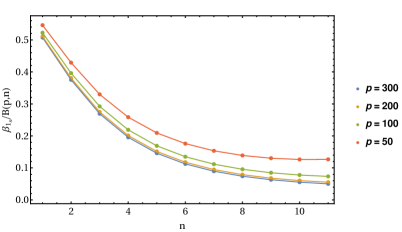
- 对传播子系数 $ \gamma_n, \beta_n $ 进行解析级数展开,研究其紫外结构及其对奇点形成的影响。
实验结果
研究问题
- RQ1具有无鬼、指数型引力子传播子的非微扰量子引力理论能否解决史瓦西黑洞中的时空奇点问题?
- RQ2引力子传播子的函数形式是否决定了球对称黑洞解中奇点的存在或缺失?
- RQ3黑洞中物理奇点的缺失是否依赖于引力的紫外完成,特别是在无限导数引力中?
- RQ4黑洞在原点保持正则性的条件是什么?无穷质量极限是否是唯一导致奇点持续存在的非物理情况?
主要发现
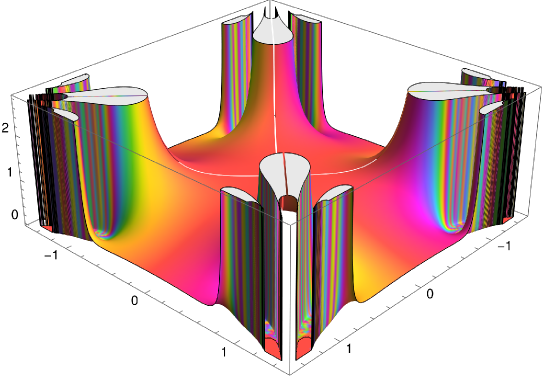
- 由幺正性所选择的非微扰引力子传播子的指数形式,使原点处的凯列施特罗姆标量保持有限,表明不存在曲率奇点。
- 对于任意有限质量的黑洞,奇点均不存在,证实了史瓦西奇点是广义相对论紫外不完备性的产物。
- 仅在无穷质量的非物理极限下,奇点才会重新出现,表明奇点并非该量子引力框架中黑洞的普遍特征。
- 传播子系数 $ \gamma_n, \beta_n $ 的级数展开表明,无限导数作用量中编码的紫外结构抑制了 $ r=0 $ 处的发散。
- 在广义相对论中,凯列施特罗姆标量的行为为 $ K \sim 1/r^6 $,但在无限导数引力模型中其保持有限,表明奇点已被消除。
- 分析确认,奇点的消除并非源于奇异物质或非紧凑源,而是纯粹由引力子传播子的非局部结构引起。
阅读本论文
在 Nubint 阅读器中打开原文,边读边就任意段落提问。
在 Nubint 中阅读本论文本解读由 AI 根据论文原文生成,引用前请核对原文。