
[论文解读] On the effect of the luni-solar gravitational attraction on trees
本研究证明,月球-太阳引力潮汐驱动树木的汁液流动,其证据来自黑杨、橡树和山毛榉树木中电学信号的分析,这些信号可分解为七个精确的潮汐周期(如P1、K1、S1、Mf、K2),与理论值的偏差小于0.01%。树木中的电渗系数(10 V/Pa)比岩石高出十倍,表明树木对潮汐力极为敏感,生理差异仅影响振幅调制,而不改变周期,从而证实潮汐力是驱动汁液流动的关键因素。
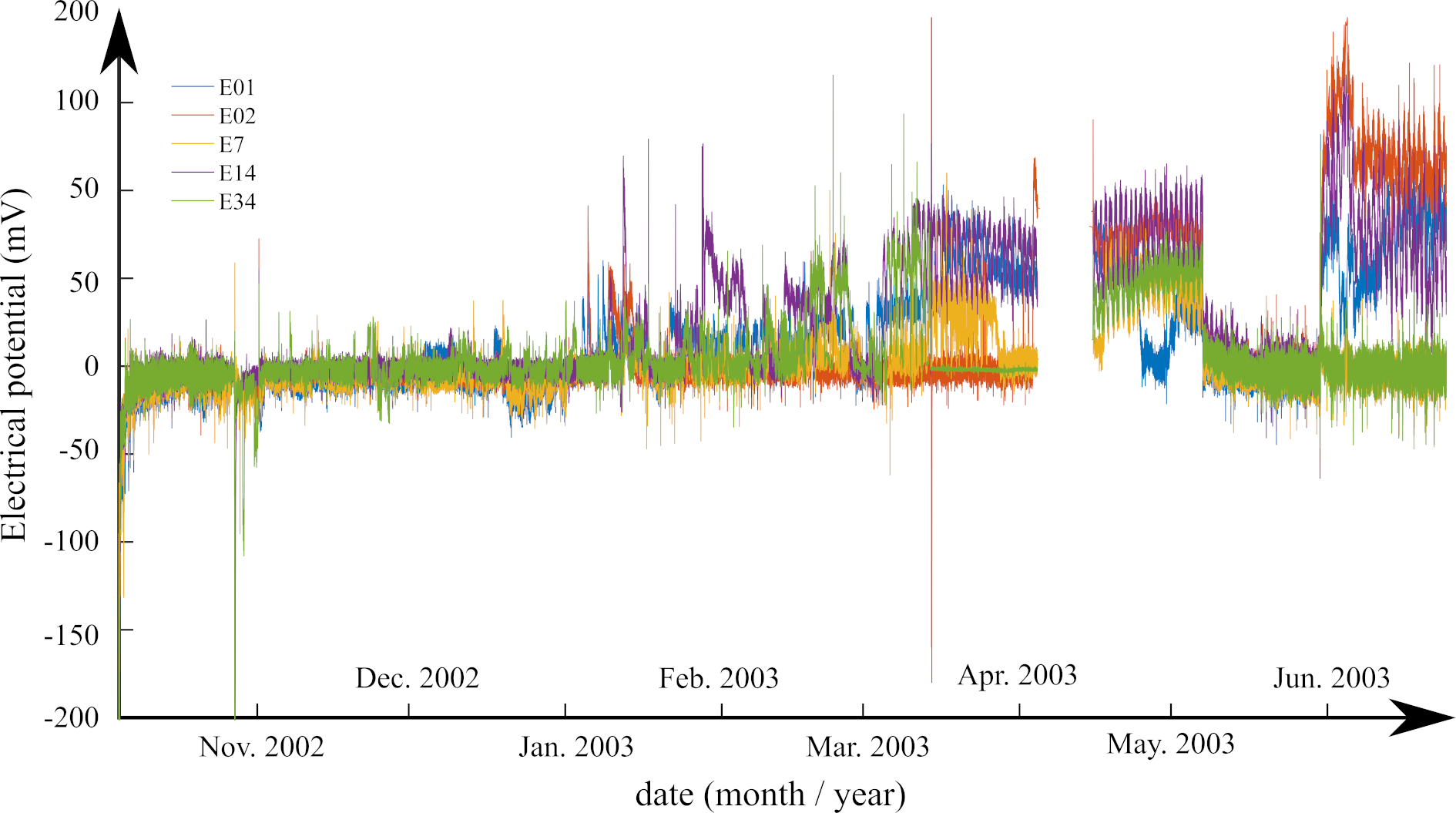
In this paper, we revisit old electrical measurements conducted on a poplar tree in 2003 (Gibert et al. 2006), which showed the presence of a diurnal electrical signal, attributed to an electrokinetic phenomenon correlated with sap flow, even in winter. We reanalyze these data using the singular spectrum analysis method and demonstrate that the electrical signal measured at various locations (roots, trunk, and branches) on the poplar tree can be decomposed to over 80\% into a sum of 7 pseudo-periods, all linked to luni-solar tides. The precision of the extracted periods exceeds that of models. To validate these old measurements, we have reproduced the 2003 protocol since 2018 at the Jardin des Plantes in Paris, on 3 oak trees and 3 hornbeams. The electrical signals today exhibit the same characteristics as those of 2003. Tidal forces could be a driving force of sap flow in trees.
研究动机与目标
- 通过重新分析历史电学测量数据,研究月球-太阳引力潮汐是否影响树木的汁液流动。
- 利用现代数据和方法验证2003年黑杨树实验的结果。
- 确定电学信号中的潮汐分量在多个树种和个体中是否一致。
- 评估树木的生理差异是否影响潮汐信号的调制,而不改变潮汐周期。
- 通过木质部中的电渗现象,建立潮汐力与汁液运动之间的因果关系。
提出的方法
- 使用奇异谱分析(SSA)重新分析2003年黑杨树的电学测量数据,以提取周期性分量。
- 应用SSA将非平稳、不连续的电学信号分解为伪周期性分量,避免傅里叶变换的局限性。
- 将提取出的周期与理论上的月球-太阳潮汐周期(P1、K1、S1、Mf、K2)进行比较,以评估精度和匹配度。
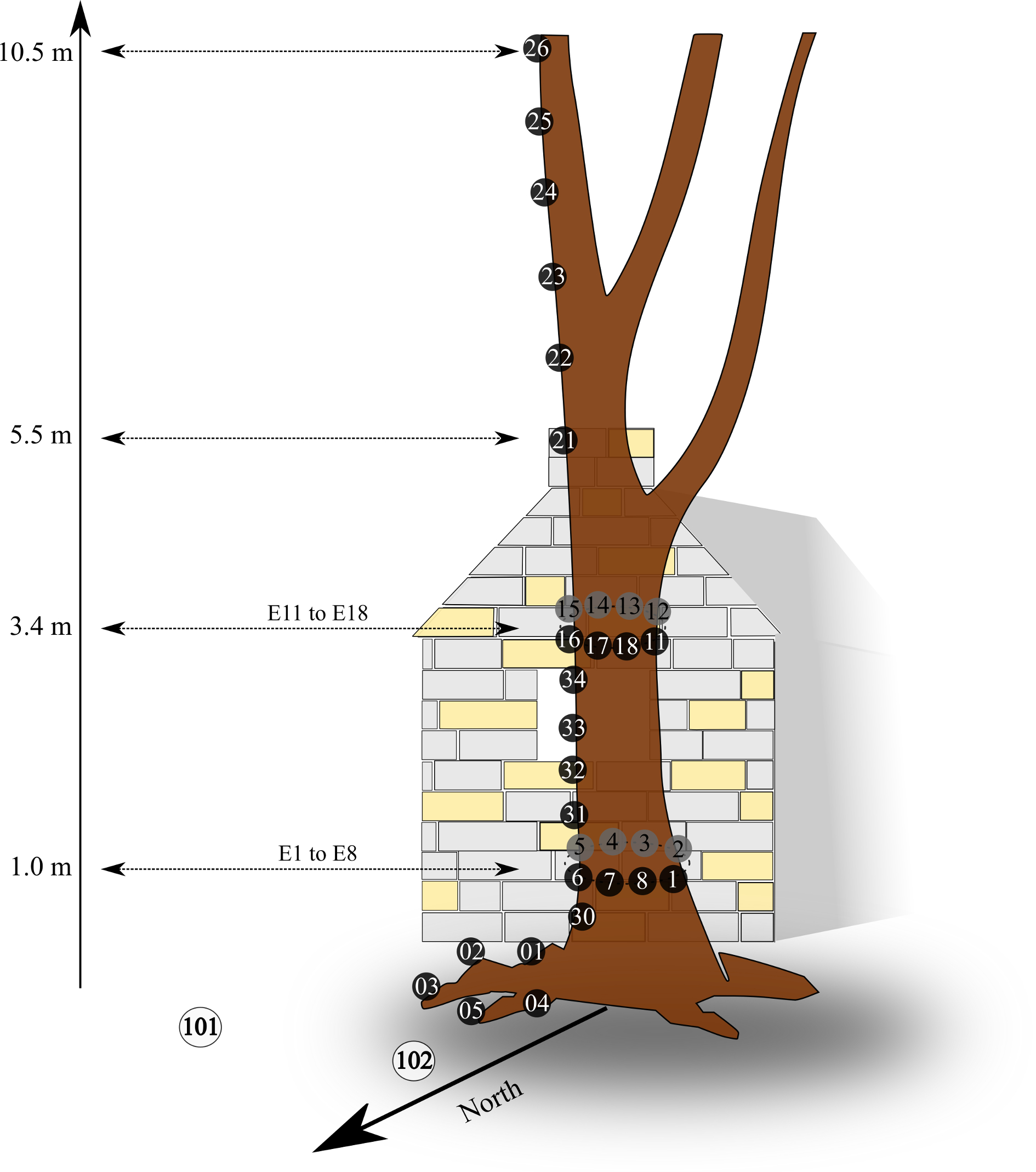
- 自2018年起在巴黎国家自然博物馆(MNHN)观测站重复2003年的实验协议,测量3株橡树、3株山毛榉及其他树种的电势。
- 在土壤中使用非极化电极,在根部、树干和枝条中使用不锈钢电极记录信号。
- 基于适配木质部结构的地球物理模型,计算树木中的电渗系数,并与岩石中的值进行比较。
实验结果
研究问题
- RQ1树木中的电学信号是否包含与月球-太阳潮汐周期高度一致的周期性分量?
- RQ2潮汐对汁液流动的影响在不同树种和个体中是否一致?
- RQ3树木的生理差异如何影响电学信号中潮汐分量的振幅和相位?
- RQ4能否量化树木中的电渗系数,其值与岩石中的相比如何?
- RQ5观察到的树木潮汐信号是否可作为汁液流动的代理指标,且在蒸腾作用较低的冬季是否仍持续存在?
主要发现
- 雷蒙戈尔黑杨树的电学信号被分解为七个伪周期性分量,全部与月球-太阳潮汐周期匹配,精度达0.01%。
- 提取出的潮汐分量总和占电学信号总方差的80%以上。
- 黑杨树的电渗系数估计为10 V/Pa,比岩石中的典型值高出十倍,这归因于木质部结构中缺乏迂曲性。
- 自2018年起在MNHN观测站对三株橡树和三株山毛榉树的重复测量显示相同的信号特征,证实了可重复性。
- 不同树种和个体之间的昼夜潮汐分量(如K1、S1)完全同相,表明存在共同的外部驱动机制。
- 不同树体部位和个体之间的潮汐分量振幅调制存在显著差异,表明存在生理调制,但潮汐周期保持不变。
阅读本论文
在 Nubint 阅读器中打开原文,边读边就任意段落提问。
在 Nubint 中阅读本论文本解读由 AI 根据论文原文生成,引用前请核对原文。