
[论文解读] On the Need for a Near-Earth Object Characterization Constellation in Low-Earth Orbit
该论文提出在低地球轨道(LEO)部署由小型卫星组成的星座,配备可见光和近红外(NIR)传感器,以实现在主要巡天项目发现近地天体(NEO)后及时开展表征。通过在多波段和多种观测周期下提供快速、灵活的后续观测覆盖,该星座将填补行星防御中的关键空白,确保对潜在危险天体实现及时轨道精化和物质特性评估。
In 2005, the United States Congress passed a bill mandating the detection, tracking, cataloguing and characterization of 90\% of the 140 meter and larger near-Earth objects (NEOs) by 2020. At the deadline $\sim$35\% were detected, tracked and catalogued, but only a small fraction were characterized. At the present rate, it will take 40 years to meet the detection mandate, and there are insufficient global facilities dedicated to NEO characterization to come close to the characterization threshold. The major surveys focus mainly on detection and initial orbit determination, which must be refined in order to fully be tracked and catalogued. Characterization requires observations spanning multiple wavelengths, cadences, and instruments, so it is challenging for observers to acquire the requisite data in a timely manner for planetary defense. Two upcoming surveys will easily meet the 90\% threshold for detection, but each will require separate facilities to tip and queue to refine orbits and characterize new discoveries, and they will provide too many discoveries for ground and space-based assets to keep up with. Here, I argue for a constellation of proliferating small satellites carrying visible and infrared sensors that would offer the needed coverage and flexibility to follow up detections from current and upcoming surveys in a timely manner. Such a constellation would enable NASA to move beyond the detection focused investments and fully meet the 2005 Congressional mandate.
研究动机与目标
- 解决尽管检测技术取得进展,但近地天体(NEO)表征仍存在关键缺口的问题,这符合2005年近地天体调查法的要求。
- 指出当前地基和天基资产不足以应对即将由鲁宾/LSST和近地天体调查者等巡天项目带来的近地天体发现量激增。
- 表明仅有约15%的近地天体获得过光谱测量,且不足1%通过雷达成像,凸显表征基础设施的严重匮乏。
- 主张及时表征对行星防御至关重要,特别是考虑到像99942阿波菲斯这类高影响风险天体可能仅在极短预警时间内被发现。
- 倡导采用在低地球轨道部署的可扩展、低成本小型卫星方案,以提供持续、响应迅速的后续观测覆盖。
提出的方法
- 建模主要巡天项目(CSS、Pan-STARRS、鲁宾/LSST、近地天体调查者)当前及预期的近地天体发现率,并评估由此产生的后续观测负担。
- 分析地基跟踪与表征的局限性,特别是对暗弱、快速移动或太阳 elongation 较高的天体(如阿提那型和阿提拉型小行星)的观测困难。
- 提出在低地球轨道部署配备可见光和近红外(NIR)传感器的小型卫星星座,使用宽波段滤波片以实现光度分类与光谱表征。
- 设计星座具备快速指向与任务排队能力,以实现对多样化轨道相空间和观测周期的覆盖。
- 利用GEOStare2任务和金石雷达等现有数据,验证从低地球轨道进行光度周期估计与光谱分类的可行性。
- 利用小型卫星平台技术进步和商业火箭搭载发射的便利性,降低部署成本,实现快速部署与可扩展性。
实验结果
研究问题
- RQ1尽管检测技术取得进展,为何当前的行星防御基础设施仍无法满足2005年国会对近地天体表征的 mandate?
- RQ2来自鲁宾/LSST和近地天体调查者等未来巡天项目带来的发现率提升,为何会压垮现有的地基后续观测能力?
- RQ3当缺乏雷达和光谱学手段时,可见光与近红外光度测量在近地天体物质表征中发挥何种作用?
- RQ4由小型、低成本卫星组成的低地球轨道星座,能否在多样化轨道几何形态与不同亮度水平下,提供及时、灵活且全面的后续观测?
- RQ5何种特定的滤波片组合与观测周期可使仅依赖光度数据的表征潜力最大化?
主要发现
- 截至2020年,仅约35%的140米及以上尺寸近地天体被成功探测到,而其中更少部分得到表征,表明表征能力存在系统性缺口。
- 当前地基资产无法跟上鲁宾/LSST和近地天体调查者项目预期的发现率,这些项目将探测到远多于以往巡天的暗弱与快速移动天体。
- 已知近地天体中仅有不到15%获得光谱测量,且不足1%通过雷达成像,凸显表征数据的极端稀缺性。
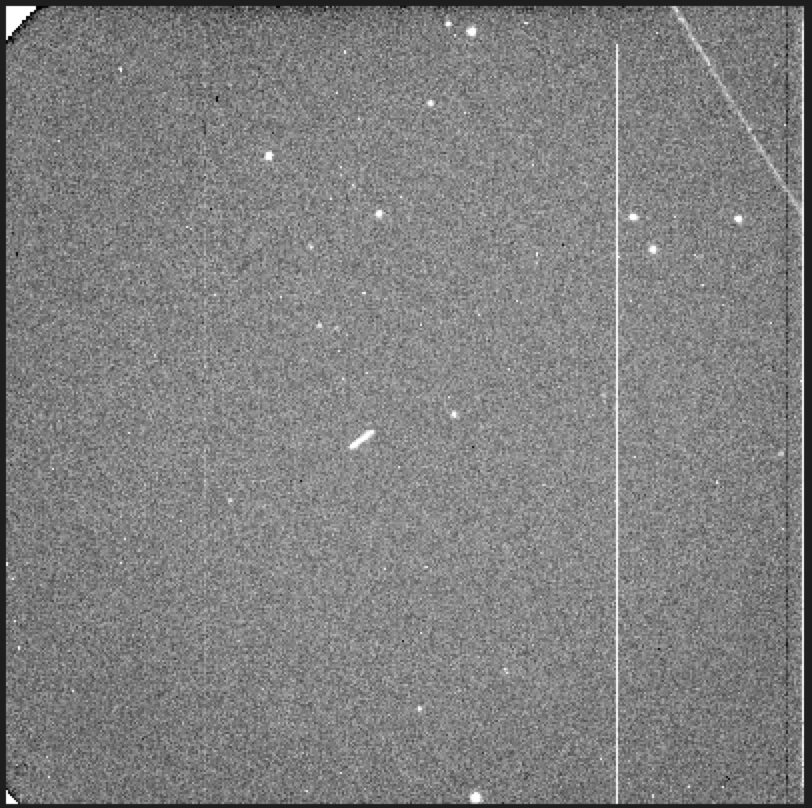
- GEOStare2对2005 LW 3的飞掠观测表明,仅通过低地球轨道光度测量即可可靠估计约200分钟的自转周期,验证了此类测量的可行性。
- 配备可见光与NIR传感器的小型卫星星座,可实现对鲁宾/LSST和近地天体调查者发现的所有近地天体的近实时表征,填补当前观测空白。
- 在可见光与近红外波段使用宽波段滤波片,可实现与光谱类型相关联的光度分类,从而在无需完整光谱分析的情况下推断物质特性。
阅读本论文
在 Nubint 阅读器中打开原文,边读边就任意段落提问。
在 Nubint 中阅读本论文本解读由 AI 根据论文原文生成,引用前请核对原文。