
[论文解读] On the Robustness of the Backdoor-based Watermarking in Deep Neural Networks
本文通过提出两种有效攻击,证明了基于后门的深度神经网络水印技术存在安全隐患:一种仅使用公开未标记数据和模型标签的黑盒攻击,另一种利用模型参数的白盒攻击。两种攻击均能以极低的精度损失成功移除水印,证明水印方案在无训练数据或触发样本访问的情况下仍易被移除。
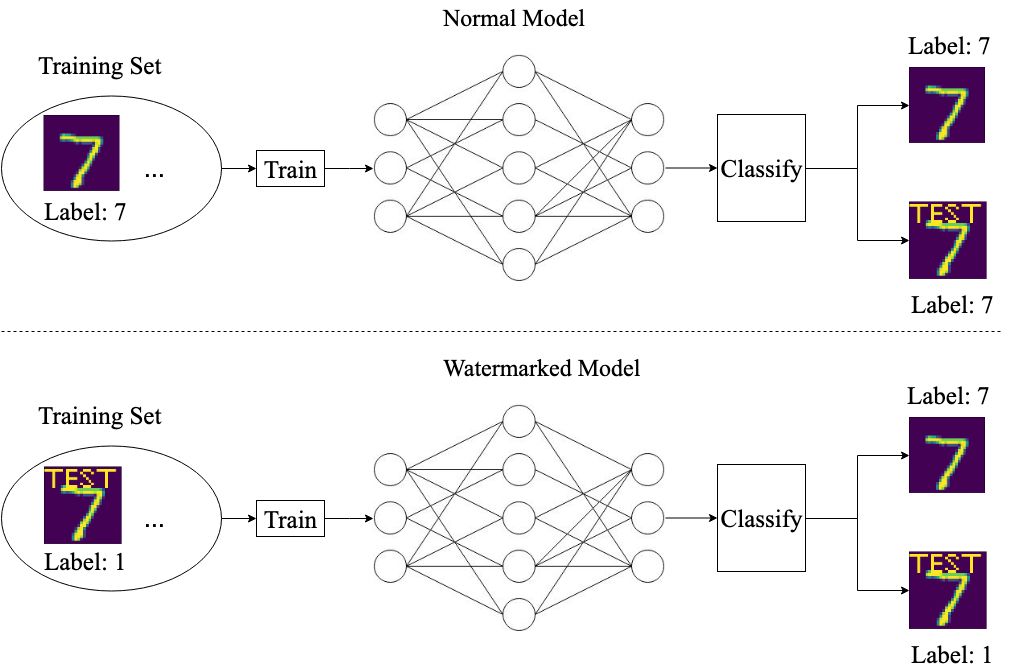
Obtaining the state of the art performance of deep learning models imposes a high cost to model generators, due to the tedious data preparation and the substantial processing requirements. To protect the model from unauthorized re-distribution, watermarking approaches have been introduced in the past couple of years. We investigate the robustness and reliability of state-of-the-art deep neural network watermarking schemes. We focus on backdoor-based watermarking and propose two -- a black-box and a white-box -- attacks that remove the watermark. Our black-box attack steals the model and removes the watermark with minimum requirements; it just relies on public unlabeled data and a black-box access to the classification label. It does not need classification confidences or access to the model's sensitive information such as the training data set, the trigger set or the model parameters. The white-box attack, proposes an efficient watermark removal when the parameters of the marked model are available; our white-box attack does not require access to the labeled data or the trigger set and improves the runtime of the black-box attack up to seventeen times. We as well prove the security inadequacy of the backdoor-based watermarking in keeping the watermark undetectable by proposing an attack that detects whether a model contains a watermark. Our attacks show that a recipient of a marked model can remove a backdoor-based watermark with significantly less effort than training a new model and some other techniques are needed to protect against re-distribution by a motivated attacker.
研究动机与目标
- 评估基于后门的水印方案在深度神经网络中的鲁棒性与可靠性。
- 开发一种黑盒攻击,仅使用公开的未标记数据和模型分类标签,无需模型参数或标注数据,即可移除水印。
- 设计一种白盒攻击,在可访问模型参数的前提下,高效地移除水印,运行时间相比黑盒方法更优。
- 证明水印检测是可行的,暴露基于后门的水印技术在保持隐蔽性方面的不安全性。
- 表明现有后门移除技术对水印移除无效,因此必须设计新型防御机制以应对有动机的攻击者。
提出的方法
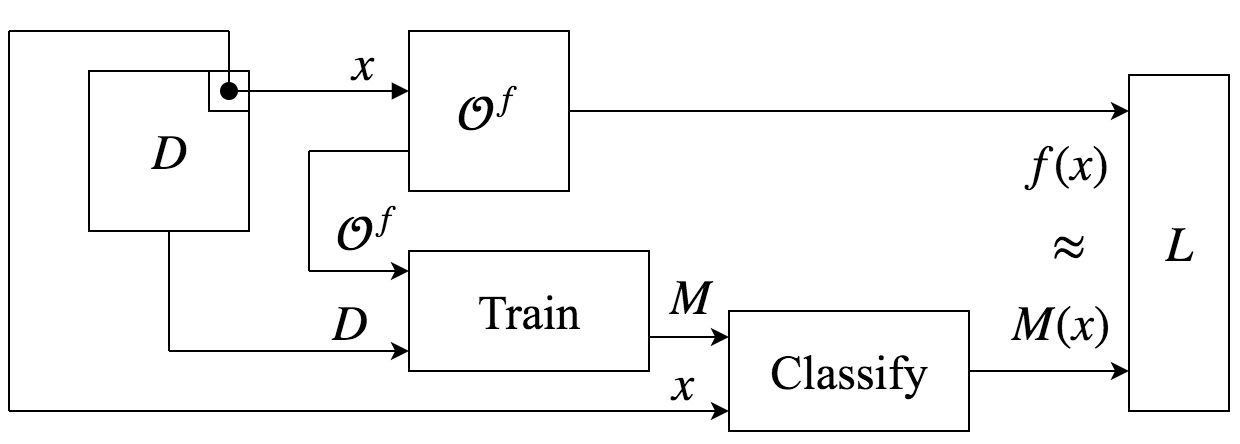
- 黑盒攻击通过向目标模型查询20,000至50,000个来自模型输入分布的公开未标记输入,并仅收集最终分类标签。
- 攻击利用标签响应上的主动学习技术,重建一个模仿原始带标记模型行为的替代模型。
- 白盒攻击利用对模型参数的访问,优化水印移除过程,与黑盒方法相比显著降低运行时间。
- 两种攻击均无需访问原始训练数据、触发样本集或标注样本,仅依赖推理时的查询或参数访问。
- 引入一种属性推断攻击,用于检测模型是否包含水印,从而在应用移除技术前实现预验证。
- 攻击在多种水印类型上进行了验证:嵌入的标志、噪声图案和抽象触发图像,表明其对不同水印形式具有通用性。
实验结果
研究问题
- RQ1能否在不访问原始训练数据或触发样本集的情况下,从深度神经网络中移除水印?
- RQ2仅使用分类标签和未标记数据的黑盒攻击,在移除基于后门的水印方面效果如何?
- RQ3当可访问模型参数时,白盒攻击是否能比黑盒方法实现更快、更准确的水印移除?
- RQ4能否在不知晓触发样本或训练数据的前提下,检测模型中是否存在水印?
- RQ5现有后门移除技术如Neural-Cleanse或Fine-Pruning是否适用于水印移除?若不适用,原因是什么?
主要发现
- 黑盒攻击仅使用20,000至50,000个未标记输入和分类标签,即可成功移除水印,且精度损失可忽略不计。
- 白盒攻击相比黑盒方法将运行时间减少最多达17倍,证明了在获得模型参数后可实现显著的效率提升。
- 属性推断攻击能够可靠地区分带水印模型与未带水印模型,实现水印存在的自动化检测。
- 水印可在不访问触发样本集或标注数据的情况下被移除,从而破坏了基于后门水印技术的安全性假设。
- 现有后门移除方法如Neural-Cleanse和Fine-Pruning对水印移除无效,原因在于其对特定触发模式或标注数据的依赖。
- 结果表明,水印方案对有动机的攻击者不具备鲁棒性,需设计替代保护机制以防止未经授权的分发。
阅读本论文
在 Nubint 阅读器中打开原文,边读边就任意段落提问。
在 Nubint 中阅读本论文本解读由 AI 根据论文原文生成,引用前请核对原文。