
[论文解读] On the Roles of LLMs in Planning: Embedding LLMs into Planning Graphs
本文提出 LLMs4Plan,一种将大语言模型(LLMs)嵌入基于图的规划框架的方法,通过在两个关键阶段整合 LLMs:前向扩展过程中的动作选择,以及回溯过程中的动作集剪枝。该方法通过减少搜索空间和计算量显著提升了规划效率与成功率,且 LLMs 的作用是增强而非取代传统规划器。
Plan synthesis aims to generate a course of actions or policies to transit given initial states to goal states, provided domain models that could be designed by experts or learnt from training data or interactions with the world. Intrigued by the claims of emergent planning capabilities in large language models (LLMs), works have been proposed to investigate the planning effectiveness of LLMs, without considering any utilization of off-the-shelf planning techniques in LLMs. In this paper, we aim to further study the insight of the planning capability of LLMs by investigating the roles of LLMs in off-the-shelf planning frameworks. To do this, we investigate the effectiveness of embedding LLMs into one of the well-known planning frameworks, graph-based planning, proposing a novel LLMs-based planning framework with LLMs embedded in two levels of planning graphs, i.e., mutual constraints generation level and constraints solving level. We empirically exhibit the effectiveness of our proposed framework in various planning domains.
研究动机与目标
- 探究 LLMs 在现成规划框架(尤其是基于图的规划)中可扮演的角色。
- 解决仅依赖 LLMs 进行规划所导致的低效问题,此类方法常产生次优或错误的解。
- 通过在 GraphPlan 算法的关键决策点嵌入 LLMs,提升规划性能。
- 识别并优化规划框架中关键且耗时的步骤,使 LLMs 能够提供有意义的帮助。
提出的方法
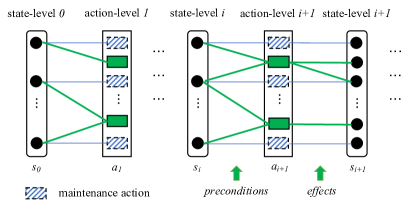
- LLMs 在两个层面被集成到 GraphPlan 框架中:前向扩展过程中的动作选择,以及回溯过程中的动作集剪枝。
- 通过状态命题、目标和领域模型自动生成提示,引导 LLMs 为每个动作层级选择有前景的动作。
- 在回溯阶段,LLMs 被提供状态级命题、相互约束和领域模型,以识别并仅保留少数非互斥的候选动作集。
- 通过系统性地添加或移除 LLM 组件,评估框架以隔离其对规划性能的影响。
- 该方法将 LLMs 视为智能剪枝与选择机制,而非完整规划器,从而保留 GraphPlan 的正确性保证。
- 通过模块化调用 LLMs 提升运行时性能,未来可借助更小或蒸馏后的 LLMs 进行优化。
实验结果
研究问题
- RQ1LLMs 在传统规划框架(如 GraphPlan)中可扮演哪些具体角色?
- RQ2在图规划的不同阶段嵌入 LLMs 如何影响搜索效率与解的质量?
- RQ3LLMs 是否能有效减少规划图中的搜索空间,同时不损害解的正确性?
- RQ4LLMs 在深层规划层存在哪些局限性,又该如何缓解?
- RQ5在规划图中,将 LLMs 应用于浅层还是深层更为有效?
主要发现
- LLMs4Plan 显著减少了扩展动作数和互斥动作数,表明计算量大幅降低。
- 该框架在减少扩展层数的同时保持或提升了成功率,实现了更高效的规划。
- LLM 剪枝显著减少了回溯过程中的搜索节点数,加快了问题求解速度,甚至解决了此前无法求解的问题。
- 仅使用 GPT-4 时,会产生更长且低效的动作序列,且在深层因输入提示过长和谓词集复杂而易出现剪枝错误。
- 浅层 LLM 剪枝可避免深层错误,同时提升成功率与效率,表明应用深度的选择至关重要。
- 尽管 LLM 调用增加了运行时间,但该方法仍显著优于纯 LLM 规划,证明了混合集成的价值。
阅读本论文
在 Nubint 阅读器中打开原文,边读边就任意段落提问。
在 Nubint 中阅读本论文本解读由 AI 根据论文原文生成,引用前请核对原文。