
[论文解读] Open-Endedness is Essential for Artificial Superhuman Intelligence
本文主张,开放性——即持续生成新颖、可学习且与人类相关的人工制品——是实现人工超人类智能(ASI)的关键。通过基于观察者的创新性和可学习性形式化开放性,作者提出,当基础模型与开放性学习框架结合时,可实现自主、自我改进的AI系统,具备持续创新能力,对未来发展AI的安全性和可扩展性具有重要意义。
In recent years there has been a tremendous surge in the general capabilities of AI systems, mainly fuelled by training foundation models on internetscale data. Nevertheless, the creation of openended, ever self-improving AI remains elusive. In this position paper, we argue that the ingredients are now in place to achieve openendedness in AI systems with respect to a human observer. Furthermore, we claim that such open-endedness is an essential property of any artificial superhuman intelligence (ASI). We begin by providing a concrete formal definition of open-endedness through the lens of novelty and learnability. We then illustrate a path towards ASI via open-ended systems built on top of foundation models, capable of making novel, humanrelevant discoveries. We conclude by examining the safety implications of generally-capable openended AI. We expect that open-ended foundation models will prove to be an increasingly fertile and safety-critical area of research in the near future.
研究动机与目标
- 基于新颖性和可学习性,建立一种形式化、依赖观察者的开放性定义,以实现开放性AI研究与开发的精确化。
- 论证开放性是人工超人类智能(ASI)的必要属性,因其可实现超越人类极限的持续、创造性与自我改进型发现。
- 证明基础模型与开放性系统在本质上正交但具有协同效应:基础模型提供泛化能力与搜索引导,而开放性系统驱动创新。
- 识别开放性AI的安全与对齐挑战,强调对人类相关且可解释的知识发现的必要性。
- 通过厘清开放性、持续强化学习、AIGAs及基于好奇心的探索之间的区别,为未来研究奠定基础。
提出的方法
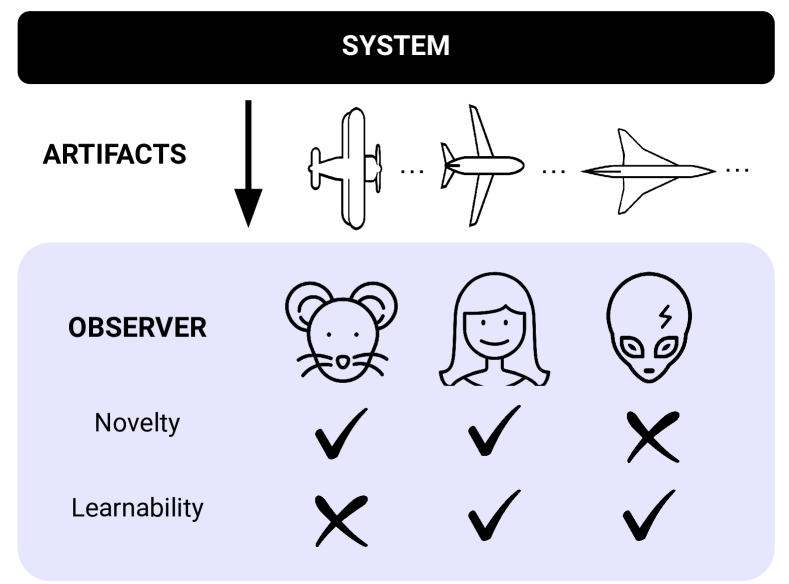
- 通过观察者历史条件模型定义开放性:若人工制品在给定过去观察下不可预测,则视为新颖;若观察者能随时间减少认知不确定性,则视为可学习。
- 将新颖性形式化为观察者预测模型与实际人工制品之间的差异,确保惊喜具有意义,而非随机噪声。
- 引入可学习性作为观察者逐步建模和理解新人工制品的能力,防止传统好奇心驱动强化学习中常见的随机陷阱。
- 提出基础模型作为通用的变异与评估算子,实现对多样化、人类相关知识空间的高效探索。
- 以观察者的学科学习过程作为认知进步的代理,确保新颖性不仅随机,而且系统性地具有信息量。
- 通过强调随时间持续积累新颖性,而非仅持续学习或元学习,将开放性与持续强化学习、AIGAs等概念区分开来。
实验结果
研究问题
- RQ1何种形式化的开放性定义可实现人工通用智能与超人类智能研究与开发的精确化?
- RQ2如何将基础模型与开放性学习相结合,以大规模实现与人类相关、新颖的发现?
- RQ3在长期创新能力方面,开放性系统与持续强化学习或AI生成算法有何本质区别?
- RQ4在实践中如何衡量与优化开放性,以避免随机陷阱并确保有意义的进步?
- RQ5能够自主生成日益复杂、与人类相关知识的开放性AI系统,其安全影响是什么?
主要发现
- 本文将开放性形式化为持续生成既新颖(由观察者的历史条件模型不可预测)又可学习(随时间减少认知不确定性)的人工制品。
- 基础模型被证明是开放性的关键推动者,因其提供泛化能力、与人类相关先验知识,并实现对多样化知识空间的高效搜索。
- 现有开放性系统(如在围棋中实现超人类水平表现或发现新数学成果的系统)表明,当与基础模型结合时,开放性发现具有可行性。
- 所提出的定义通过聚焦期望新颖性与可学习性,避免了随机陷阱,与传统基于好奇心的强化学习形成对比,后者可能被随机噪声误导。
- 作者主张,开放性不仅是AI的一个特征,更是人工超人类智能的必要条件,因其可实现持续、自我改进的创新。
- 将开放性与基础模型结合,开创了一个新的、富有潜力的研究前沿,对未来发展AI的安全性具有高度关键意义。

阅读本论文
在 Nubint 阅读器中打开原文,边读边就任意段落提问。
在 Nubint 中阅读本论文本解读由 AI 根据论文原文生成,引用前请核对原文。