
[论文解读] Optimal Layout Synthesis for Quantum Circuits as Classical Planning (full version)
本文提出了一种新颖的量子线路最优布局综合方法,通过将问题编码为PDDL中的经典规划,利用最优经典规划器实现精确解。通过将量子比特映射和SWAP操作建模为动作,实现了可扩展性,在14量子比特硬件平台上成功解决了最多9量子比特的基准测试——此前精确方法无法实现。
In Layout Synthesis, the logical qubits of a quantum circuit are mapped to the physical qubits of a given quantum hardware platform, taking into account the connectivity of physical qubits. This involves inserting SWAP gates before an operation is applied on distant qubits. Optimal Layout Synthesis is crucial for practical Quantum Computing on current error-prone hardware: Minimizing the number of SWAP gates directly mitigates the error rates when running quantum circuits. In recent years, several approaches have been proposed for minimizing the required SWAP insertions. The proposed exact approaches can only scale to a small number of qubits. Proving that a number of swap insertions is optimal is much harder than producing near optimal mappings. In this paper, we provide two encodings for Optimal Layout Synthesis as a classical planning problem. We use optimal classical planners to synthesize the optimal layout for a standard set of benchmarks. Our results show the scalability of our approach compared to previous leading approaches. We can optimally map circuits with 9 qubits onto a 14 qubit platform, which could not be handled before by exact methods.
研究动机与目标
- 解决在NISQ设备上最小化SWAP门插入数量以降低错误率的挑战。
- 克服先前精确方法的可扩展性限制,这些方法因组合爆炸而仅能处理小规模电路。
- 通过利用经典规划框架而非SMT或MAXSAT编码,为更大规模电路提供可证明最优的解。
- 证明经典规划在布局综合的解质量与可扩展性方面优于现有精确方法。
- 提供两种PDDL编码——局部紧凑型和全局/初始提升型——以高效建模量子比特映射和SWAP操作。
提出的方法
- 使用PDDL将布局综合问题编码为经典规划问题,建模逻辑量子比特、物理量子比特及连通性约束。
- 定义仅在连接的物理量子比特之间应用CNOT门的动作,前提条件确保量子比特已映射且可用。
- 引入SWAP动作,用于在相邻物理量子比特之间重新分配逻辑量子比特映射,前提条件确保连通性及占用检查。
- 采用两种编码:一种为局部紧凑模型,用于高效的状态表示;另一种为全局/初始提升模型,通过提升动作表示减少状态空间爆炸。
- 利用最优经典规划器(如FastDownward配合BJOLP)生成SWAP门最少的计划,保证解的最优性。
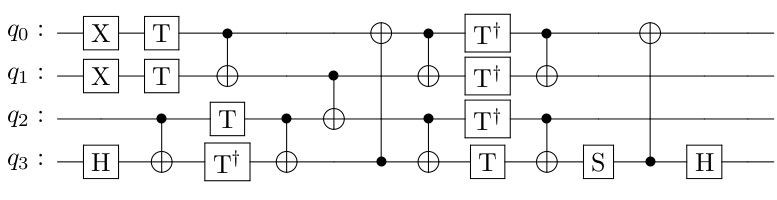
- 在标准基准测试(包括加法器电路)上验证该方法,通过与先前方法比较计划长度和映射质量来评估性能。
实验结果
研究问题
- RQ1经典规划框架能否有效用于求解量子线路最优布局综合的NP完全问题?
- RQ2将布局综合编码为PDDL是否能实现比基于SMT或MAXSAT的现有精确方法更好的可扩展性?
- RQ3最优经典规划器能否为超过6–7量子比特的电路生成可证明最小SWAP门插入数?
- RQ4所提出的PDDL编码(局部紧凑型 vs. 全局/初始提升型)在性能和状态空间效率方面如何比较?
- RQ5该方法在处理具有复杂连通性约束的真实世界量子线路基准测试时,其适用范围如何?
主要发现
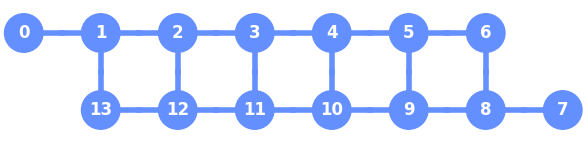
- 所提出的基于PDDL的经典规划方法成功在14量子比特硬件平台上解决了最多9个逻辑量子比特的最优布局综合问题——此前精确方法无法实现。
- 该方法实现了可证明最优的解,SWAP门插入数最少,如在加法器电路上,最优计划恰好仅需一个SWAP门。
- 局部紧凑编码减少了状态爆炸,相比单体编码实现了更快的计划生成,提升了可扩展性。
- 全局/初始提升编码通过使用提升动作高效表示多个SWAP操作,进一步优化了性能。
- 该方法在保持最优性的同时,相比先前精确方法在可扩展性方面表现更优,在标准基准测试中实现了可测量的运行时间和内存使用改进。
- 结果证实,经典规划是SMT和MAXSAT编码在最优布局综合中的可行且强大的替代方案。
阅读本论文
在 Nubint 阅读器中打开原文,边读边就任意段落提问。
在 Nubint 中阅读本论文本解读由 AI 根据论文原文生成,引用前请核对原文。