
[论文解读] Optimizing Inventory Placement for a Downstream Online Matching Problem
本文通过使用离线代理函数,优化了电子商务在线匹配问题中的库存配置,针对联合配置与履约问题获得了 (1−(1−1/d)^d)/2-近似解。该方法利用随机化舍入技术,实现了紧致的 (1−(1−1/d)^d)-近似解,并通过京东实际数据验证,其性能优于贪心和流体配置方法。
We study the inventory placement problem of splitting $Q$ units of a single item across warehouses in advance of a downstream online matching problem that represents the dynamic fulfillment decisions of an e-commerce retailer. This is a challenging problem both theoretically, due to the computational complexity of the downstream matching problem, and practically, as the fulfillment team continuously updates its algorithm while the placement team lacks direct evaluation of placement decisions. We compare the performance of three placement procedures based on optimizing surrogate functions that have been studied and applied: Offline, Myopic, and Fluid placement. On the theory side, we show that optimizing inventory placement for the Offline surrogate leads to an $α(1-(1-1/d)^d)$-approximation for the joint placement and fulfillment problem under any demand model that admits an $α$-competitive fulfillment policy. We assume $d$ is an upper bound on how many warehouses can serve any demand location. The crux of our theoretical contribution is to use randomized rounding to derive a tight $(1-(1-1/d)^d)$-approximation for the integer programming problem of optimizing the Offline surrogate. We further show how to extend this result to a multi-SKU setting, improving upon the best known approximation of $1/2$. We use statistical learning to show that rounding after optimizing a sample-average Offline surrogate, which is necessary due to the exponentially-sized support, indeed has vanishing loss. On the experimental side, we evaluate how different combinations of placement and fulfillment procedures perform on a wide array of synthetic instances. When coupled with a good fulfillment procedure, optimizing the Offline surrogate performs best even compared to computationally-intensive simulation procedures, corroborating our theory.
研究动机与目标
- 为解决电子商务中上游库存配置与下游在线履约决策之间的协调挑战。
- 评估并比较三种基于代理函数的配置方法——离线、贪心和流体——在联合配置与履约中的性能表现。
- 理论上分析在需求时间或空间独立性假设下,优化离线代理函数的近似保证。
- 利用京东的真实订单序列对所提方法进行实证验证。
- 证明即使缺乏对下游履约策略的完整了解,优化离线代理函数仍能实现稳健且高性能的库存配置。
提出的方法
- 作者采用随机化舍入技术,为优化离线代理函数的整数规划问题推导出紧致的 (1−(1−1/d)^d)-近似解。
- 他们应用统计学习方法,证明在优化样本平均离线代理函数后进行舍入,尽管支持集呈指数级增长,但损失仍趋于消失。
- 该方法假设 d 是服务任意需求位置的仓库数量的上界,且需求到达在时间或空间上相互独立。
- 该方法比较了三种配置策略:离线(优化最优履约奖励的代理函数)、贪心(基于模拟和局部搜索)以及流体(使用确定性流体松弛)。
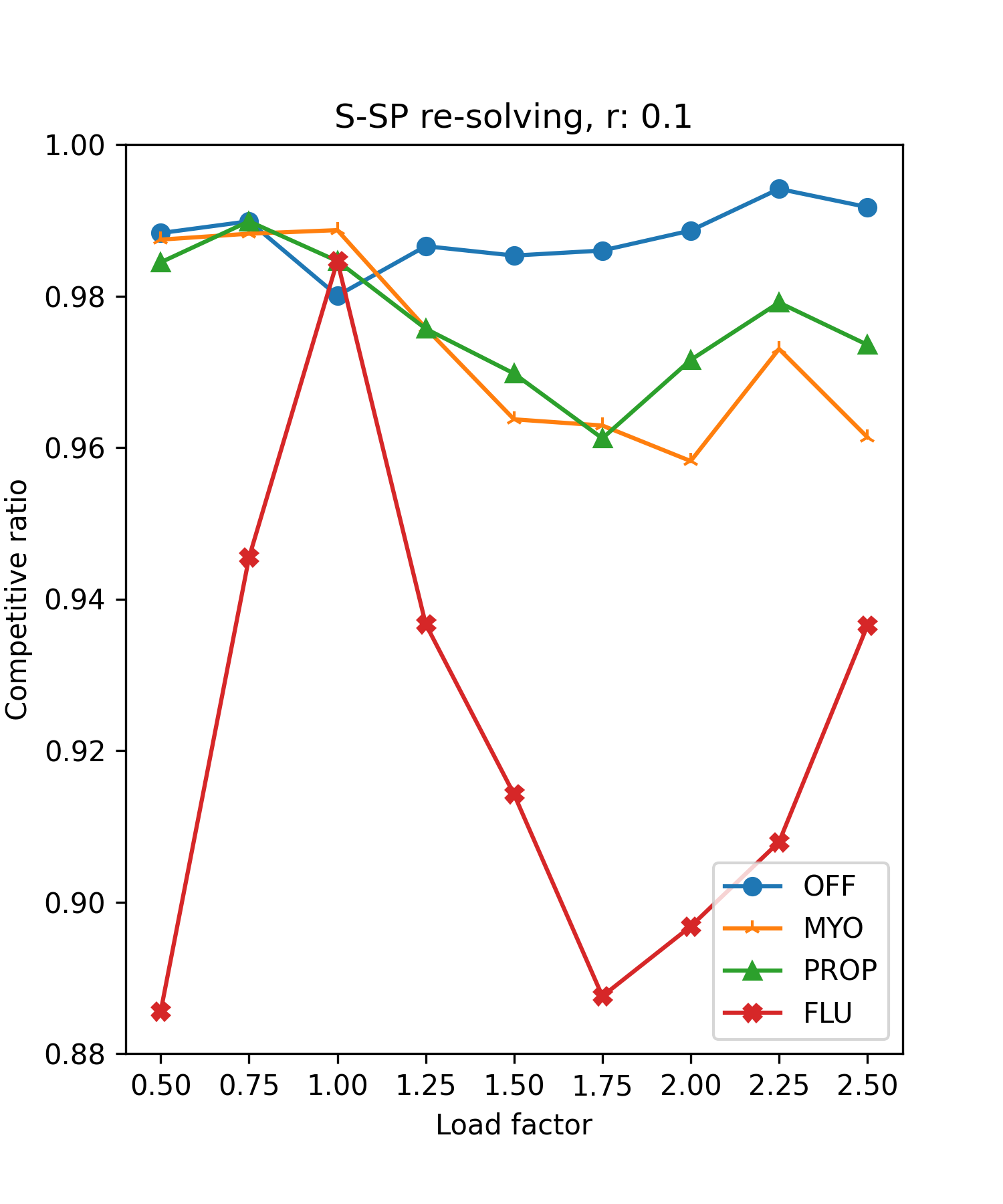
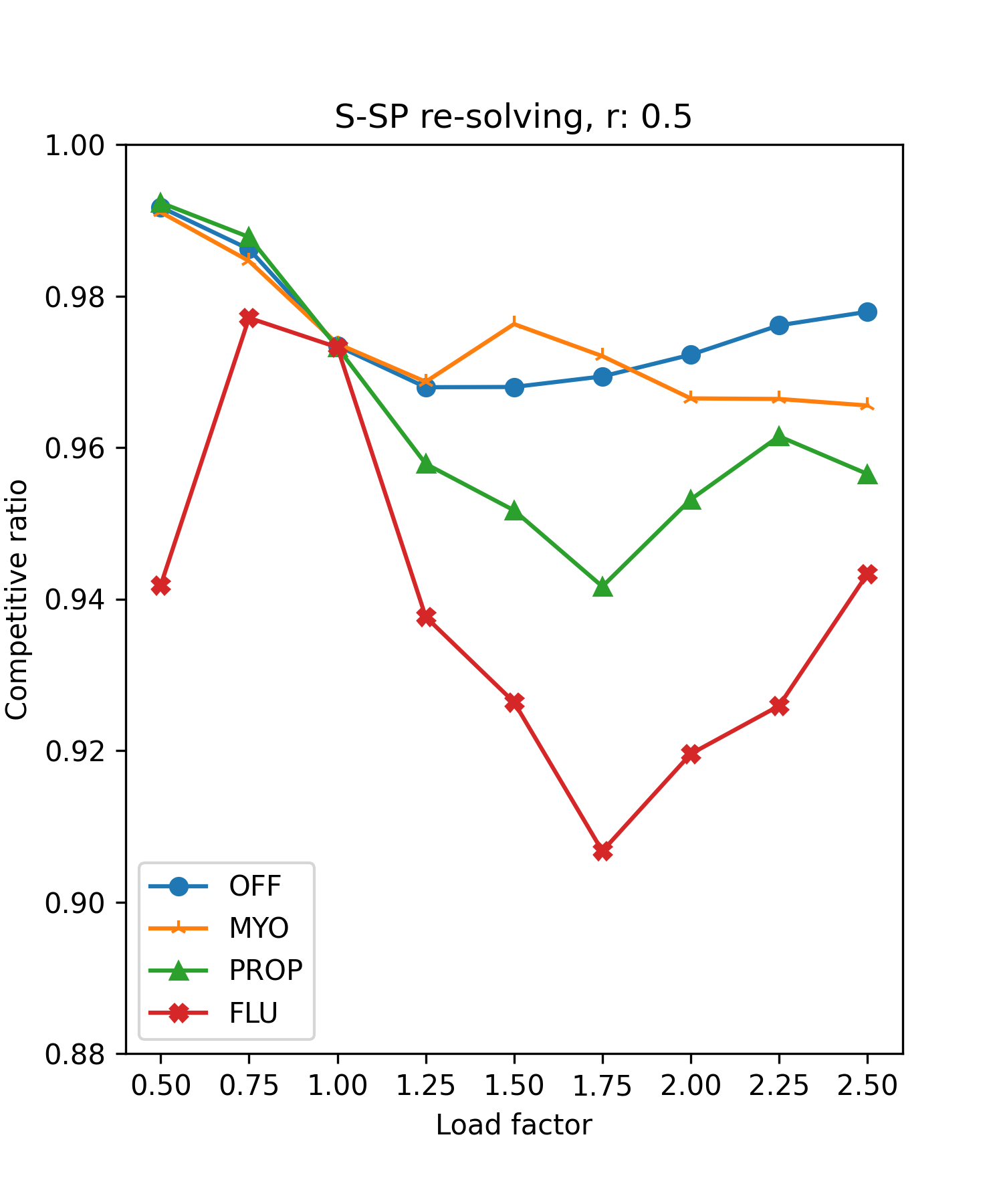
- 采用高质量的履约策略——S-SP并配合重优化——以隔离并评估不同配置方法的性能表现。
- 使用京东的真实订单数据,评估不同配置与履约策略组合的竞争力比率。
实验结果
研究问题
- RQ1优化离线代理函数是否能为联合库存配置与在线履约问题提供可证明良好的近似解?
- RQ2在现实需求模式下,离线配置的性能与贪心和流体配置相比如何?
- RQ3尽管缺乏对需求到达顺序的了解,基于代理的离线配置方法是否仍能优于基于模拟的贪心配置方法?
- RQ4离线配置方法在不同需求负载和本地与溢出履约奖励比下是否具有鲁棒性?
- RQ5在样本平均离线代理函数上使用随机化舍入是否能在实际中产生接近最优的解?
主要发现
- 在需求时间或空间独立性假设下,优化离线代理函数可为联合配置与履约问题提供 (1−(1−1/d)^d)/2-近似解。
- 随机化舍入技术为整数规划问题实现了紧致的 (1−(1−1/d)^d)-近似解,证明了其理论最优性(至多相差一个常数因子)。
- 尽管未使用到达顺序信息,离线配置在理论和实践中均优于贪心配置,尤其在高负载因子(≥1.25)且 r=0.1 时表现更优。
- S-SP配合重优化在所有设置下均保持最高或第二高的竞争力比率,是鲁棒性最强的履约策略。
- 流体配置表现较差,原因在于存在多个最优解导致的不稳定性,且对RDC(区域配送中心)存在强烈偏向,尤其在优先选择RDC作为解时。
- 当与高质量履约策略搭配时,离线配置是鲁棒性最强的配置方法,在不同 r 值和负载因子下均优于贪心和流体配置。
阅读本论文
在 Nubint 阅读器中打开原文,边读边就任意段落提问。
在 Nubint 中阅读本论文本解读由 AI 根据论文原文生成,引用前请核对原文。