
[论文解读] Persistent hyperdigraph homology and persistent hyperdigraph Laplacians
本文引入了持久超有向图同调与持久超有向图拉普拉斯算子,以实现对有向、结构化数据的多尺度拓扑分析。通过扩展超有向图同调并利用基于过滤的持久谱方法,该方法既捕捉了拓扑不变量(通过贝蒂数表示),也捕捉了定量结构变化(通过非调和谱),相较于仅使用持久同调,对分子相互作用的敏感性显著提升。
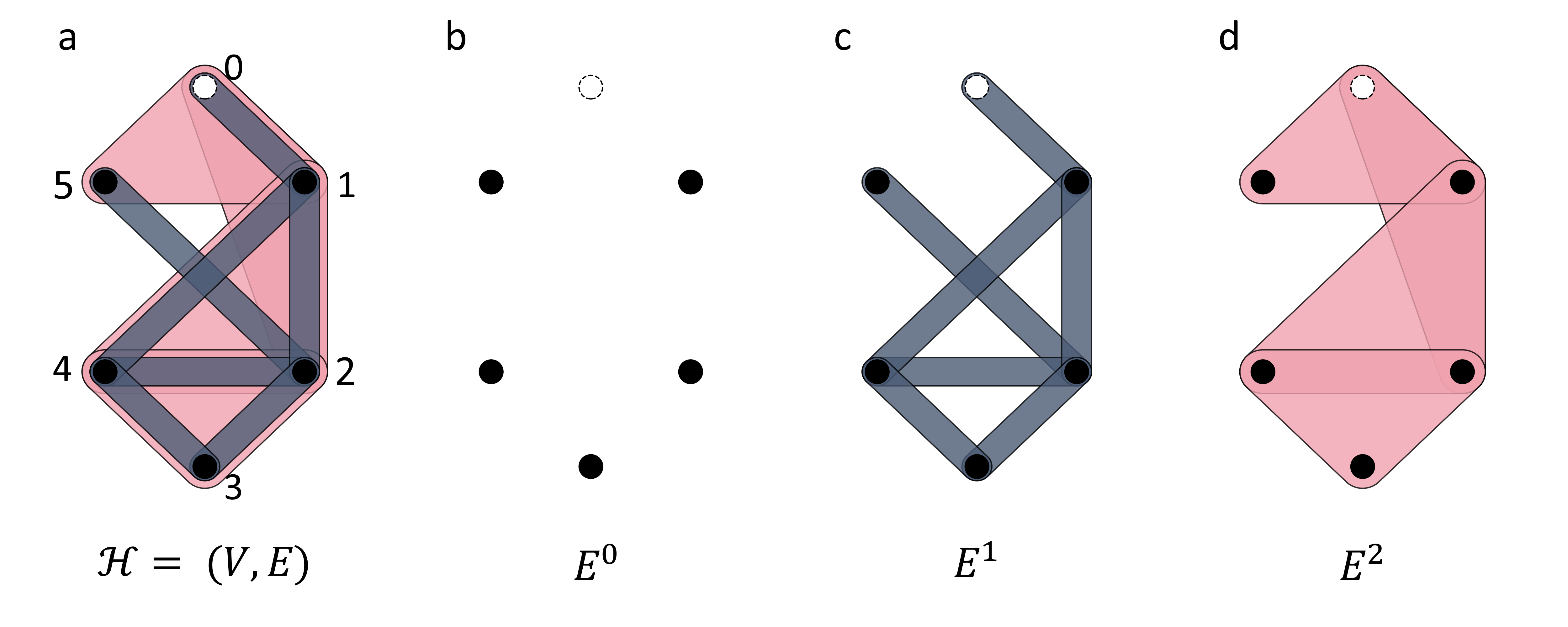
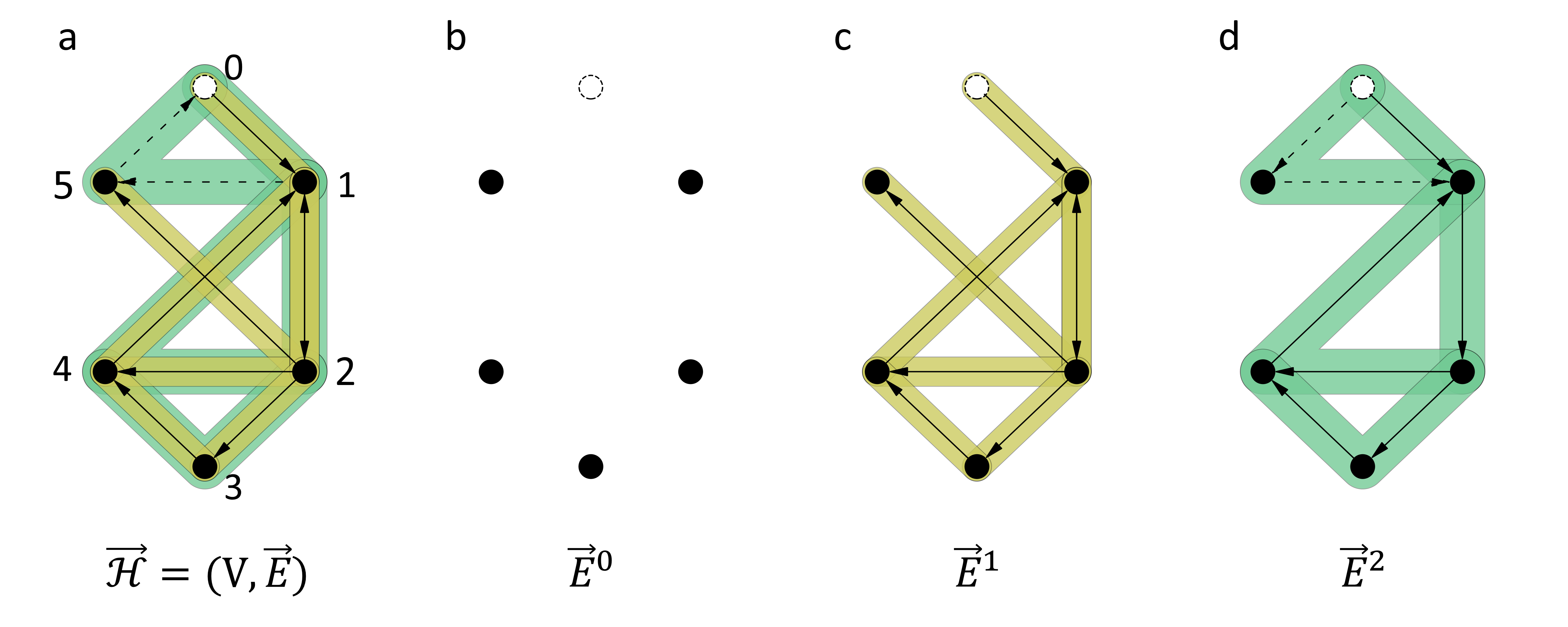
Hypergraphs are useful mathematical models for describing complex relationships among members of a structured graph, while hyperdigraphs serve as a generalization that can encode asymmetric relationships in the data. However, obtaining topological information directly from hyperdigraphs remains a challenge. To address this issue, we introduce hyperdigraph homology in this work. We also propose topological hyperdigraph Laplacians, which can extract both harmonic spectra and non-harmonic spectra from directed and internally organized data. Moreover, we introduce persistent hyperdigraph homology and persistent hyperdigraph Laplacians through filtration, enabling the capture of topological persistence and homotopic shape evolution of directed and structured data across multiple scales. The proposed methods offer new multiscale algebraic topology tools for topological data analysis.
研究动机与目标
- 解决复杂网络中缺乏针对有向、非对称关系的拓扑工具的问题。
- 通过引入顶点顺序与方向性,将超图同调推广至超有向图。
- 构建能同时提取调和(贝蒂数)与非调和谱信息的拓扑超有向图拉普拉斯算子。
- 通过体积与距离相关的过滤方法,引入持久超有向图同调与拉普拉斯算子,实现对尺度鲁棒的形状分析。
- 展示该方法在捕捉生物系统中细微结构变化(如蛋白质-配体相互作用)方面的优越性。
提出的方法
- 通过固定顶点顺序的有向超边定义超有向图同调,以编码非对称关系。
- 构建拓扑超有向图拉普拉斯算子作为霍奇拉普拉斯算子的离散类比,将图与单纯复形拉普拉斯算子推广至有向超图。
- 通过忽略超边的方向性,将超有向图同调简化为超图同调。
- 应用基于体积与距离的过滤方法,生成一系列嵌套的超有向图,用于持久性分析。
- 从过滤参数下的一系列持久拉普拉斯矩阵中计算持久贝蒂数与非调和特征值。
- 将最小的非零特征值作为非调和谱特征的代表,以追踪结构演化。
实验结果
研究问题
- RQ1如何为具有有序超边的有向超图(超有向图)一致地定义拓扑不变量?
- RQ2拓扑超有向图拉普拉斯算子能否同时捕捉贝蒂数之外的拓扑不变量与定量结构特征?
- RQ3持久超有向图拉普拉斯算子在检测复杂有向数据中细微变化方面,与持久同调相比表现如何?
- RQ4非调和谱在多大程度上揭示了调和谱或贝蒂数无法捕捉的结构动力学?
- RQ5该框架能否有效建模与分析分子系统中的蛋白质-配体相互作用?
主要发现
- 与持久同调相比,持久超有向图拉普拉斯算子能更早、更敏感地检测到蛋白质-配体复合物中的结构变化,尤其体现在非调和谱上。
- 在过滤参数约为2.5时,新形成的有向1-超边(配体结合)导致β₀减少,并显著降低λ₀与λ₁,表明连接性增强与复合物形成。
- β₂的变化范围小于λ₂,表明非调和谱对拓扑变化的敏感性高于持久贝蒂数。
- 非调和持久特征值揭示了仅通过贝蒂数无法检测到的结构演化,证明其具有更高的信息含量。
- 该方法成功区分了配体结合引起的拓扑变化,表明有向超图及其持久拉普拉斯算子能够以更高分辨率建模复杂的生物相互作用。
- 持久超有向图拉普拉斯算子通过同时捕捉拓扑不变量与跨尺度的定量谱动态,优于持久同调。
阅读本论文
在 Nubint 阅读器中打开原文,边读边就任意段落提问。
在 Nubint 中阅读本论文本解读由 AI 根据论文原文生成,引用前请核对原文。