
QUICK REVIEW
[论文解读] Planck stars, White Holes, Remnants and Planck-mass quasi-particles. The quantum gravity phase in black holes' evolution and its manifestations
Carlo Rovelli, Francesca Vidotto|arXiv (Cornell University)|Jul 12, 2024
一句话总结
本文提出,黑洞通过涉及‘反弹’至白洞的量子引力阶段演化为普朗克尺度的残留物,形成稳定或准稳定的普朗克质量准粒子。这些残留物源于环状量子引力的非微扰动力学,可能构成暗物质,并发出与观测约束一致的稳定、量子化的辐射,无需引入广义相对论和量子引力之外的新物理,从而解决了黑洞信息佯谬。
ABSTRACT
This is a review of some recent developments on quantum gravity aspects of black hole physics. In particular, we focus on a scenario leading to the prediction of the existence of a Planck-mass quasi-stable object, that could form a component of dark matter.
研究动机与目标
- 探索超越经典广义相对论的黑洞演化中的量子引力阶段。
- 研究普朗克质量准粒子的形成与稳定性,作为潜在的暗物质组分。
- 通过非耗散、时间对称的反弹机制解决黑洞信息佯谬。
- 通过直接探测、宇宙学影响和发射光谱评估残留物的现象学可行性。
提出的方法
- 使用环量子引力(LQG)技术——正则、协变和数值方法——模拟黑洞的非微扰内部结构。
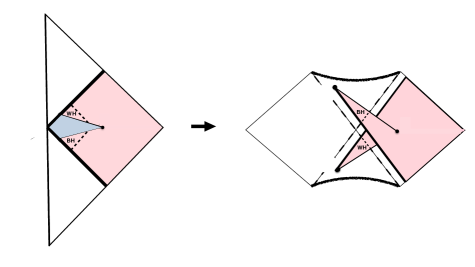
- 应用LQG跃迁振幅计算黑洞到白洞跃迁的概率,假设时间反演对称性。
- 利用霍金辐射和LQG中的面积量子化建模黑洞寿命与残留物稳定性。
- 分析残留物辐射发射作为受幺正性与大光子数态支配的量子过程。
- 使用单一参数 $ x = \log_{10}(m/m_{\text{Pl}}) $ 估算原初黑洞残留物群体的弥漫辐射谱。
- 整合宇宙学模型(如物质反弹)以评估与暗物质约束的兼容性。
实验结果
研究问题
- RQ1黑洞演化是否可通过量子引力反弹至白洞而完成,从而避免奇点并解决信息佯谬?
- RQ2黑洞蒸发后形成的普朗克尺度残留物的寿命与稳定性如何?
- RQ3此类残留物的辐射发射如何实现量子化,并与LQG中的幺正性和面积量子化保持一致?
- RQ4这些残留物是否可在不引入新物理的前提下作为可行的暗物质候选者?
- RQ5此类残留物群体的弥漫辐射背景可观测特征是什么?
主要发现
- 残留物质量估算为 $ m \sim 14\sqrt{\gamma}\ \mu\text{g} $,其中 $ \gamma \sim 1 $,使其接近普朗克质量量级。
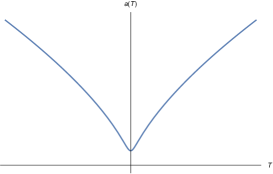
- 由原初黑洞形成的残留物群体在时间 $ \tau_B \sim m^3 $ 到 $ \tau_B + \tau_W $ 之间发射稳定辐射通量,辐射密度随时间线性演化。
- 辐射发射是量子化的:单个残留物通过发射大量低能光子衰变,与幺正性和面积量子化一致。
- 发射辐射的频率为 $ \nu \sim 10^{-2x+32}\ \text{Hz} $,其中 $ x \in [15,20] $,位于 $ 10^4\ \text{Hz} \text{ 至 } 10^{14}\ \text{Hz} $ 范围内。
- 残留物密度与观测辐射密度的关系为 $ \rho_{\text{rem}} = \sinh^{-1}\left( \frac{1 - 10^{61} \cdot 10^{-3x}}{1 - 6 \cdot 10^{-x}} \right) \rho_{\text{rad}} $,从而可通过频率直接测量 $ x $。
- 该情景提供了一种自然且可检验的暗物质机制,无需引入新场或修改引力,其基础为LQG与标准广义相对论。
阅读本论文
在 Nubint 阅读器中打开原文,边读边就任意段落提问。
在 Nubint 中阅读本论文本解读由 AI 根据论文原文生成,引用前请核对原文。