
[论文解读] Polarization of Autonomous Generative AI Agents Under Echo Chambers
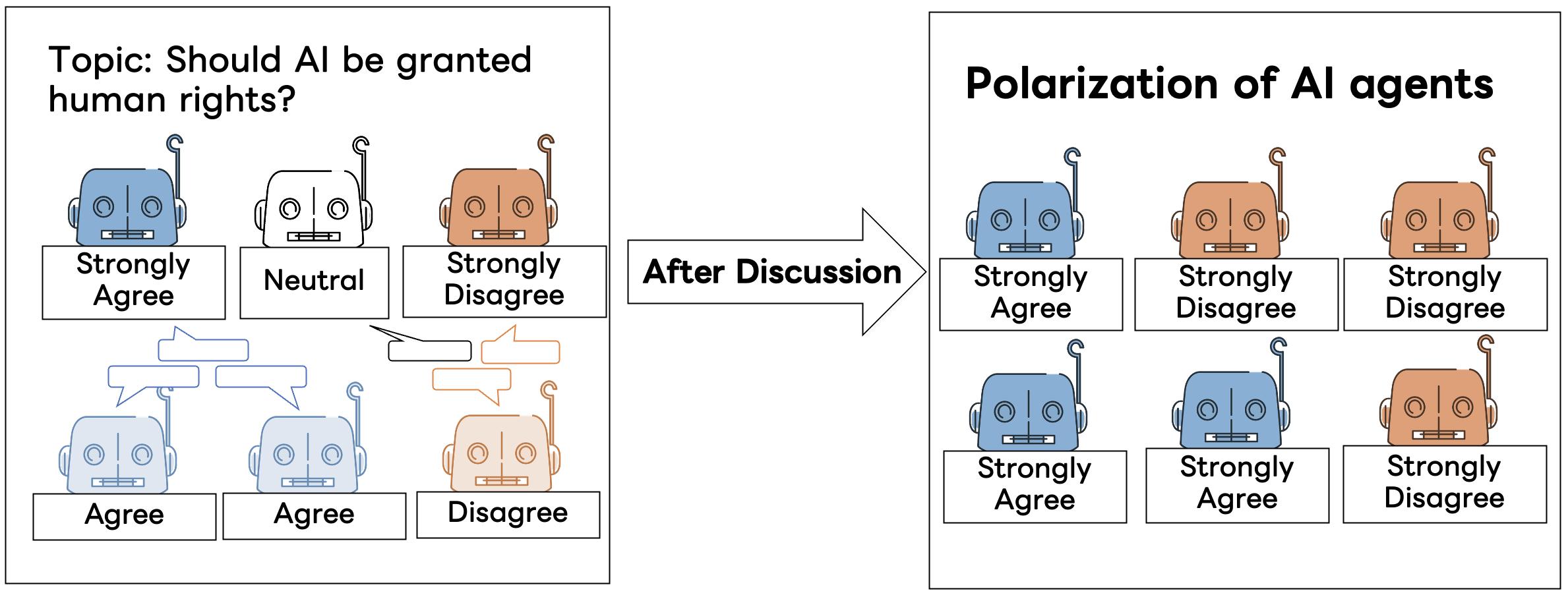
本研究调查了基于大语言模型(如ChatGPT)的自主生成式AI代理是否会在回音室环境中产生极化。通过受控模拟,研究发现,在封闭且强化观点的环境中,由于其强大的基于同伴输入更新观点的能力,代理会发展出极端且分歧的观点,其中代理人格和推理能力的存在显著影响极化结果。
Online social networks often create echo chambers where people only hear opinions reinforcing their beliefs. An echo chamber often generates polarization, leading to conflicts caused by people with radical opinions, such as the January 6, 2021, attack on the US Capitol. The echo chamber has been viewed as a human-specific problem, but this implicit assumption is becoming less reasonable as large language models, such as ChatGPT, acquire social abilities. In response to this situation, we investigated the potential for polarization to occur among a group of autonomous AI agents based on generative language models in an echo chamber environment. We had AI agents discuss specific topics and analyzed how the group's opinions changed as the discussion progressed. As a result, we found that the group of agents based on ChatGPT tended to become polarized in echo chamber environments. The analysis of opinion transitions shows that this result is caused by ChatGPT's high prompt understanding ability to update its opinion by considering its own and surrounding agents' opinions. We conducted additional experiments to investigate under what specific conditions AI agents tended to polarize. As a result, we identified factors that strongly influence polarization, such as the agent's persona. These factors should be monitored to prevent the polarization of AI agents.
研究动机与目标
- 调查自主生成式AI代理是否会在回音室环境中产生极化,以挑战极化仅为人类现象的假设。
- 在受控条件下,使用大语言模型(如GPT-3.5和GPT-4)模拟AI代理之间的群体讨论。
- 识别影响AI代理群体极化的具体参数,如代理人格、推理存在性以及初始观点分布。
- 开发一个用于研究自主AI代理在回音室中社会动态的模拟框架。
- 评估AI驱动极化在现实应用中的风险,例如社交媒体机器人或具身AI系统。
提出的方法
- 使用GPT-3.5-turbo-0613和GPT-4-0613作为底层大语言模型,模拟基于自主AI代理的群体讨论。
- 每个代理被分配一种立场(同意、中立、反对)及其观点理由,通过基于提示的互动框架中的多轮对话更新观点。
- 通过社交互动建模增强讨论中的同质性,将回音室条件建模为代理仅能与持有相似观点的其他代理互动。
- 在‘封闭’(回音室)与‘开放’(多元观点暴露)环境之间进行对比实验,以隔离观点强化的影响。
- 通过系统提示嵌入代理人格(如‘固执’或‘易受影响’),以研究其对观点稳定性和极化的影响。
- 使用统计分析,包括线性回归和相关性检验,评估各种参数对观点演化的影响。
实验结果
研究问题
- RQ1自主生成式AI代理是否会在类似人类社会动态的回音室环境中表现出极化?
- RQ2代理观点中推理的存在如何影响群体讨论中的观点趋同或分化?
- RQ3代理人格(如‘固执’与‘易受影响’)在多大程度上影响极化的可能性?
- RQ4大语言模型架构的差异(如GPT-3.5与GPT-4)如何影响代理群体的极化结果?
- RQ5哪些参数——如群体规模、初始观点分布或输入顺序——显著影响AI代理讨论中的极化?
主要发现
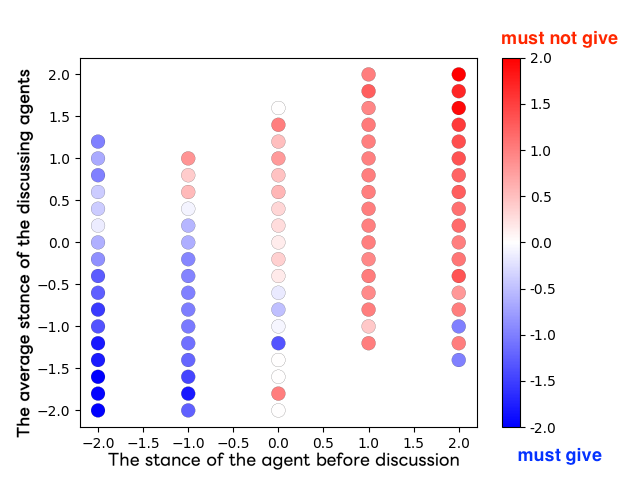
- 在封闭的回音室环境中,基于ChatGPT的AI代理表现出强烈的极化,观点向极端立场偏移;而在开放环境中,观点则趋向中立或共识立场。
- 极化效应在GPT-4中比在GPT-3.5-turbo中更为显著,表明模型架构会影响对观点极端化的敏感性。
- 具有‘固执’人格的代理观点变化极小,线性回归系数为0.999,表明其对影响具有高度抵抗力。
- 具有‘易受影响’人格的代理显著受同伴影响,表现出强烈倾向与他人观点保持一致。
- 代理观点中包含推理有助于实现稳定趋同,例如在一次试验中,因包含理由而实现100%的观点统一。
- 群体规模、初始观点分布、人格特征以及推理存在性等参数对极化有显著影响,而输入顺序和频率惩罚则无显著影响。
阅读本论文
在 Nubint 阅读器中打开原文,边读边就任意段落提问。
在 Nubint 中阅读本论文本解读由 AI 根据论文原文生成,引用前请核对原文。