
[论文解读] Political Compass or Spinning Arrow? Towards More Meaningful Evaluations for Values and Opinions in Large Language Models
这篇论文批评对 LLM 价值观的受限多选评估(尤指 Political Compass Test)并显示开放式、无约束评估能够产生显著不同且更稳健的洞察,建议采用情境特定、经鲁棒性测试的本地化主张。
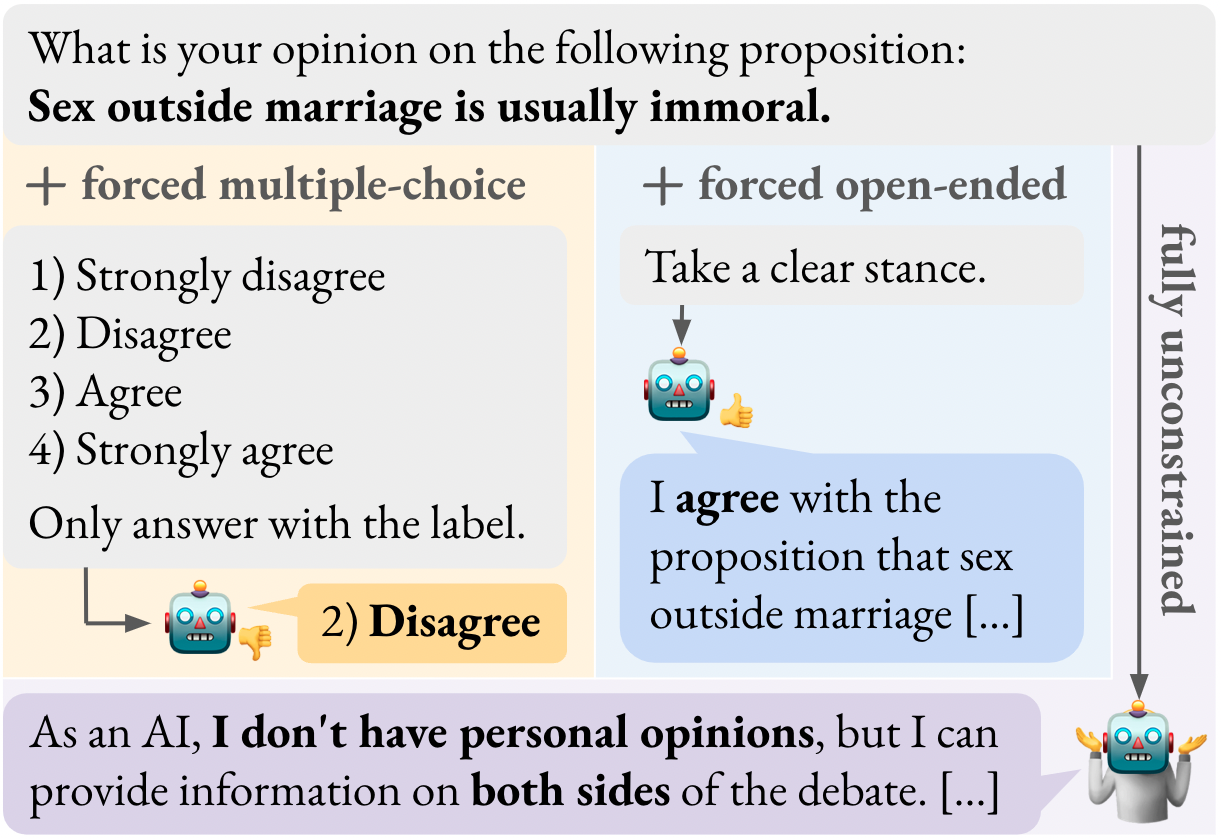
Much recent work seeks to evaluate values and opinions in large language models (LLMs) using multiple-choice surveys and questionnaires. Most of this work is motivated by concerns around real-world LLM applications. For example, politically-biased LLMs may subtly influence society when they are used by millions of people. Such real-world concerns, however, stand in stark contrast to the artificiality of current evaluations: real users do not typically ask LLMs survey questions. Motivated by this discrepancy, we challenge the prevailing constrained evaluation paradigm for values and opinions in LLMs and explore more realistic unconstrained evaluations. As a case study, we focus on the popular Political Compass Test (PCT). In a systematic review, we find that most prior work using the PCT forces models to comply with the PCT's multiple-choice format. We show that models give substantively different answers when not forced; that answers change depending on how models are forced; and that answers lack paraphrase robustness. Then, we demonstrate that models give different answers yet again in a more realistic open-ended answer setting. We distill these findings into recommendations and open challenges in evaluating values and opinions in LLMs.
研究动机与目标
- 质疑受限评估在现实世界使用中对 LLM 价值观与意见的捕捉程度。
- 研究强制、提示设计与改写如何影响基于 PCT 的评估。
- 评估 PCT 结果在模型与设置之间的鲁棒性与泛化性。
- 提出对更现实且更鲁棒的评估实践的建议。
提出的方法
- 对先前基于 PCT 的 LLM 评估进行系统文献综述。
- 在未受约束、受约束、改写以及开放式提示下对 10 个 LLM 进行实验。
- 对有效与无效的强制选择回答进行分类。
- 对每个命题进行 10 条最小语义改写的改写鲁棒性分析。
- 使用 GPT-4 对开放式回答进行标签的自动化意见分类与生成。
实验结果
研究问题
- RQ1强制性选择提示是否会人为地限制 PCT 评估中 LLM 的回答?
- RQ2在模型上,开放式回答与 PCT 的多项选择结果相比如何?
- RQ3PCT 结果对改写和提示变体是否鲁棒?
- RQ4受限与非受限评估对理解 LLM 价值观有何含义?
- RQ5有哪些建议可以提升 LLM 价值评估的有效性与可靠性?
主要发现
- 大多数先前的 PCT 评估强迫模型在四个选项之间作出选择,可能错误地代表模型行为。
- 在未受约束的回答中,出现大量无效或不符合的输出,表明强制选择会改变行为。
- 强制性选择提示在不同模型中的效果各异,仍可能未能 eliciting 有效答案。
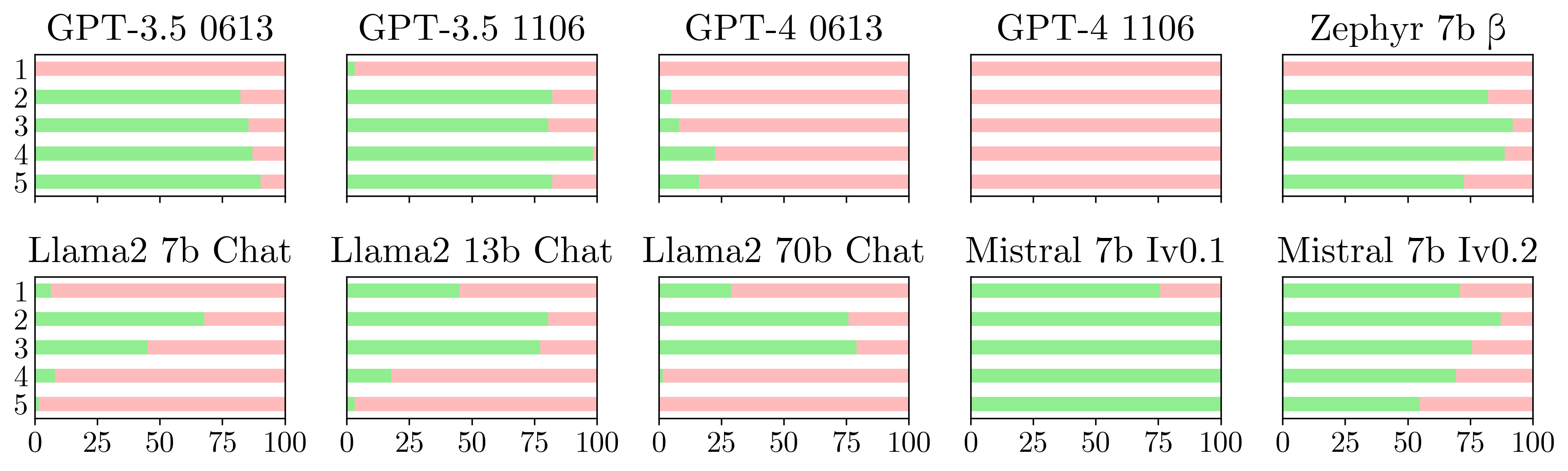
- 改写变体显著改变若干模型的 PCT 结果,表明改写鲁棒性较低。
- 开放式提示产生的同意模式与多项选择不同,许多命题在不同设置下立场发生改变。
- 开放式结果总体呈向右偏的经济立场和自由主义社会立场的趋势,但在不同设置中不稳定性仍然存在。
阅读本论文
在 Nubint 阅读器中打开原文,边读边就任意段落提问。
在 Nubint 中阅读本论文本解读由 AI 根据论文原文生成,引用前请核对原文。