
[论文解读] Predicting Drivers' Route Trajectories in Last-Mile Delivery Using A Pair-wise Attention-based Pointer Neural Network
本文提出一种基于成对注意力机制的指针神经网络,利用历史司机数据预测现实世界中的最后一公里配送路线轨迹。通过整合局部成对停靠点关系与迭代式路线生成算法,该模型相较于基线方法,将前四个停靠点的预测准确率提高了31.2%,路线差异减少了15%。
In last-mile delivery, drivers frequently deviate from planned delivery routes because of their tacit knowledge of the road and curbside infrastructure, customer availability, and other characteristics of the respective service areas. Hence, the actual stop sequences chosen by an experienced human driver may be potentially preferable to the theoretical shortest-distance routing under real-life operational conditions. Thus, being able to predict the actual stop sequence that a human driver would follow can help to improve route planning in last-mile delivery. This paper proposes a pair-wise attention-based pointer neural network for this prediction task using drivers' historical delivery trajectory data. In addition to the commonly used encoder-decoder architecture for sequence-to-sequence prediction, we propose a new attention mechanism based on an alternative specific neural network to capture the local pair-wise information for each pair of stops. To further capture the global efficiency of the route, we propose a new iterative sequence generation algorithm that is used after model training to identify the first stop of a route that yields the lowest operational cost. Results from an extensive case study on real operational data from Amazon's last-mile delivery operations in the US show that our proposed method can significantly outperform traditional optimization-based approaches and other machine learning methods (such as the Long Short-Term Memory encoder-decoder and the original pointer network) in finding stop sequences that are closer to high-quality routes executed by experienced drivers in the field. Compared to benchmark models, the proposed model can increase the average prediction accuracy of the first four stops from around 0.229 to 0.312, and reduce the disparity between the predicted route and the actual route by around 15%.
研究动机与目标
- 预测反映传统优化方法未能捕捉的隐性知识的实际最后一公里配送司机路线轨迹。
- 利用成对注意力机制建模局部停靠点依赖关系,以提升序列预测性能。
- 开发一种基于操作成本的迭代生成算法,通过选择最优路线起点来最小化运营成本。
- 在预测高质量、人类执行的配送序列方面,超越传统TSP/VRP求解器与标准深度学习模型。
提出的方法
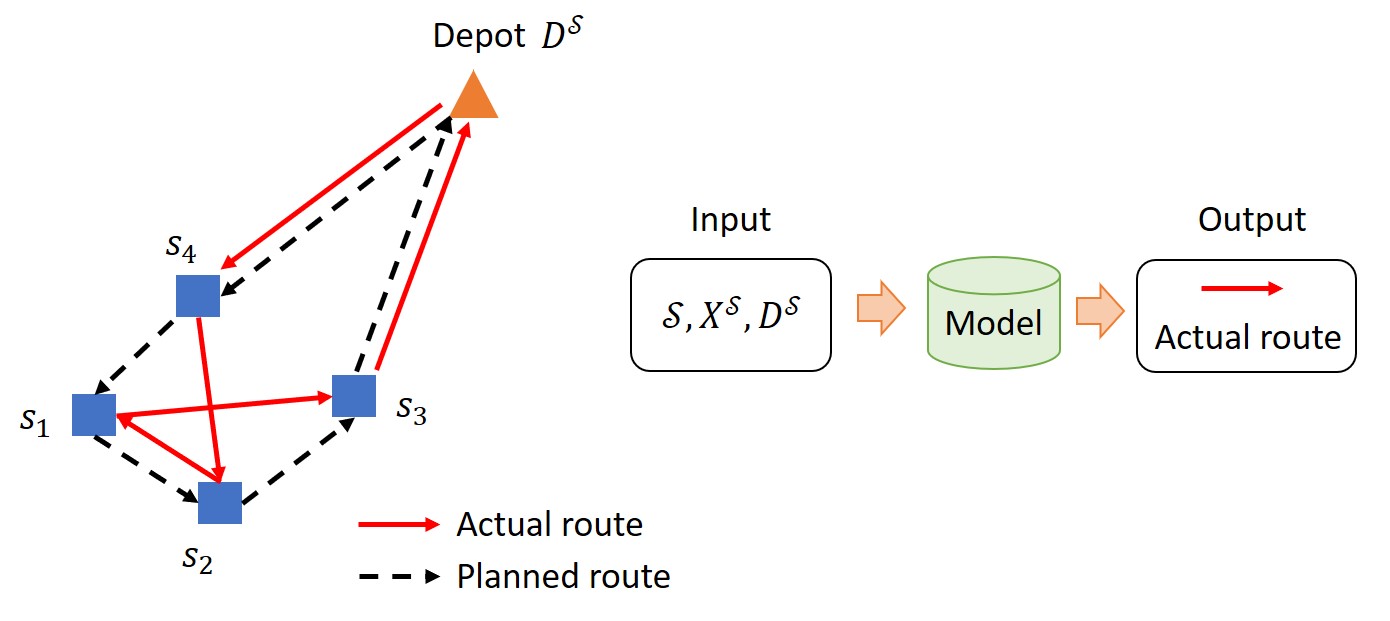
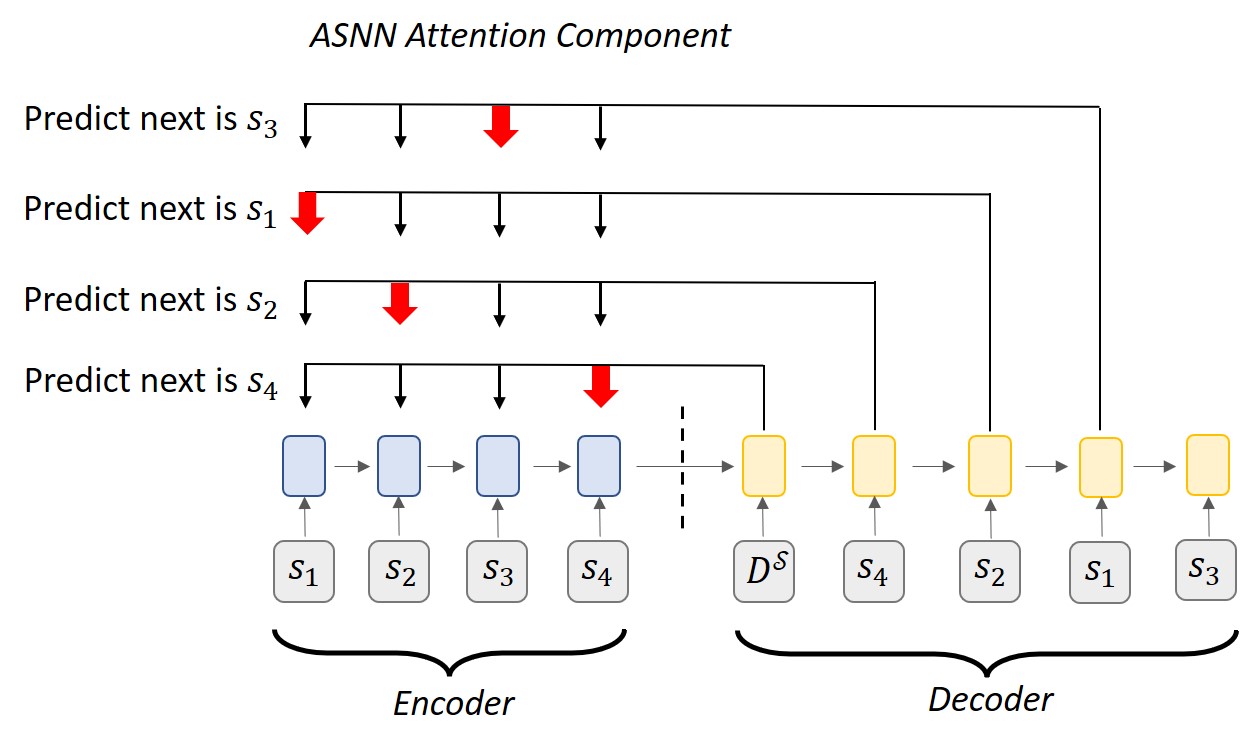
- 基于编码器-解码器架构的序列到序列模型,利用历史轨迹数据处理配送停靠点序列。
- 一种新颖的成对注意力机制捕捉停靠点对之间的局部依赖关系,增强对序列选择的建模能力。
- 一种特定于任务的神经网络(ASNN)基于停靠点对特征计算注意力分数,提升局部路线决策的准确性。
- 一种迭代路线生成算法通过选择使总行驶成本最小化的首个停靠点,确保全局路线效率。
- 通过在区域内求解路径与巡回TSP问题,利用最近的停靠点作为进出候选点,生成完整的停靠点序列。
- 通过求解每个区域内候选首末停靠点之间的TSP子问题,将区域序列转换为完整的停靠点序列。
实验结果
研究问题
- RQ1基于历史司机轨迹训练的深度学习模型,是否能比传统优化方法更准确地预测实际停靠点序列?
- RQ2在停靠点之间引入成对注意力机制,相较于标准指针网络,如何提升轨迹预测性能?
- RQ3基于操作成本的迭代生成策略在多大程度上能最小化预测路线与经验司机行为之间的偏离?
- RQ4在预测配送路线前四个停靠点方面,该模型相较于LSTM-编码器-解码器与标准指针网络的性能表现如何?
主要发现
- 所提模型将前四个停靠点的平均预测准确率从约0.2提升至0.312,显著优于基线模型。
- 与基准方法相比,该模型将预测路线与实际路线之间的差异减少了约15%。
- 成对注意力机制有效捕捉了局部停靠点依赖关系,相比标准注意力机制,显著提升了序列建模能力。
- 迭代路线生成算法成功识别出低成本的起始停靠点,提升了预测路线的全局效率。
- 在现实世界最后一公里配送场景中,该模型优于传统基于优化的方法以及深度学习基线模型(如LSTM-编码器-解码器与原始指针网络)。
- 将区域级路径规划与区域内TSP优化相结合,实现了可扩展且高精度的完整路线重建。
阅读本论文
在 Nubint 阅读器中打开原文,边读边就任意段落提问。
在 Nubint 中阅读本论文本解读由 AI 根据论文原文生成,引用前请核对原文。