
[论文解读] Privacy Leakage on DNNs: A Survey of Model Inversion Attacks and Defenses
本论文提供了对 DNN 的模型反演攻击及防御在视觉、文本和图形模态上的全面综述,并为 MI 研究引入一个开源工具箱。
Deep Neural Networks (DNNs) have revolutionized various domains with their exceptional performance across numerous applications. However, Model Inversion (MI) attacks, which disclose private information about the training dataset by abusing access to the trained models, have emerged as a formidable privacy threat. Given a trained network, these attacks enable adversaries to reconstruct high-fidelity data that closely aligns with the private training samples, posing significant privacy concerns. Despite the rapid advances in the field, we lack a comprehensive and systematic overview of existing MI attacks and defenses. To fill this gap, this paper thoroughly investigates this realm and presents a holistic survey. Firstly, our work briefly reviews early MI studies on traditional machine learning scenarios. We then elaborately analyze and compare numerous recent attacks and defenses on Deep Neural Networks (DNNs) across multiple modalities and learning tasks. By meticulously analyzing their distinctive features, we summarize and classify these methods into different categories and provide a novel taxonomy. Finally, this paper discusses promising research directions and presents potential solutions to open issues. To facilitate further study on MI attacks and defenses, we have implemented an open-source model inversion toolbox on GitHub (https://github.com/ffhibnese/Model-Inversion-Attack-ToolBox).
研究动机与目标
- 通过回顾预训练模型如何泄露训练数据来引发隐私关注。
- 系统地分析计算机视觉、NLP 和图学习中的 MI 攻击与防御。
- 比较白盒和黑盒攻击设置并识别模态特定挑战。
- 总结防御策略及其在隐私和模型效用之间的权衡。
- 强调未解决的问题并提出未来研究方向。
提出的方法
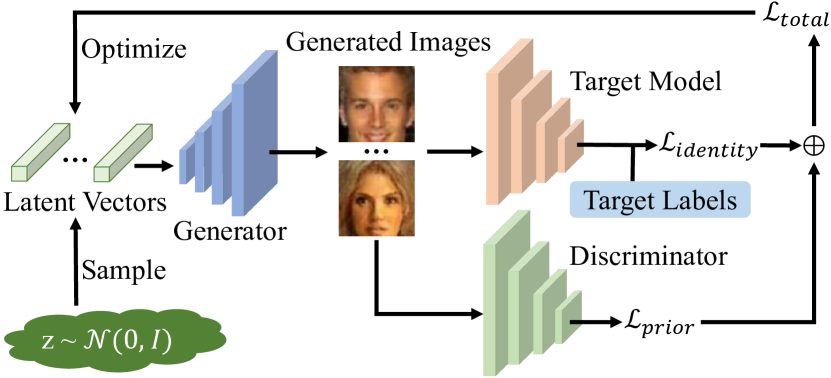
- 将 MI 攻击分解为图像的生成先验基础和基于优化的方案,包括基于 GAN 和扩散模型的先验。
- 将攻击设置分类为白盒或黑盒,并描述目标函数与优化范式。
- 通过输出处理和鲁棒训练来减少信息泄露的防御机制。
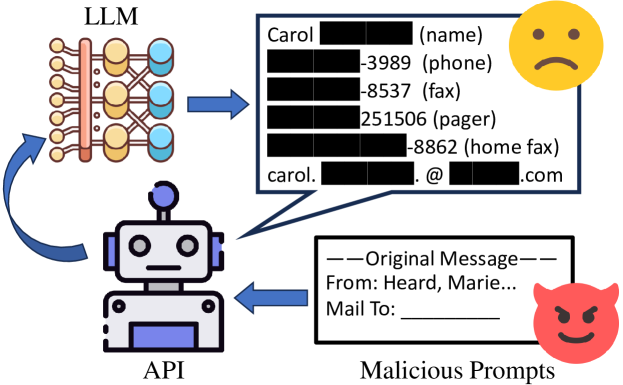
- 将 MI 调研扩展到 NLP,覆盖嵌入优化、标记搜索和恶意提示设计范式。
- 讨论面向图的 MI 攻击,聚焦邻接矩阵优化和反向映射/关系推理,以及相应的防御。
实验结果
研究问题
- RQ1在 DNN 的图像、文本和图数据中,主要的 MI 攻击策略是什么?
- RQ2防御如何降低 MI 风险,并对各模态的模型性能有何影响?
- RQ3白盒与黑盒 MI 设置有何区别,攻击者对两者如何进行适应?
- RQ4在不同数据模态下,保护隐私免受 MI 攻击还存在哪些未解决的挑战?
主要发现
- MI 攻击可以使用生成先验(GAN、扩散模型)或直接优化来重建私有训练样本。
- 白盒攻击依赖基于梯度的优化,而黑盒攻击使用代理模型、梯度估计或基于搜索的方法。
- 防御主要分为输出处理和鲁棒训练,以降低信息泄露并保持任务效用。
- MI 研究覆盖视觉、NLP 和图,具有模态特定的攻击与防御技术及权衡。
- 提供一个开源工具箱以促进复制与进一步研究 MI 攻击与防御。
阅读本论文
在 Nubint 阅读器中打开原文,边读边就任意段落提问。
在 Nubint 中阅读本论文本解读由 AI 根据论文原文生成,引用前请核对原文。