
[论文解读] Progress in Direct Measurements of the Hubble Constant
对 H0 的直观局部测量二十年综述,聚焦 Cepheids、TRGB 与 JAGB,以及 JWST 结果与系统性不确定性,以解决 H0 张力。
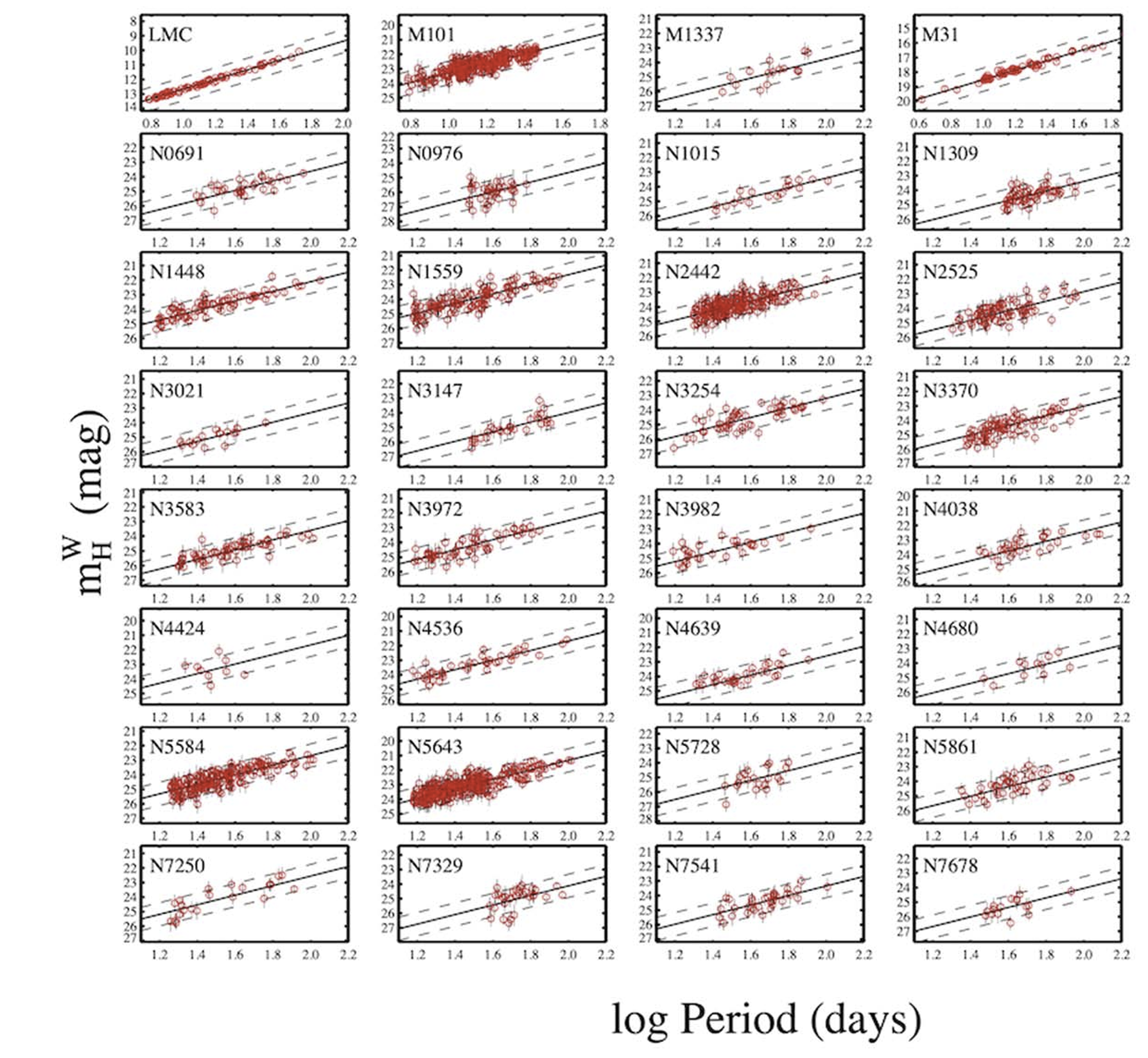
One of the most exciting and pressing issues in cosmology today is the discrepancy between some measurements of the local Hubble constant and other values of the expansion rate inferred from the cosmic microwave background (CMB) radiation. Resolving these differences holds the potential for the discovery of new physics beyond the standard model of cosmology: Lambda Cold Dark Matter (LCDM), a successful model that has been in place for more than 20 years. Given both the fundamental significance of this outstanding discrepancy, and the many-decades-long effort to increase the accuracy of the extragalactic distance scale, it is critical to demonstrate that the local measurements are convincingly free from residual systematic errors. We review the progress over the past quarter century in measurements of the local value of the Hubble constant, and discuss remaining challenges. Particularly exciting are new data from the James Webb Space Telescope (JWST). JWST is delivering high-resolution near-infrared imaging data to both test for and to address directly several of the systematic uncertainties that have historically limited the accuracy of the extragalactic distance scale. We present an overview of our new JWST program to observe Cepheids, TRGB and JAGB stars. For the first galaxy in our program, NGC 7250, the high-resolution JWST images demonstrate that many of the Cepheids observed with the Hubble Space Telescope (HST) are significantly crowded by nearby neighbors. Avoiding the more significantly crowded variables, the scatter in the JWST near-infrared (NIR) Cepheid period-luminosity relation is decreased by a factor of two compared to those from HST, illustrating the power of JWST for improvements to local measurements of Ho. Ultimately, these data will either confirm the standard model, or provide robust evidence for the inclusion of additional new physics.
研究动机与目标
- 评估局部 H0 测量的历史现状及其精度。
- 确定并评估影响 Cepheid 基于距离和 TRGB 基于距离的主导系统误差。
- 总结 JWST 数据的出现及其在减少星群拥挤和尘埃相关不确定性方面的影响。
- 讨论替代距离指示器(如 JAGB)及距离尺度的独立锚点。
- 概述实现百个百分点精度在 H0 方面的前景与仍存挑战。
提出的方法
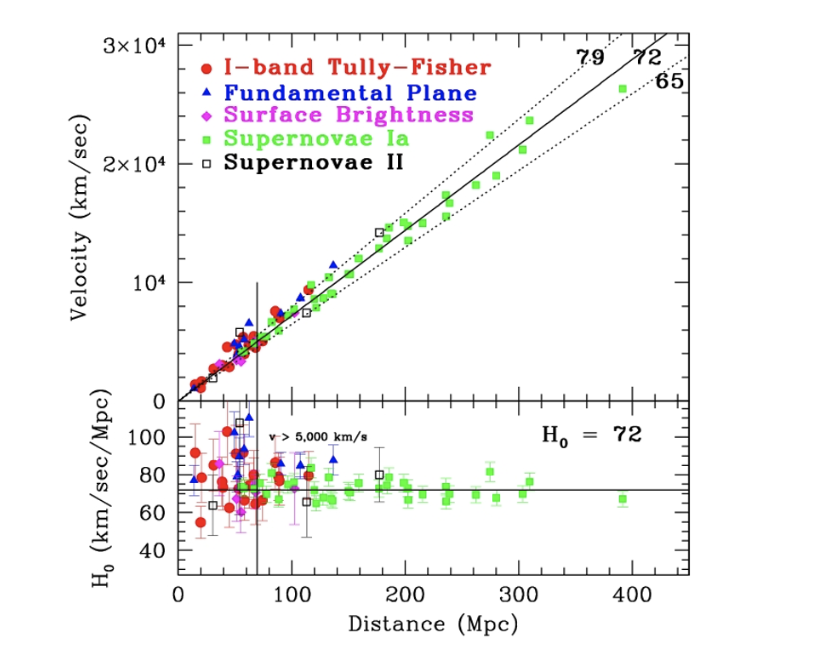
- 回顾 Hubble Key Project 及其 10% 总不确定性目标。
- 评述 Cepheid 与 TRGB 距离尺度作为两种最高精度的局部方法。
- 评估距离尺度锚点(LMC、MW 视差、NGC 4258)及它们对 H0 的影响。
- 总结 SHoES、CCHP、CSP 与 Pantheon+ 在 SN Ia 标定与 H0 方面的工作。
- 阐述 JWST 的能力与首批结果(如 NGC 7250)以解决拥挤与红化问题。
实验结果
研究问题
- RQ1当前直接局部 H0 测量的状态及其精度如何?
- RQ2Cepheid 与 TRGB 距离尺度中的主导系统性不确定性有哪些,以及它们是如何被缓解的?
- RQ3独立校准(锚点)如何影响推导的 H0 及其不确定性?
- RQ4JWST 数据在多大程度上能够减少已知系统误差并进一步约束 H0?
- RQ5其他距离指示器(如 JAGB)是否与 Cepheid/TRGB 标度一致,其对 H0 的影响程度如何?
主要发现
- 基于 Cepheid 的标定给出接近 73 km s-1 Mpc-1 的 H0,而基于 TRGB 的标定趋于稍低(约 70 km s-1 Mpc-1)。
- JWST 近红外成像减少 Cepheid 的拥挤度,在首批 JWST 结果中使 Cepheid PL 关系的散布相较于 HST 减半。
- 使用独立锚点(NGC 4258、LMC、SMC)的 TRGB 标定与基于激射星、晕 TRGB 测量一致,支持稳健的距离尺度。
- 锚点(LMC 距离模数、MW 视差、NGC 4258 震源)主导当前的系统性预算,从而决定全球 H0 的精度。
- CCHP 与 SHoES 项目强调红外 Cepheids、 reddening 校正以及视差基线,以推动到亚 2% 的系统不确定性。
- JAGB 正在崭露头角,成为一个具竞争力的标准烛源,具有较小的金属量与红化敏感性,提供独立的交叉校验。
阅读本论文
在 Nubint 阅读器中打开原文,边读边就任意段落提问。
在 Nubint 中阅读本论文本解读由 AI 根据论文原文生成,引用前请核对原文。