
[论文解读] Quantum communication networks with defects in silicon carbide
本论文综述碳化硅缺陷作为量子网络的自旋-光子接口,并使用最先进的SiC设备对记忆增强的 MA-MDI-QKD 进行建模,概述向大规模部署的步骤。
Quantum communication promises unprecedented communication capabilities enabled by the transmission of quantum states of light. However, current implementations face severe limitations in communication distance due to photon loss. Silicon carbide (SiC) defects have emerged as a promising quantum device platform, offering strong optical transitions, long spin coherence lifetimes and the opportunity for integration with semiconductor devices. Some defects with optical transitions in the telecom range have been identified, allowing to interface with fiber networks without the need for wavelength conversion. These unique properties make SiC an attractive platform for the implementation of quantum nodes for quantum communication networks. We provide an overview of the most prominent defects in SiC and their implementation in spin-photon interfaces. Furthermore, we model a memory-enhanced quantum communication protocol in order to extract the parameters required to surpass a direct point-to-point link performance. Based on these insights, we summarize the key steps required towards the deployment of SiC devices in large-scale quantum communication networks.
研究动机与目标
- 推动量子网络的发展以及量子存储在扩展通信距离方面的作用。
- 识别并表征适用于自旋-光子接口的突出SiC缺陷。
- 评估基于SiC的量子节点与光子器件及 telecom 兼容跃迁的整合。
- 使用SiC存储器对记忆辅助量子密钥分发建模并提取部署所需参数。
- 概述在大规模量子通信网络中实现SiC设备的路线图。
提出的方法
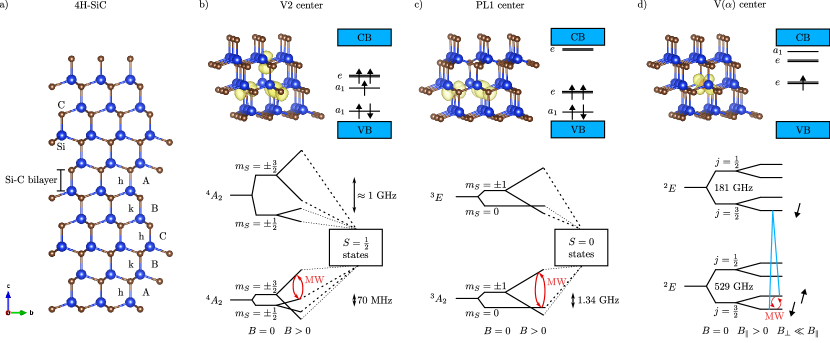
- 描述并比较4H-SiC中的深层缺陷(Si-空位、二空位、钒)及其基态/激发态自旋状态。
- 通过自旋选择的光学跃迁以及自旋初始化/读取,解释自旋-光子接口机制。
- 讨论在基于SiC的节点中自旋到光子的纠缠以及通过贝尔态测量实现的宣布纠缠。
- 给出带有自发辐射因子 F_SE 和相干性 C 的腔增强框架,用于SiC缺陷。
- 概述SiC中SPI的器件架构,包括时分复用量子比特和基于Mach-Zehnder干涉仪的测量。
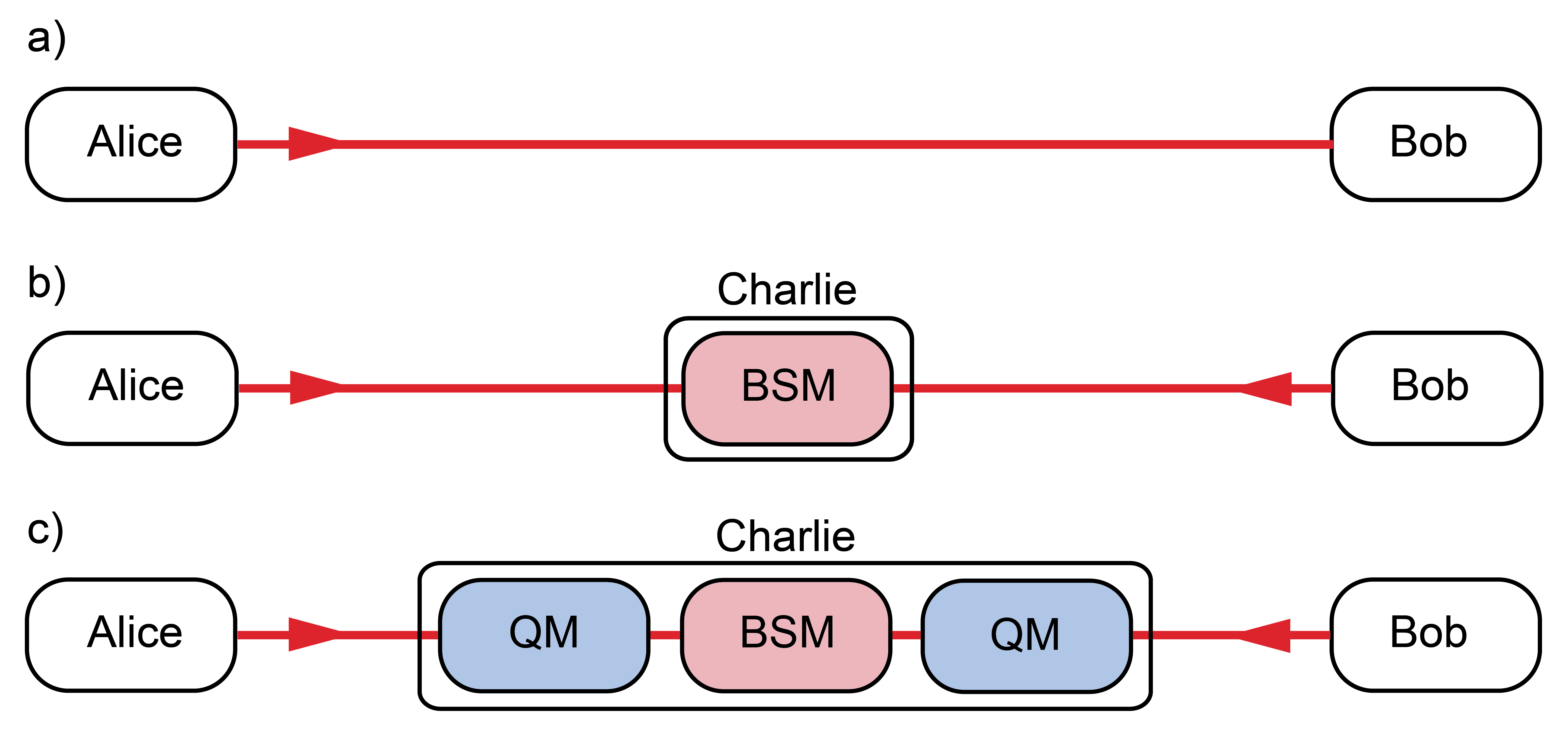
- 使用最先进的SiC设备参数对记忆辅助MA-MDI-QKD进行建模,并讨论性能影响。
实验结果
研究问题
- RQ14H-SiC中的哪些缺陷提供适用于量子网络的鲁棒自旋-光子接口?
- RQ2如何将基于SiC的自旋存储器与光子电路集成以实现宣布纠缠和BSM?
- RQ3为使SiC器件在量子密钥分发中优于直接光纤传输,需要在哪些方面的性能改进(相干性、耦合和腔增强)?
- RQ4在现实设备参数下,使用SiC存储器的记忆辅助量子密钥分发协议能否超越直接点对点链路?
- RQ5部署SiC量子节点于大规模量子通信网络需要哪些路线图步骤?
主要发现
- 如Si-空位、二空位和钒中心等SiC缺陷提供适用于自旋-光子接口的自旋态和光学跃迁,处于电信相关或近电信范围内(例如,α-钒中心在1278 nm处发射)。
- 4H-SiC中的α-钒中心具有长的自旋相干性和有利的零声子线结构,T1在100 mK时达到25 s,且在2 K时集体T2*约为7.2 μs,表明其作为可编程核自旋存储器的潜力。
- ZPLs和自旋选择的系统间跨越使自旋泵浦与读取成为可能,从而通过微波和光学跃迁实现一致的SPI操作和自旋态控制。
- 腔体中的光学增强可以显著改变向目标模的发射,理论表达式F_SE和相干性C可为SiC基微腔的设计及其对自旋-光子接口的影响提供指导。
- 使用最先进器件参数的SiC基MA-MDI-QKD仿真表明,在某些条件下记忆辅助的量子密钥分发可优于直接传输,提供实际部署路线图的依据。
- 本文讨论实用的整合考量,包括达到高品质因子和小模态体积的微腔、薄膜和光子晶体腔,以及实现可扩展量子网络所需的同位素工程和器件稳定化。
阅读本论文
在 Nubint 阅读器中打开原文,边读边就任意段落提问。
在 Nubint 中阅读本论文本解读由 AI 根据论文原文生成,引用前请核对原文。