
[论文解读] Question-Instructed Visual Descriptions for Zero-Shot Video Question Answering
Q-ViD 提出了一种简单、无梯度的零样本视频问答框架,通过使用指令感知的视觉语言模型(InstructBLIP)生成与问题相关的视觉描述,再利用大语言模型(LLM)进行推理。该方法在多个基准测试中实现了与复杂架构及基于 GPT 的方法相当或更优的性能,表明针对问题的帧描述能显著提升零样本视频问答的效果。
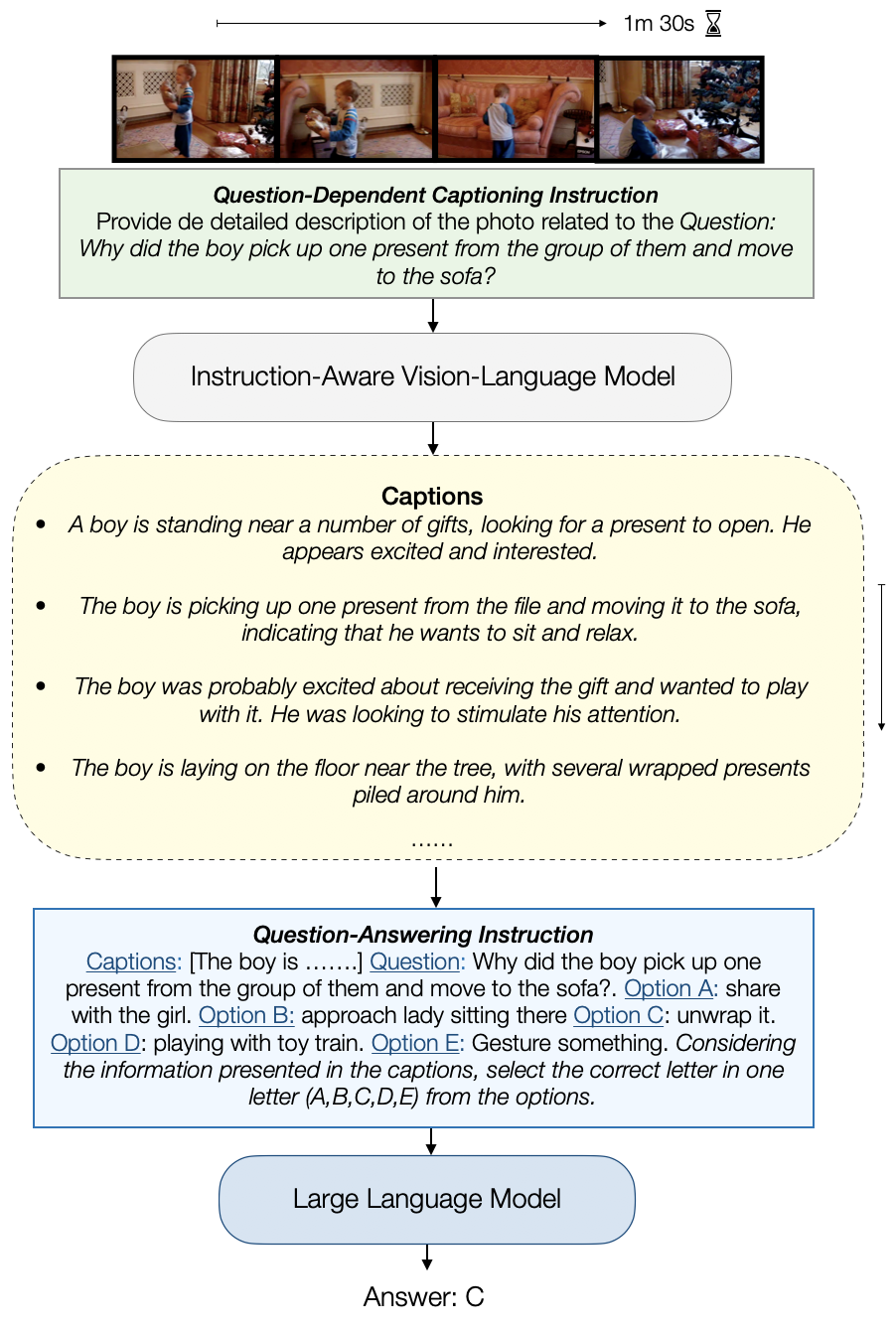
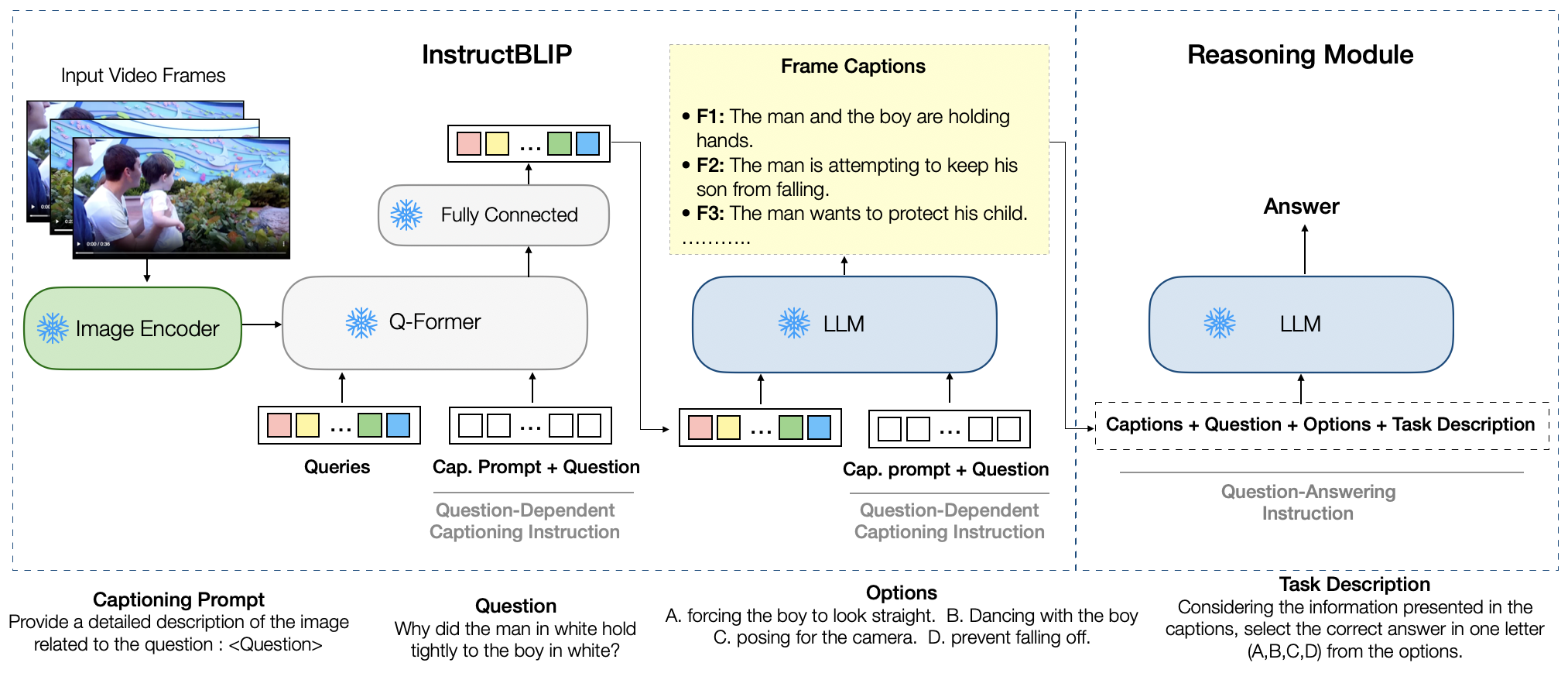
We present Q-ViD, a simple approach for video question answering (video QA), that unlike prior methods, which are based on complex architectures, computationally expensive pipelines or use closed models like GPTs, Q-ViD relies on a single instruction-aware open vision-language model (InstructBLIP) to tackle videoQA using frame descriptions. Specifically, we create captioning instruction prompts that rely on the target questions about the videos and leverage InstructBLIP to obtain video frame captions that are useful to the task at hand. Subsequently, we form descriptions of the whole video using the question-dependent frame captions, and feed that information, along with a question-answering prompt, to a large language model (LLM). The LLM is our reasoning module, and performs the final step of multiple-choice QA. Our simple Q-ViD framework achieves competitive or even higher performances than current state of the art models on a diverse range of videoQA benchmarks, including NExT-QA, STAR, How2QA, TVQA and IntentQA.
研究动机与目标
- 为零样本视频问答挑战提供一种简单、高效且开源的解决方案,避免使用复杂架构或闭源模型。
- 探究是否仅使用一个指令微调的视觉语言模型生成的与问题相关的视觉描述,即可有效替代多模块或微调的视频问答流水线。
- 评估指令设计对帧描述质量及下游问答性能的影响,尤其与通用或通用性描述提示进行对比。
- 确定当输入帧描述已针对问题定制时,是否仍需使用复杂或详细的问答提示。
- 证明仅使用开源模型且无需微调的最小化、模块化流水线,可在零样本视频问答中实现最先进性能。
提出的方法
- 从输入视频中采样固定数量的帧,以降低计算负载并保持时间连贯性。
- 通过向 InstructBLIP 模型提示目标问题,生成与问题相关的描述指令,利用其生成详细且任务相关的帧描述。
- 将问题引导的帧描述拼接成统一的视频描述,以捕捉与问题相关的时空和语义上下文。
- 将视频描述、原始问题、多选选项以及标准问答指令提示输入大语言模型(Flan-T5),以生成最终答案。
- 采用两阶段提示策略:第一阶段生成上下文相关的视觉描述,第二阶段引导 LLM 进行推理并选择正确答案。
- 通过消融研究优化提示模板,包括描述提示模板和问答指令模板,识别出最有效的配置。
实验结果
研究问题
- RQ1单个指令感知的视觉语言模型能否生成优于通用帧描述的、与问题相关的视觉描述,从而在零样本视频问答中表现更优?
- RQ2仅使用帧描述作为 LLM 上下文的简单两阶段流水线,能否在性能上与复杂、多模块或微调的视频问答系统相媲美?
- RQ3描述提示的设计(通用 vs. 问题依赖)如何影响视觉描述质量及下游问答准确率?
- RQ4当输入视觉描述已针对问题定制时,是否仍需使用复杂或详细的问答提示?
- RQ5在零样本视频问答中,是否可以使用开源、指令微调的模型替代闭源 LLM(如 GPT-3.5)而不损失性能?
主要发现
- Q-ViD 在五个多样化的视频问答基准上达到最先进或具有竞争力的性能:NExT-QA(60.1%)、STAR(44.9%)、How2QA(66.3%)、TVQA(45.7%)和 IntentQA(45.8%),使用 Q-ViD XXL 变体。
- 使用问题依赖的描述提示(例如:'根据问题描述第 X 帧的场景:...)显著优于通用描述提示,在 NExT-QA 上准确率最高提升 4.5%。
- 使用通用描述提示的 Q-ViD XL 模型在 NExT-QA 上平均准确率达 60.2%,而使用依赖提示的 Q-ViD XXL 模型达到 66.3%,表明定制化视觉描述具有明显优势。
- 消融研究显示,更复杂的问答指令模板并未提升性能,反而表明输入描述质量比问答提示的复杂度更为关键。
- 该方法优于复杂架构如 SeViLa、InternVideo 和 Flamingo,甚至与基于 GPT 的方法如 LloVi 和 ViperGPT 表现相当或更优,尽管仅使用开源模型且未进行微调。
- 尽管性能优异,该方法仍存在局限性:描述中存在幻觉现象,且长视频因需存储详细帧描述,导致内存占用过高,可能超出 LLM 上下文长度限制。
阅读本论文
在 Nubint 阅读器中打开原文,边读边就任意段落提问。
在 Nubint 中阅读本论文本解读由 AI 根据论文原文生成,引用前请核对原文。