
[论文解读] Reducing Popularity Bias in Recommender Systems through AUC-Optimal Negative Sampling
本文提出了一种AUC最优负采样方法,以在不牺牲推荐准确率的前提下减少推荐系统中的流行度偏差。通过优化负采样以最大化部分AUC,该方法纠正了模型相关偏差与模型无关偏差,实现在真实数据集上的公平性与性能的提升。
Popularity bias is a persistent issue associated with recommendation systems, posing challenges to both fairness and efficiency. Existing literature widely acknowledges that reducing popularity bias often requires sacrificing recommendation accuracy. In this paper, we challenge this commonly held belief. Our analysis under general bias-variance decomposition framework shows that reducing bias can actually lead to improved model performance under certain conditions. To achieve this win-win situation, we propose to intervene in model training through negative sampling thereby modifying model predictions. Specifically, we provide an optimal negative sampling rule that maximizes partial AUC to preserve the accuracy of any given model, while correcting sample information and prior information to reduce popularity bias in a flexible and principled way. Our experimental results on real-world datasets demonstrate the superiority of our approach in improving recommendation performance and reducing popularity bias.
研究动机与目标
- 挑战一种广泛持有的观点,即减少流行度偏差必然损害推荐准确率。
- 解决协同过滤中模型相关与模型无关偏差之间的相互作用,这些偏差会加剧流行度偏差。
- 开发一种灵活、轻量的方法,在通过原理化负采样纠正偏差的同时保持模型准确率。
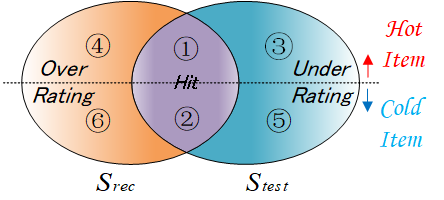
- 提供一个统一框架,以同时减少对热门项目的过度估计和对冷门项目的低估。
提出的方法
- 该方法通过负采样干预模型训练过程,以最大化部分AUC,同时保持任何给定推荐模型的准确率。
- 提出一种最优负采样规则,通过校正样本信息来缓解模型相关偏差(例如,来自协同过滤反馈循环的偏差)。
- 通过校正先验信息来应对模型无关偏差(例如,来自项目流行度分布偏斜的选择偏差)。
- 采用偏差-方差分解框架,证明在特定条件下,偏差减少与性能提升可以共存。
- 推导出采样规则,以在可控范围内优化真正例率与假正例率之间的权衡(由γ控制)。
- 该方法作为对比损失计算前的预处理步骤实现,因此可与任何现有推荐模型兼容。
实验结果
研究问题
- RQ1是否可以实现减少流行度偏差而不以牺牲推荐准确率为代价,从而反驳普遍存在的权衡假设?
- RQ2流行度偏差与模型预测中的假正例率和假负例率有何关联?
- RQ3何种最优负采样策略能在纠正模型相关与模型无关偏差的同时,最大化部分AUC?
- RQ4是否可以设计一种统一的轻量级方法,同时减少对热门项目的过度估计和对冷门项目的低估?
- RQ5γ(控制可接受假正例率的参数)的选择如何影响top-k排序性能?
主要发现
- 所提出的方法实现了双赢结果:在减少流行度偏差的同时,提升或保持了推荐准确率。
- 在γ = 6e-3时达到最佳top-5排序性能(Pre@5 = 0.4324),表明假正例率与真正例率之间达到最优平衡。
- 在γ = 100e-3时达到最佳top-10排序性能(Pre@10 = 0.3594),反映出随着k增大,对假正例的容忍度提高。
- 通过针对性校正样本信息与先验信息,该方法有效减少了对热门项目的过度估计和对冷门项目的低估。
- 在真实世界数据集上的实证结果证实,该方法在不增加模型复杂度的前提下,显著减少了流行度偏差并提升了公平性。
- 当γ增大时,该方法仍保持高性能,表明其对不同假正例率容忍度具有鲁棒性。
阅读本论文
在 Nubint 阅读器中打开原文,边读边就任意段落提问。
在 Nubint 中阅读本论文本解读由 AI 根据论文原文生成,引用前请核对原文。