
[论文解读] Reproducibility in Machine Learning-based Research: Overview, Barriers and Drivers
一项批判性综述,识别 ML 可重复性(描述、代码、数据、实验)方面的障碍,并讨论技术、流程及意识驱动因素,以及用于指导改进的 Drivers-Barriers-Matrix。
Many research fields are currently reckoning with issues of poor levels of reproducibility. Some label it a "crisis", and research employing or building Machine Learning (ML) models is no exception. Issues including lack of transparency, data or code, poor adherence to standards, and the sensitivity of ML training conditions mean that many papers are not even reproducible in principle. Where they are, though, reproducibility experiments have found worryingly low degrees of similarity with original results. Despite previous appeals from ML researchers on this topic and various initiatives from conference reproducibility tracks to the ACM's new Emerging Interest Group on Reproducibility and Replicability, we contend that the general community continues to take this issue too lightly. Poor reproducibility threatens trust in and integrity of research results. Therefore, in this article, we lay out a new perspective on the key barriers and drivers (both procedural and technical) to increased reproducibility at various levels (methods, code, data, and experiments). We then map the drivers to the barriers to give concrete advice for strategies for researchers to mitigate reproducibility issues in their own work, to lay out key areas where further research is needed in specific areas, and to further ignite discussion on the threat presented by these urgent issues.
研究动机与目标
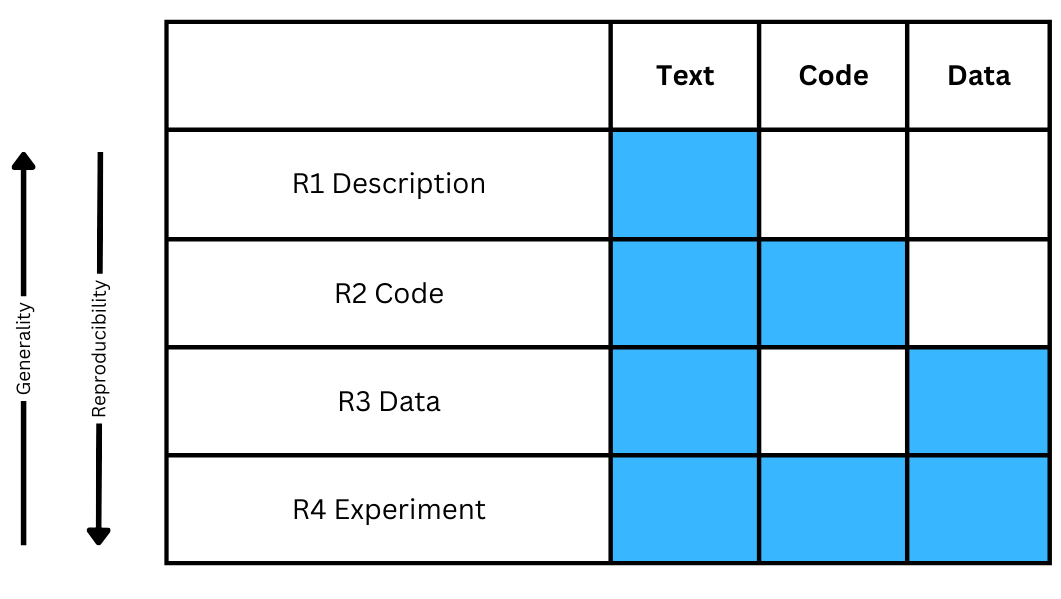
- 澄清并统一 ML 研究中关于可重复性的定义,涵盖描述、代码、数据和实验类型。
- 识别并分类计算机科学与生物医学语境下的 ML 可重复性障碍。
- 识别并分类可提升 ML 可重复性的驱动因素,并将其映射到障碍。
- 提出一个可视化的 Drivers-Barriers-Matrix,以支持采用可重复性解决方案的决策。
提出的方法
- 回顾并综合关于 ML 可重复性及现有障碍/驱动因素的文献。
- 将障碍分类为四种可重复性类型(R1 Description, R2 Code, R3 Data, R4 Experiment)。
- 将驱动因素分为基于技术、流程性和意识/教育类别。
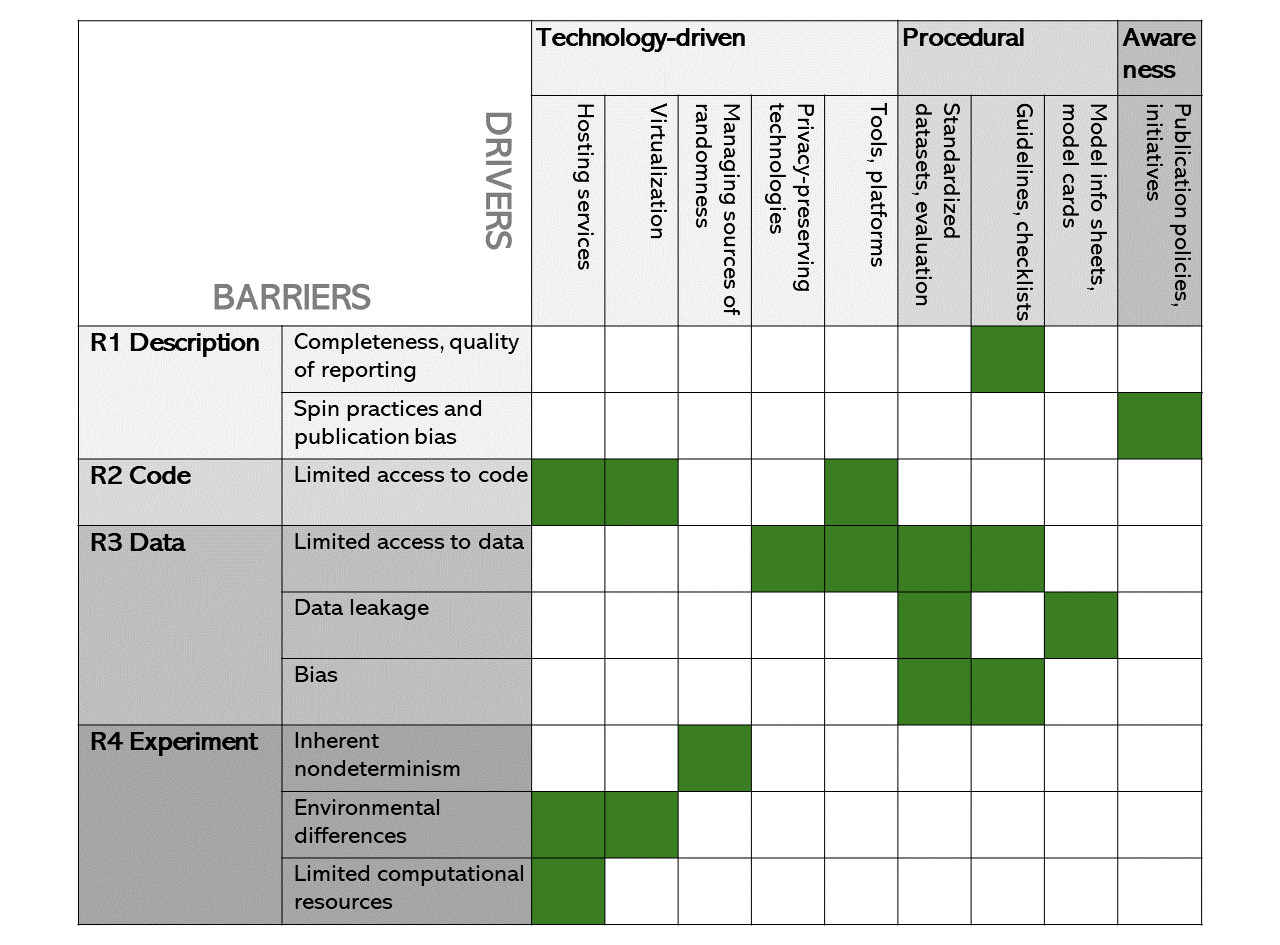
- 将驱动因素映射到障碍以评估改进的可行性。
- 引入一个 Drivers-Barriers-Matrix 来可视化并传达这些关系。
实验结果
研究问题
- RQ1在描述、代码、数据和实验方面,ML 驱动研究的主要可重复性障碍是什么?
- RQ2存在哪些驱动因素以支持 ML 可重复性,它们如何映射到已识别的障碍?
- RQ3Drivers-Barriers-Matrix 如何帮助研究人员和机构决定可重复性干预措施?
- RQ4ML 特定挑战(例如非确定性、数据泄露、AutoML)如何与一般可重复性问题相互作用?
- RQ5哪些指南、工具和实践在提升 CS 与生物医学领域的 ML 可重复性方面显示出潜力?
主要发现
- Nine identified barriers to ML reproducibility 分布在四种 reproducibility types 之中:description、code、data 和 experiment。
- 对代码和数据的获取受限,以及文档缺口,是可重复性的重要障碍。
- 固有的 nondeterminism、环境差异和资源约束显著影响实验的可重复性。
- 隐私保护技术、托管服务、虚拟化以及工具/平台可以作为可重复性的促进因素,但也有权衡。
- 标准化数据集、评估方法,以及准则/清单(如 model cards、data cards)支持可重复性。
- 意识、教育和实际工作流程对于在 ML 可重复性方面实现持续改进至关重要。
阅读本论文
在 Nubint 阅读器中打开原文,边读边就任意段落提问。
在 Nubint 中阅读本论文本解读由 AI 根据论文原文生成,引用前请核对原文。