
[论文解读] Reviewer2: Optimizing Review Generation Through Prompt Generation
Reviewer2 提出了一种两阶段 LLM 框架,首先生成方面提示以引导详细、受控的评论生成,显著提升了基线方法在具体性和覆盖范围方面的表现。该框架在包含 27,000 篇论文和 99,000 条评论的新数据集上进行训练,该数据集包含方面提示,并利用 LongLoRA 和 FlashAttention-2 实现 32k 上下文长度,从而在评论质量和可控性方面优于现有方法。
Recent developments in LLMs offer new opportunities for assisting authors in improving their work. In this paper, we envision a use case where authors can receive LLM-generated reviews that uncover weak points in the current draft. While initial methods for automated review generation already exist, these methods tend to produce reviews that lack detail, and they do not cover the range of opinions that human reviewers produce. To address this shortcoming, we propose an efficient two-stage review generation framework called Reviewer2. Unlike prior work, this approach explicitly models the distribution of possible aspects that the review may address. We show that this leads to more detailed reviews that better cover the range of aspects that human reviewers identify in the draft. As part of the research, we generate a large-scale review dataset of 27k papers and 99k reviews that we annotate with aspect prompts, which we make available as a resource for future research.
研究动机与目标
- 解决现有基于 LLM 的自动化评论生成方法中细节不足和覆盖范围有限的问题。
- 通过控制评论焦点,使作者能够获得关于论文特定方面的针对性反馈。
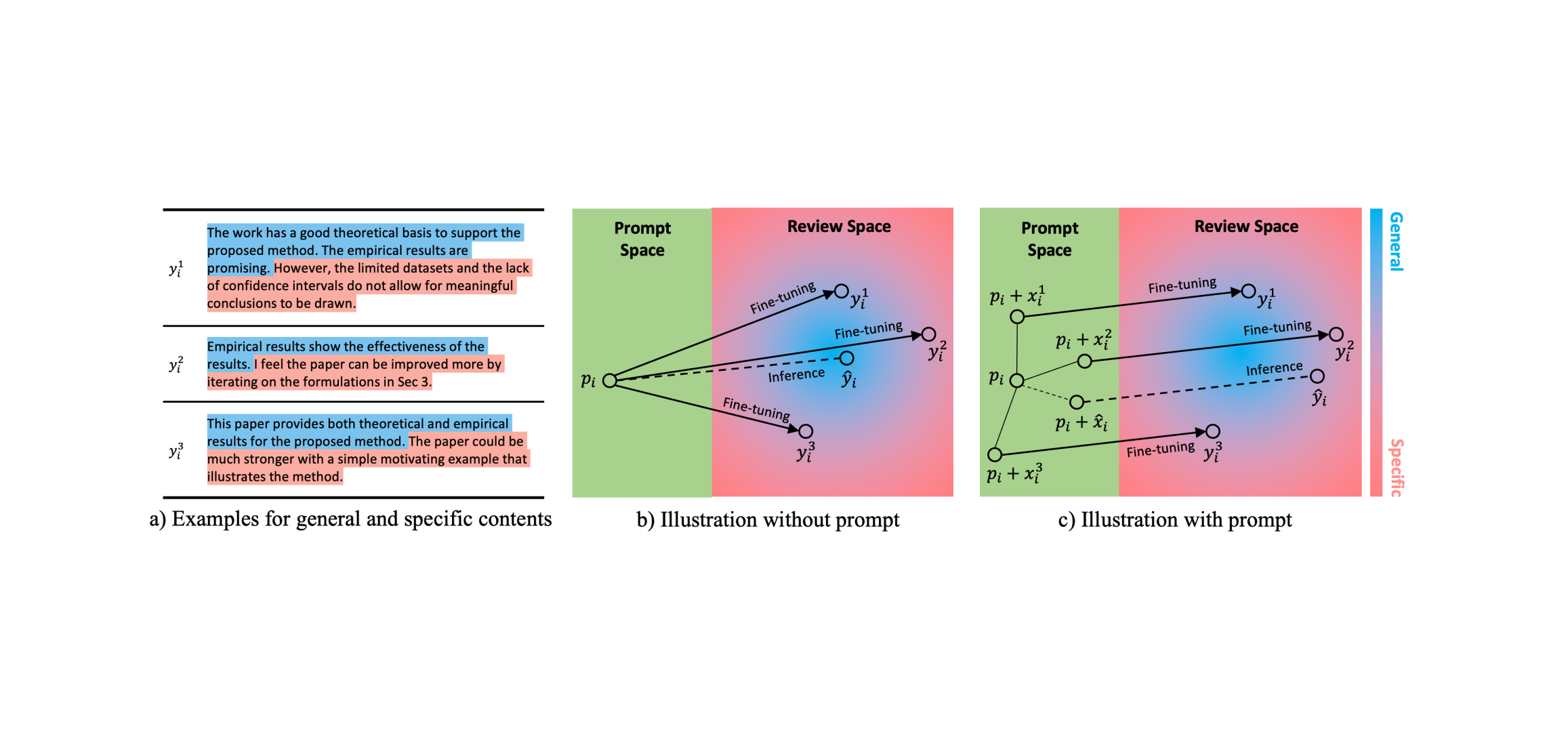
- 克服标准微调的局限性,后者会导致通用化、低具体性的评论,并在方面覆盖上出现回归均值现象。
- 开发一种可扩展、高效的流水线,用于生成用于训练和推理的高质量方面提示。
- 构建一个大规模、带注释的论文-评论配对数据集,包含方面提示,以支持未来在自动化评论生成方面的研究。
提出的方法
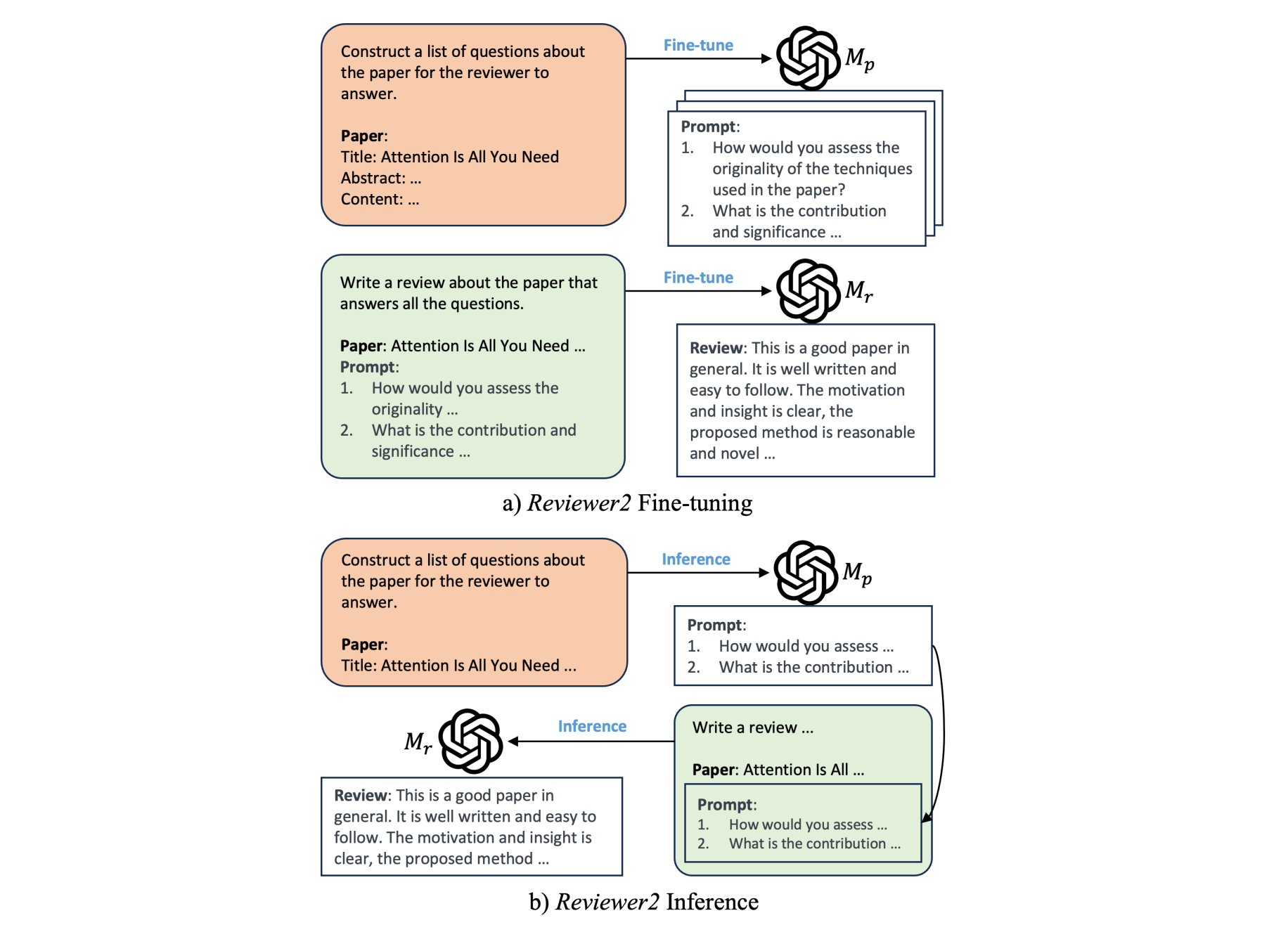
- 采用两阶段框架:首先,语言模型根据论文生成方面提示(例如,'评估第 3 节的理论基础');其次,第二阶段模型结合论文和方面提示生成评论。
- 利用 LongLoRA 和 FlashAttention-2 实现 32k 上下文长度,避免对长论文进行抽取式摘要。
- 设计一种提示生成与评估(PGE)流水线,从人工评论中生成方面提示,并利用自我评估确保提示质量。
- 引入两种新评估指标:具体性(衡量论据深度)和可覆盖性(衡量不同提示下生成评论的多样性)。
- 在包含 27,000 篇论文和 99,000 条评论的新数据集上微调第二阶段模型,数据来自六个会议。
- 使用 BertScore 计算参考评论与生成评论之间的成对相似度,以评估可覆盖性和一致性。
实验结果
研究问题
- RQ1与通用提示相比,基于方面提示的引导是否能提升 LLM 生成评论的具体性和深度?
- RQ2采用方面提示的两阶段框架是否相比标准微调能实现对多样化评论方面的更好覆盖?
- RQ3该模型在多大程度上能够生成既详细又对特定方面提示有响应的评论?
- RQ4与截断输入相比,使用完整上下文长度 32k 的输入在评论质量和方面覆盖方面有何影响?
- RQ5基于自我评估的提示生成流水线能否生成高质量、多样化的方面提示,以训练出鲁棒的评论生成模型?
主要发现
- Reviewer2 将可覆盖性(衡量不同提示下评论多样性的指标)降低至 ICLR 的 4.22、NeurIPS 的 3.99 和 ACL 的 3.23,显著优于基线 R2-E 的 13.55、12.66 和 16.62。
- 与标准微调相比,该框架生成的评论具体性更高,表现为随着训练步数增加,通用表述减少,后期出现更多详细论据。
- PGE 流水线成功生成了高质量的方面提示,使模型能够生成既具体又与输入提示高度匹配的评论。
- 通过 LongLoRA 和 FlashAttention-2 实现的 32k 上下文长度,使模型能够完整保留论文上下文而无需摘要,从而提升了评论质量和方面覆盖。
- 本文公开发布了包含 27,000 篇论文和 99,000 条评论的全新数据集,其中包含方面提示,为未来自动化评论生成和指令微调研究提供了宝贵资源。
- Reviewer2 展现出强大的可控性:当输入不同方面时,模型能生成不同且相关的评论,与预期焦点一致,输出间相似度较低,经验证可靠。
阅读本论文
在 Nubint 阅读器中打开原文,边读边就任意段落提问。
在 Nubint 中阅读本论文本解读由 AI 根据论文原文生成,引用前请核对原文。