
[论文解读] Robust Contrastive Language-Image Pre-training against Data Poisoning and Backdoor Attacks
RoCLIP 是一种新颖的防御方法,通过在训练过程中将图像动态匹配到一个大型随机字幕池中与之最相似的字幕,而非原始字幕,从而增强对比视觉-语言预训练模型在对抗性数据中毒和后门攻击下的鲁棒性。该方法在训练早期即破坏了被污染的关联,将中毒攻击的成功率降低至12.5%,后门攻击成功率为0%,同时相比CLIP,线性探测准确率最高提升10%。
Contrastive vision-language representation learning has achieved state-of-the-art performance for zero-shot classification, by learning from millions of image-caption pairs crawled from the internet. However, the massive data that powers large multimodal models such as CLIP, makes them extremely vulnerable to various types of targeted data poisoning and backdoor attacks. Despite this vulnerability, robust contrastive vision-language pre-training against such attacks has remained unaddressed. In this work, we propose ROCLIP, the first effective method for robust pre-training multimodal vision-language models against targeted data poisoning and backdoor attacks. ROCLIP effectively breaks the association between poisoned image-caption pairs by considering a relatively large and varying pool of random captions, and matching every image with the text that is most similar to it in the pool instead of its own caption, every few epochs.It also leverages image and text augmentations to further strengthen the defense and improve the performance of the model. Our extensive experiments show that ROCLIP renders state-of-the-art targeted data poisoning and backdoor attacks ineffective during pre-training CLIP models. In particular, ROCLIP decreases the success rate for targeted data poisoning attacks from 93.75% to 12.5% and that of backdoor attacks down to 0%, while improving the model's linear probe performance by 10% and maintains a similar zero shot performance compared to CLIP. By increasing the frequency of matching, ROCLIP is able to defend strong attacks, which add up to 1% poisoned examples to the data, and successfully maintain a low attack success rate of 12.5%, while trading off the performance on some tasks.
研究动机与目标
- 解决 CLIP 等大规模视觉-语言模型在预训练阶段对有针对性数据中毒和后门攻击的严重脆弱性。
- 开发一种在预训练阶段即有效的防御机制,与以往仅在微调阶段起效的方法不同。
- 在仅使用极小比例(例如0.01%)被污染数据的情况下,维持或提升模型性能。
- 实现可扩展、高效的防御,可应用于大规模预训练数据集,且计算开销极低。
提出的方法
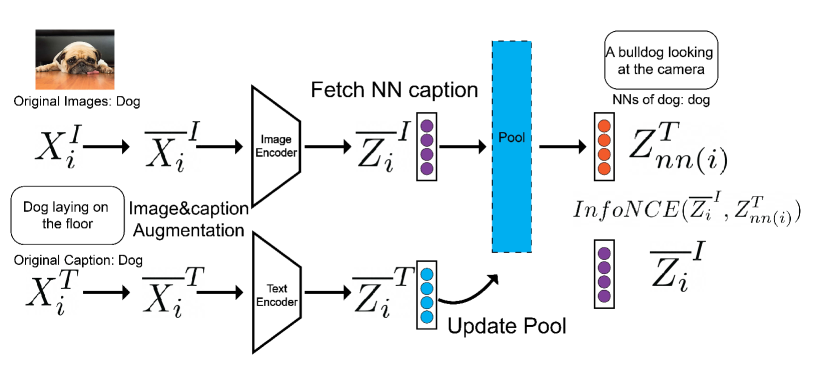
- RoCLIP 维护一个从预训练数据集中动态更新的大规模随机字幕池,并在训练过程中用该池中的字幕替代原始图像字幕。
- 在训练期间,每张图像并非与原始字幕匹配,而是基于对比空间中表示相似度,与随机池中最为相似的字幕进行匹配。
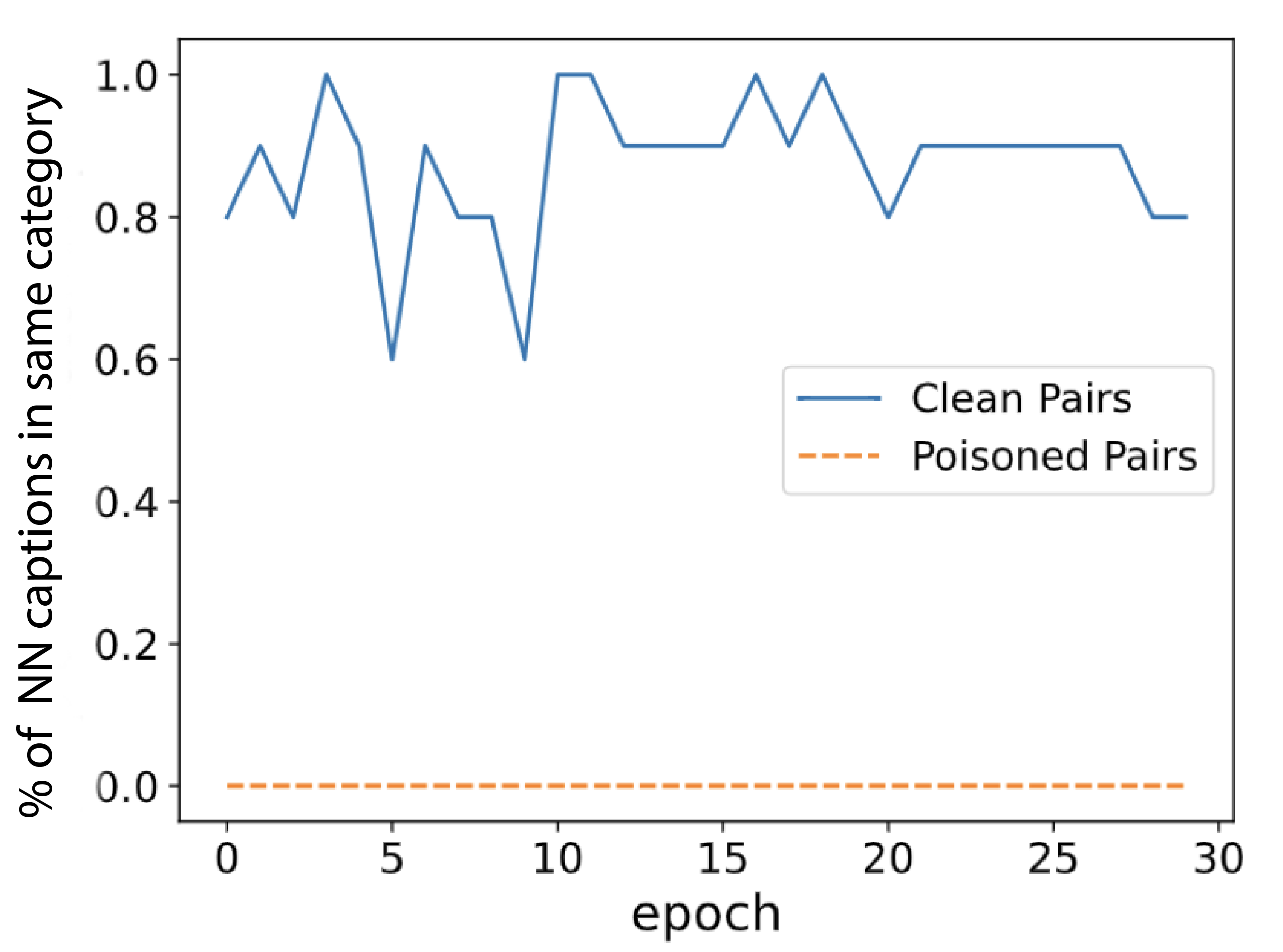
- 这种动态字幕匹配机制在训练早期即破坏了被污染图像与对抗性字幕之间的关联,此时这些配对与干净数据的主要聚类尚未对齐。
- 对图像和文本数据应用增强技术,以进一步提升鲁棒性并改善泛化能力。
- 该方法按周期应用——每隔几个周期执行一次,使模型能够使用更可靠、更干净的字幕匹配重新嵌入图像。
- 该防御方法轻量化,内存开销可忽略不计,运行时成本主要来自增强操作。
实验结果
研究问题
- RQ1能否设计一种预训练阶段的防御方法,在不依赖微调的前提下,有效破坏被污染的图像-字幕关联?
- RQ2从随机池中进行动态字幕匹配,在防御对比视觉-语言模型中的数据中毒和后门攻击方面有多有效?
- RQ3在高污染率(例如1%)下,防御效果与下游性能之间的权衡如何?
- RQ4数据增强与字幕池机制如何协同作用,以同时提升鲁棒性和准确率?
- RQ5该方法能否防御采用视觉上相似类别(例如狗与猫)进行污染的自适应攻击?
主要发现
- RoCLIP 将 CIFAR-10 数据集上针对性数据中毒攻击的成功率从 93.75% 降低至 12.5%。
- 在所有评估的后门攻击中,包括 Blended、WaNet 和标签一致触发器,后门攻击成功率均降低至 0%。
- 与 CLIP 相比,线性探测准确率最高提升 10%,在使用数据增强时,CIFAR-10 上提升 5%,CIFAR-100 上提升 2%。
- 即使不使用数据增强,RoCLIP 仍保持与 CLIP 相当的零样本性能,表明泛化能力几乎没有下降。
- 在 1% 污染率下,RoCLIP 对中毒攻击的成功率仅维持在 12.5%,对后门攻击的成功率为 0%,展现出对强攻击的鲁棒性。
- 该方法计算效率高,内存开销可忽略不计,运行时成本低,可轻松扩展至大规模预训练。
阅读本论文
在 Nubint 阅读器中打开原文,边读边就任意段落提问。
在 Nubint 中阅读本论文本解读由 AI 根据论文原文生成,引用前请核对原文。