
[论文解读] Safe Sequential Testing and Effect Estimation in Stratified Count Data
本文提出了一种新颖的方法,用于在分层计数数据中使用 e-变量进行序列假设检验和任意时间有效的置信序列,实现了在可选停止条件下的有效推断。该方法将 e-值的先前工作扩展至分层 $2\times2$ 表格,允许各层之间进行信息交互以提升检验效能,同时在子总体风险差异异质的情况下仍能保持第一类错误控制和覆盖概率保证。
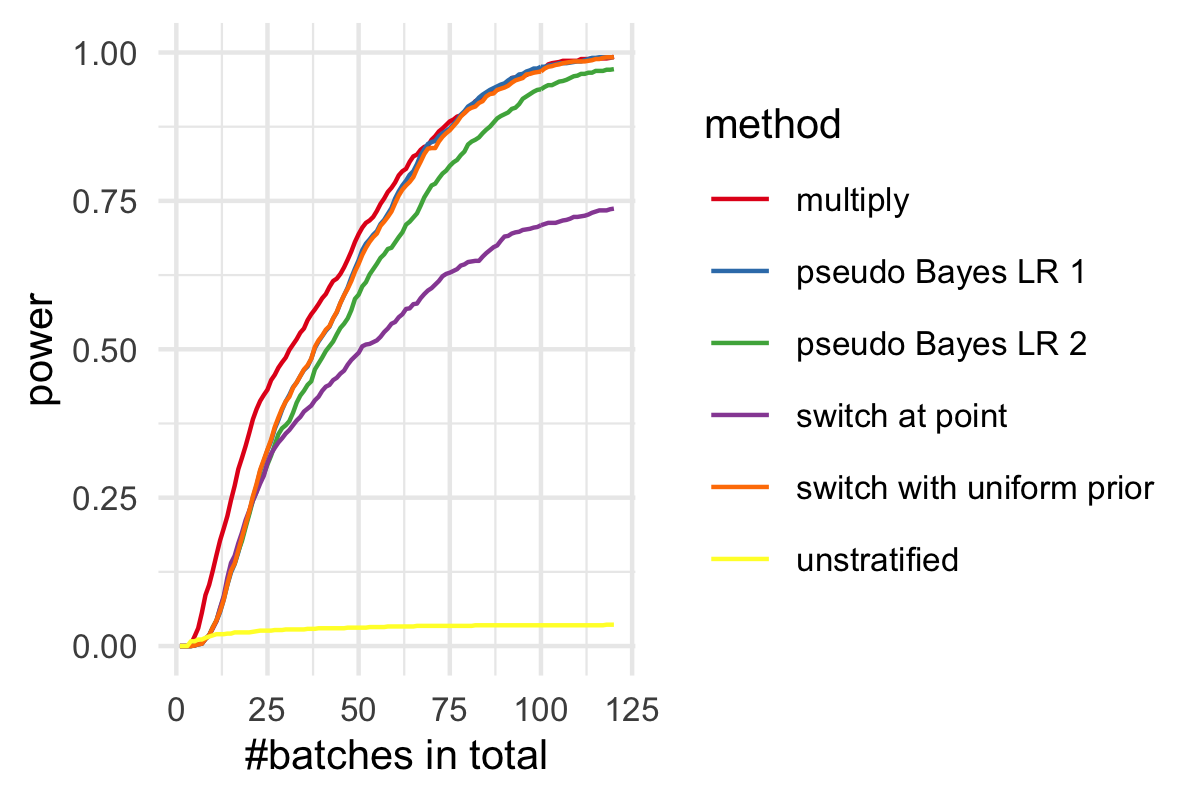
Sequential decision making significantly speeds up research and is more cost-effective compared to fixed-n methods. We present a method for sequential decision making for stratified count data that retains Type-I error guarantee or false discovery rate under optional stopping, using e-variables. We invert the method to construct stratified anytime-valid confidence sequences, where cross-talk between subpopulations in the data can be allowed during data collection to improve power. Finally, we combine information collected in separate subpopulations through pseudo-Bayesian averaging and switching to create effective estimates for the minimal, mean and maximal treatment effects in the subpopulations.
研究动机与目标
- 开发用于分层 $2\times2$ 列联表中条件独立性检验的序列假设检验方法,确保在可选停止条件下第一类错误控制。
- 构建无需固定样本量的子总体治疗效应的任意时间有效置信序列。
- 通过在数据收集过程中允许层间信息交互,提升统计效能,即使结果相互关联亦可。
- 利用伪贝叶斯平均化与切换策略,估计跨子总体的复合效应度量(最小、均值、最大效应)。
- 将现有 e-变量方法推广至分层设置,将先前针对 $2\times2$ 表格的工作推广至多层设计。
提出的方法
- 使用 e-变量和 e-过程,借助 Ville 不等式实现序列监控下的第一类错误控制,确保任意时间有效的推断。
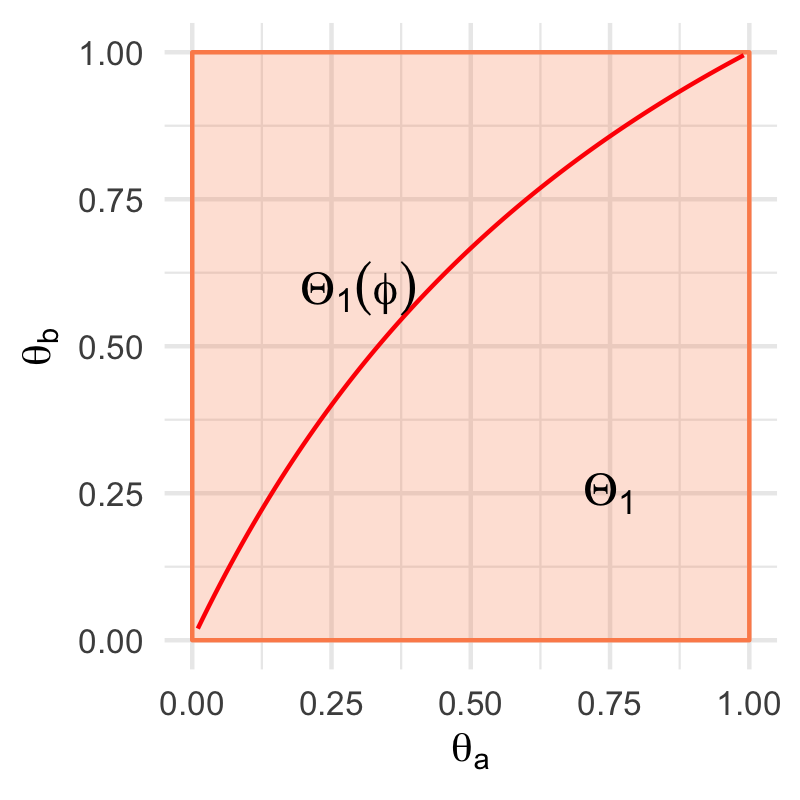
- 基于增长率最优的 e-变量为每层构建 e-变量,并通过在满足 $\sum_k \pi_k \delta_k = \delta^*$ 的可行发散向量 $\vec{\delta}$ 上取最小值来组合它们。
- 采用通用推断法(Wasserman 等,2020)构建全局 e-变量 $E^{*(m)}_{\delta^*} = \min_{\vec{\delta}} E^{(m)}_{[\vec{\delta}]}$,用于检验全局零假设。
- 通过反转 e-过程构建置信序列,确保在任意停止时间下对真实效应大小的覆盖。
- 引入“层间交叉对话”概念,允许在子总体间共享信息,当效应相似时可缩小置信区间。
- 应用伪贝叶斯学习与切换策略,以估计跨层的复合效应度量(如均值、最小值、最大值效应)。
实验结果
研究问题
- RQ1e-变量能否推广至分层 $2\times2$ 表格,以实现在可选停止条件下的任意时间有效检验?
- RQ2如何在序列监控下构建分层治疗效应的置信序列,同时保持覆盖概率?
- RQ3层间交叉对话在多大程度上可提升效能而不损害第一类错误控制?
- RQ4伪贝叶斯平均化与切换策略能否有效估计异质子总体间的复合效应度量?
- RQ5所提出的任意时间有效置信序列相较于固定样本量方法(如 Miettinen-Nuninen 区间)表现如何?
主要发现
- 所提方法在可选停止条件下实现了有效推断,第一类错误在任意停止规则下均控制在水平 $\alpha$ 以内。
- 置信序列在任意停止时间下均保持 95% 的覆盖概率,即使在各层风险差异异质的情况下亦成立。
- 在风险差异同质的情境下,任意时间有效置信序列在批次 50 时显著早于固定样本量的 Miettinen-Nuninen 区间排除 0。
- 在同质情况下,置信序列略宽于固定样本量区间,但具备连续监控能力,并在模型误设时仍保持有效性。
- 当风险差异相似时,层间交叉对话使置信区间更窄,表明在不牺牲有效性的情况下提升了效率。
- 该方法在决策速度和灵活性方面优于固定样本量方法,同时保持精确覆盖与错误控制。
阅读本论文
在 Nubint 阅读器中打开原文,边读边就任意段落提问。
在 Nubint 中阅读本论文本解读由 AI 根据论文原文生成,引用前请核对原文。