
[论文解读] Secure Semantic Communications: Fundamentals and Challenges
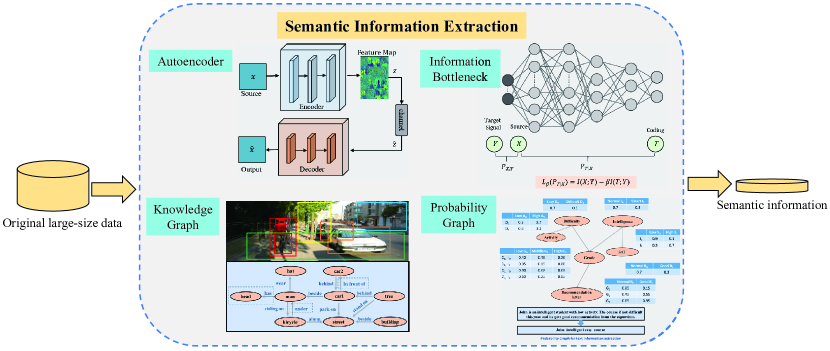
本文提出了一套全面的框架,用于实现安全的语义通信,解决了两个独特的安全挑战:信息安全性与机器学习(ML)模型安全性。该文提出使用自编码器、信息瓶颈、知识图谱和概率图来定义语义信息,并针对基于语义的ML系统中的语义对抗样本、后门攻击、数据 poisoning(投毒攻击)和隐私泄露等问题提出对策,为在真实无线网络中设计安全的语义通信提供了整体性指导。
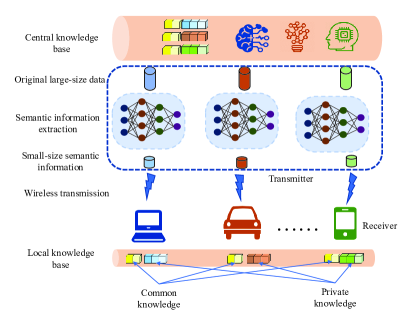
Semantic communication allows the receiver to know the intention instead of the bit information itself, which is an emerging technique to support real-time human-machine and machine-to-machine interactions for future wireless communications. In semantic communications, both transmitter and receiver share some common knowledge, which can be used to extract small-size information at the transmitter and recover the original information at the receiver. Due to different design purposes, security issues in semantic communications have two unique features compared to standard bit-wise communications. First, an attacker in semantic communications considers not only the amount of stolen data but also the meanings of stolen data. Second, an attacker in semantic communication systems can attack not only semantic information transmission as done in standard communication systems but also attacks machine learning (ML) models used for semantic information extraction since most of semantic information is generated using ML based methods. Due to these unique features, in this paper, we present an overview on the fundamentals and key challenges in the design of secure semantic communication. We first provide various methods to define and extract semantic information. Then, we focus on secure semantic communication techniques in two areas: information security and semantic ML model security. For each area, we identify the main problems and challenges. Then, we will provide a comprehensive treatment of these problems. In a nutshell,this article provides a holistic set of guidelines on how to design secure semantic communication systems over real-world wireless communication networks.
研究动机与目标
- 为应对语义通信系统中独特的安全威胁,这些威胁与传统基于比特的通信不同,后者关注的不仅是数据量,而是语义含义。
- 识别并分析语义通信中的双重安全挑战:信息安全性与机器学习模型安全性。
- 系统性地概述语义信息表示方法及其在真实部署中的脆弱性。
- 为关键威胁(如对抗样本、数据投毒、后门攻击和隐私泄露)在基于ML的语义系统中提出对策。
- 为未来无线网络中的安全语义通信系统提供统一的设计框架。
提出的方法
- 采用四种语义信息表示方法:自编码器、信息瓶颈(IB)、知识图谱和概率图,每种方法具有独特的优点与局限性。
- 将语义通信系统视为端到端框架,其中发送方与接收方共享共同知识,以提取并重建语义。
- 识别出两个主要攻击面:(1) 语义信息的传输过程,(2) 用于语义提取的机器学习模型。
- 提出对策,分为三个分支:防投毒(如触发器反演、无数据知识蒸馏)、对抗鲁棒性(如对抗训练、差分隐私)和隐私保护(如联邦学习、可信计算)。
- 集成模型水印与认证技术,以保护基于ML的语义系统中的知识产权。
- 使用可视化框架(图5)映射ML生命周期中的已知威胁与对策,突出显示训练、推理和部署阶段的攻击向量。
实验结果
研究问题
- RQ1如何使用基于机器学习的方法(如自编码器和信息瓶颈)正式定义并提取语义信息?
- RQ2语义通信中存在哪些在传统基于比特的通信系统中不存在的独特安全威胁?
- RQ3对抗样本、后门攻击和数据投毒如何具体破坏基于语义的ML模型的完整性和机密性?
- RQ4在黑盒和真实部署场景下,保护用于语义通信的ML模型最有效的对策是什么?
- RQ5当传输或存储源自敏感数据的语义表示时,如何防止隐私泄露?
主要发现
- 语义通信系统面临双重安全威胁:对传输语义内容的攻击,以及对用于提取语义的底层ML模型的攻击。
- 传统安全模型不足以应对语义系统,因为攻击者不仅针对数据量,还针对语义含义,使得语义完整性成为关键关注点。
- 视觉变换器等深度模型中的对抗样本与后门攻击对实时语义通信系统构成重大风险。
- 在无法访问模型训练过程的黑盒环境中,触发器反演与无数据知识蒸馏等防投毒技术尤为有效。
- 差分隐私与联邦学习有助于保护隐私,但可能降低模型准确率,凸显了安全设计中的权衡。
- 模型水印与认证技术对于保护商业语义通信系统中的知识产权至关重要。
阅读本论文
在 Nubint 阅读器中打开原文,边读边就任意段落提问。
在 Nubint 中阅读本论文本解读由 AI 根据论文原文生成,引用前请核对原文。