
[论文解读] Self-Sovereign Identity for Trust and Interoperability in the Metaverse
本文提出了一种与区块链集成的自我主权身份(SSI)框架,以在元宇宙中实现去中心化、可信且互操作的身份管理。通过让用户拥有并控制其数字身份和加密密钥,该系统支持在虚拟世界之间实现端到端加密通信,无需依赖中心化权威机构,从而在去中心化环境中实现无缝的身份与数据互操作性。
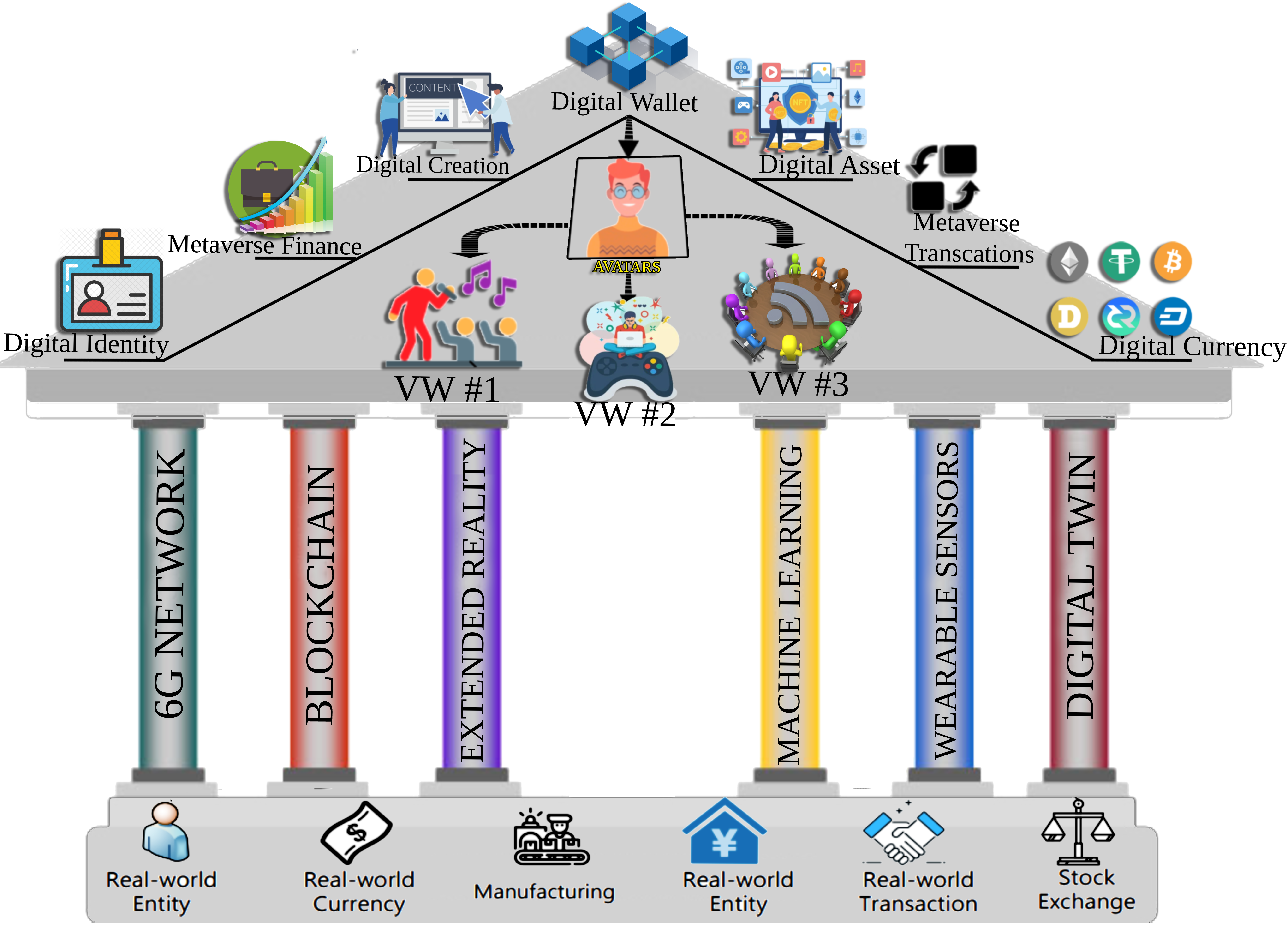
With the advancement in computing power and speed, the Internet is being transformed from screen-based information to immersive and extremely low latency communication environments in web 3.0 and the Metaverse. With the emergence of the Metaverse technology, more stringent demands are required in terms of connectivity such as secure access and data privacy. Future technologies such as 6G, Blockchain, and Artificial Intelligence (AI) can mitigate some of these challenges. The Metaverse is now on the verge where security and privacy concerns are crucial for the successful adaptation of such disruptive technology. The Metaverse and web 3.0 are to be decentralized, anonymous, and interoperable. Metaverse is the virtual world of Digital Twins and non-fungible tokens (NFTs). The control and possession of users' data on centralized servers are the cause of numerous security and privacy concerns. This paper proposes a solution for the security and interoperability challenges using Self-Sovereign Identity (SSI) integrated with blockchain. The philosophy of Self-Sovereign Identity, where the users are the only holders and owners of their identity, comes in handy to solve the questions of decentralization, trust, and interoperability in the Metaverse. This work also discusses the vision of a single, open standard, trustworthy, and interoperable Metaverse with initial design and implementation of SSI concepts.
研究动机与目标
- 解决元宇宙中虚拟世界之间在信任和互操作性方面的关键挑战。
- 使用户能够自主拥有、控制和管理其数字身份,而无需依赖中心化权威机构。
- 设计并实现一种基于SSI和区块链的安全去中心化通信协议,以在沉浸式虚拟环境中实现端到端加密。
- 在6G时代建立一个单一、开放标准、互操作且可信的元宇宙愿景。
- 探索6G、区块链、人工智能和数字孪生等使能技术的集成,以支持以用户为中心的元宇宙。
提出的方法
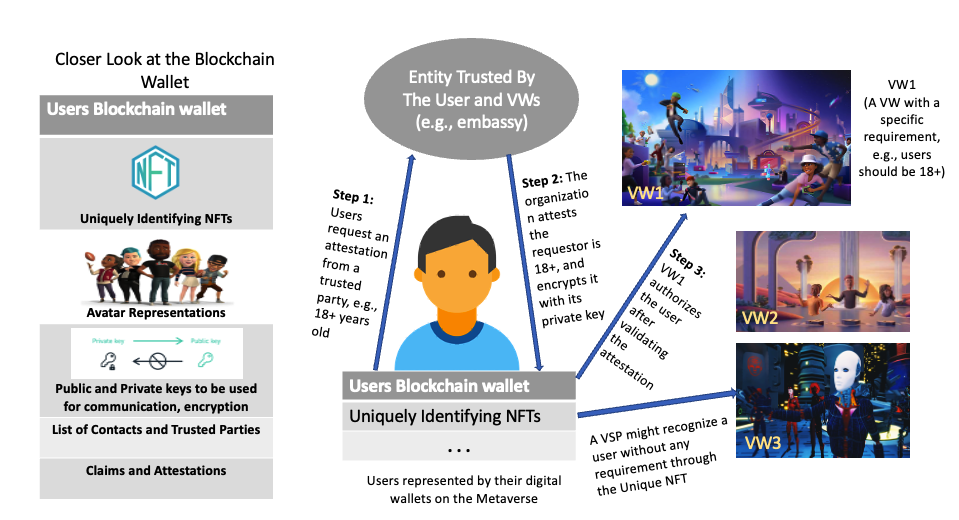
- 所提出的系统采用自我主权身份(SSI)原则,用户是其数字身份和加密密钥的唯一所有者。
- 身份数据和公钥集合存储在公共SSI区块链上,实现可验证且密码学安全的身份声明。
- 可信方(TP)为公钥颁发证明证书,通过TP的公钥验证以确保真实性。
- 使用X3DH密钥交换协议实现端到端加密,公钥由用户自声明,并通过TP的证书进行验证。
- 该系统通过允许用户直接交换密钥而无需中心化中介,实现在不同虚拟世界之间的安全通信。
- 算法1和2定义了使用SSI验证密钥和X3DH建立安全通信通道的请求与响应流程。
实验结果
研究问题
- RQ1如何在元宇宙中实现去中心化的身份管理,以确保用户控制权和数据主权?
- RQ2在无信任、去中心化的虚拟环境中,哪些机制可实现用户之间的安全端到端加密通信?
- RQ3如何在多个独立的虚拟世界之间实现身份、化身和数据的互操作性?
- RQ4区块链和可信证明在建立可验证且防篡改的元宇宙数字身份方面发挥什么作用?
- RQ5如何集成6G、人工智能和数字孪生等新兴技术,以支持可扩展且沉浸式的元宇宙,并确保强大的隐私与信任保障?
主要发现
- 所提出的基于SSI的系统使用户能够完全拥有并控制其数字身份和加密密钥,消除了对中心化身份提供者的依赖。
- 通过使用SSI验证的公钥实现端到端加密,成功应用X3DH协议,确保无需中心化中介的安全通信。
- 该系统通过利用共享的公共SSI区块链存储身份和密钥,支持在不同虚拟世界之间实现身份和数据的互操作性。
- 可信方(TP)颁发的证明证书用于验证公钥集合,确保真实性并防止冒充攻击。
- 该架构支持用户之间在无需中心化协调的情况下实现无缝安全通信,前提是扩展密钥派生和存储机制。
- 本文识别出区块链在大规模身份数据存储方面的局限性,并提出未来工作方向:为SSI管理的数据开发可扩展的链下存储解决方案。
阅读本论文
在 Nubint 阅读器中打开原文,边读边就任意段落提问。
在 Nubint 中阅读本论文本解读由 AI 根据论文原文生成,引用前请核对原文。