
[论文解读] SentimentGPT: Exploiting GPT for Advanced Sentiment Analysis and its Departure from Current Machine Learning
本文研究了三种基于 GPT 的策略(基于提示、微调、基于嵌入)用于 SemEval-2017 Task 4 的情感分析,显示GPT方法在 F1 分数上比传统模型高出超过 22%。
This study presents a thorough examination of various Generative Pretrained Transformer (GPT) methodologies in sentiment analysis, specifically in the context of Task 4 on the SemEval 2017 dataset. Three primary strategies are employed: 1) prompt engineering using the advanced GPT-3.5 Turbo, 2) fine-tuning GPT models, and 3) an inventive approach to embedding classification. The research yields detailed comparative insights among these strategies and individual GPT models, revealing their unique strengths and potential limitations. Additionally, the study compares these GPT-based methodologies with other current, high-performing models previously used with the same dataset. The results illustrate the significant superiority of the GPT approaches in terms of predictive performance, more than 22\% in F1-score compared to the state-of-the-art. Further, the paper sheds light on common challenges in sentiment analysis tasks, such as understanding context and detecting sarcasm. It underscores the enhanced capabilities of the GPT models to effectively handle these complexities. Taken together, these findings highlight the promising potential of GPT models in sentiment analysis, setting the stage for future research in this field. The code can be found at https://github.com/DSAatUSU/SentimentGPT
研究动机与目标
- 研究 GPT 模型在社交媒体文本(推文)情感分析中的有效性。
- 将基于提示、微调和基于嵌入的 GPT 方法与 SemEval-2017 Task 4 的传统模型进行比较。
- 分析 GPT 模型处理情感语言细微差别的能力,如表情符号、讽刺、否定和混合情感。
- 通过情感推理提示评估语言可解释性。
- 为在情感分析任务中应用基于 GPT 的策略提供实用指南。
提出的方法
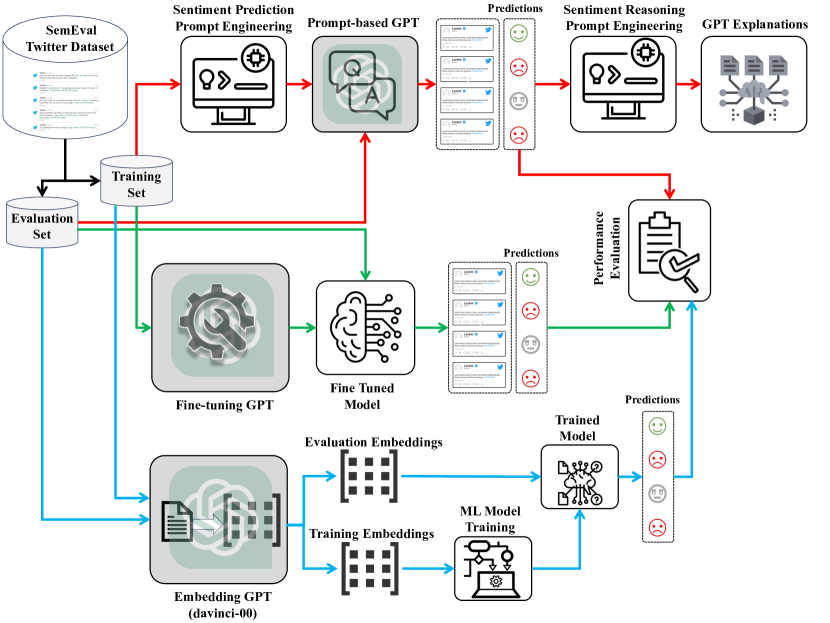
- 将三种基于 GPT 的策略进行探索:基于提示的情感分析,采用精心设计的提示和就地推理;在带标注数据上微调 GPT 模型(Ada、Babbage、Curie);基于嵌入的分类,使用 GPT text-embedding-ada-002 作为特征,随后在降低维度的嵌入上运行传统 ML 模型(XGBoost、Random Forest)(PCA 从 400 降至 150)。
- 基于提示的方法使用 chat completion GPT-3.5 Turbo,情感尺度为 0–2,并包含用于 RQ3 的解释提示。
- 评估指标包括准确率、召回率和 F1 分数;如果模型输出混合情感,则予以处理。
- 使用 SemEval-2017 Task 4 的英文数据集,并注意类别不平衡(Positive/Neutral > Negative)。
- 语言细微差别分析识别七个类别(emoji、俚语、hashtag、否定与讽刺、混合情感、文化情境、现代缩写)。
- 嵌入方法在 PCA 降维后,将 GPT 嵌入作为 ML 分类器(XGBoost、RF)的特征。
实验结果
研究问题
- RQ1RQ1:与现有机器学习解决方案相比,GPT 相关模型在社交媒体帖子情感分析中的表现如何?
- RQ2RQ2:不同的 GPT 产品(基于提示、微调、嵌入)在情感分析任务中的表现如何?
- RQ3RQ3:GPT 模型是否能够有效地处理情感语言细微差异,如情感、表情符号和混合情感?
主要发现
- GPT 方法在预测性能上显著优于现有最先进模型,F1 分数提升超过 22%。
- 通过精心设计提示的基于提示的 GPT-3.5 Turbo 可以产生具有竞争力的情感预测,并支持情感推理解释。
- 对微调的 GPT 模型(Ada、Babbage、Curie)进行评估并与基于提示的方法进行比较,在成本与能力之间存在不同的权衡。
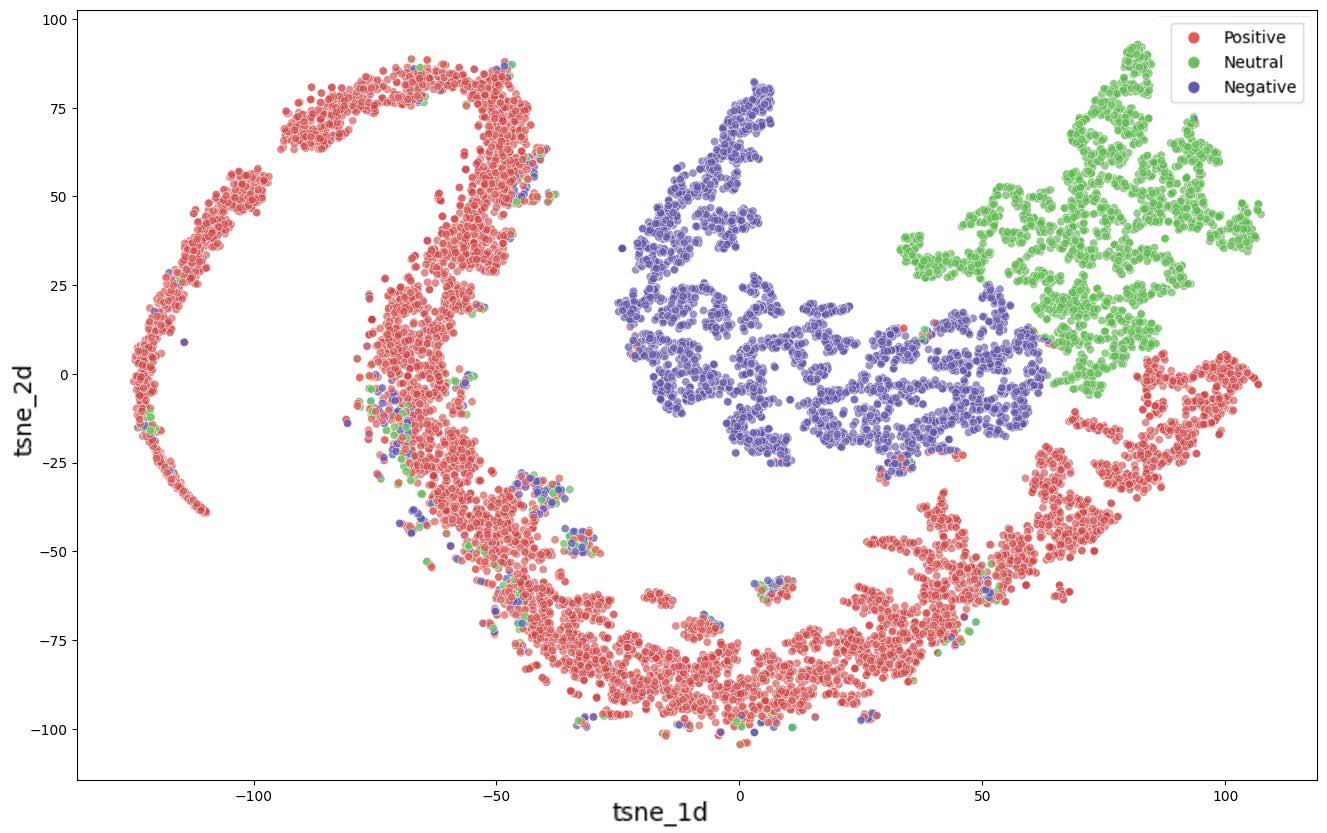
- 将 GPT 嵌入与传统 ML 模型(如 XGBoost 和 Random Forest)在 PCA 降维特征上结合使用,提供另一种可行的情感分类路径。
- 研究强调情感任务在上下文理解与讽刺等方面的困难,并展示了 GPT 模型在解决这些细微差别方面的增强能力。
- 使用 SemEval-2017 Task 4 的英文子集,承认数据集不平衡,并聚焦于一个三分尺度(positive、neutral、negative)。
阅读本论文
在 Nubint 阅读器中打开原文,边读边就任意段落提问。
在 Nubint 中阅读本论文本解读由 AI 根据论文原文生成,引用前请核对原文。