
[论文解读] Shaping Human-AI Collaboration: Varied Scaffolding Levels in Co-writing with Language Models
本研究探讨了不同层级的AI支架(句子级与段落级建议)对人机协作写作的影响。通过一项被试内田野实验(N=131),研究发现高支架(下一段建议)显著提升了写作质量和生产力,尤其对非常规写作者及技术熟练度较低的用户效果更明显,且未带来显著的认知负担,但文本所有权感和满意度出现中等程度下降。
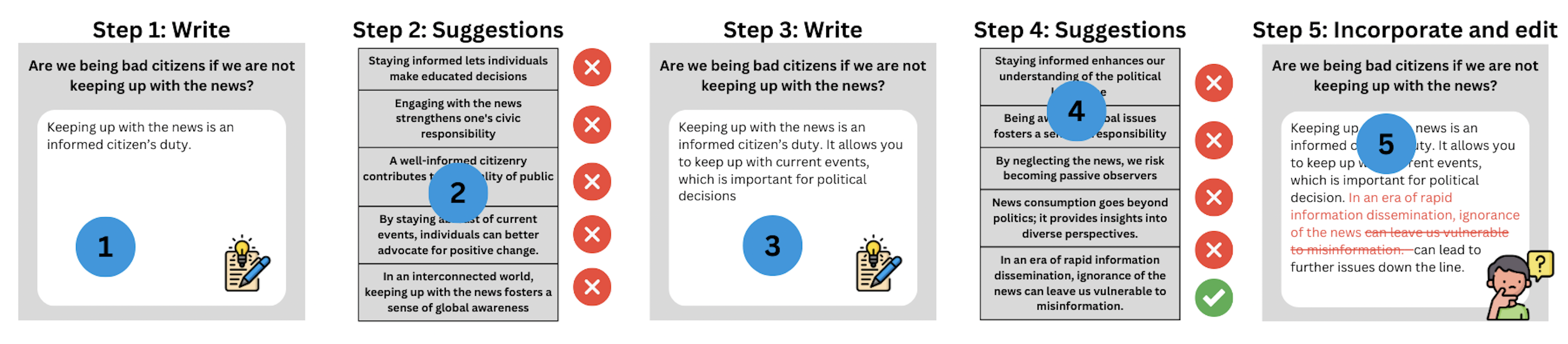
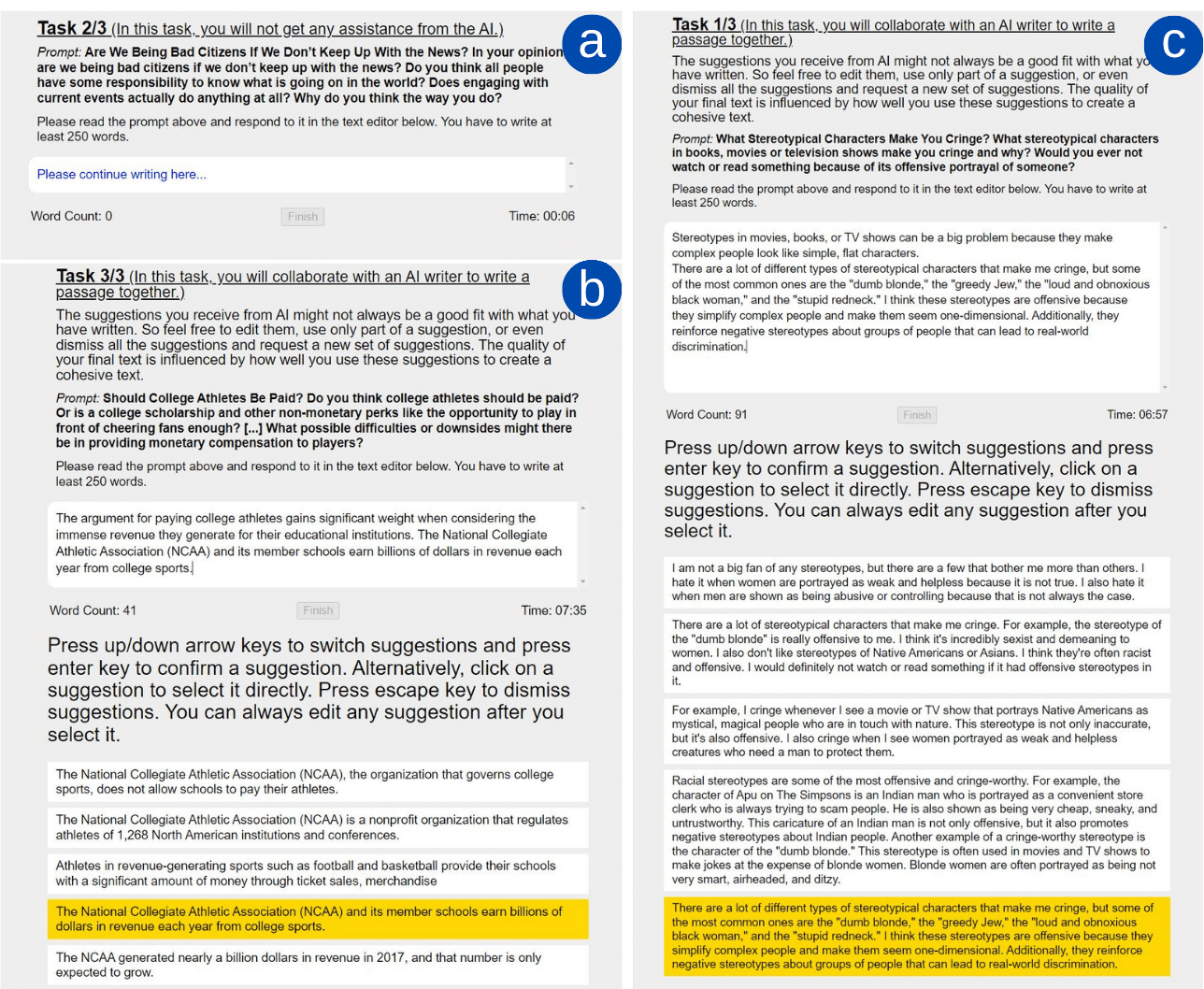
Advances in language modeling have paved the way for novel human-AI co-writing experiences. This paper explores how varying levels of scaffolding from large language models (LLMs) shape the co-writing process. Employing a within-subjects field experiment with a Latin square design, we asked participants (N=131) to respond to argumentative writing prompts under three randomly sequenced conditions: no AI assistance (control), next-sentence suggestions (low scaffolding), and next-paragraph suggestions (high scaffolding). Our findings reveal a U-shaped impact of scaffolding on writing quality and productivity (words/time). While low scaffolding did not significantly improve writing quality or productivity, high scaffolding led to significant improvements, especially benefiting non-regular writers and less tech-savvy users. No significant cognitive burden was observed while using the scaffolded writing tools, but a moderate decrease in text ownership and satisfaction was noted. Our results have broad implications for the design of AI-powered writing tools, including the need for personalized scaffolding mechanisms.
研究动机与目标
- 探究不同层级的AI支架如何影响人机协作写作中的写作质量、生产力与用户体验。
- 理解支架对不同写作经验与技术熟练度写作者的差异化影响。
- 评估在不同支架条件下认知负荷、文本所有权感与用户满意度的影响。
- 为设计兼顾增强效果与人类主导权的自适应、个性化AI写作助手提供依据。
提出的方法
- 采用拉丁方设计的被试内田野实验,以控制顺序效应。
- 将131名参与者随机分配至三个条件:无AI辅助(对照组)、下一句建议(低支架)、下一段建议(高支架)。
- 使用标准化测试格式的议论文写作题,确保各条件间的一致性。
- 通过自动化指标(如连贯性、论点强度)衡量写作质量,以每分钟字数衡量生产力,并通过自评问卷测量用户结果(认知负荷、所有权感、满意度)。
- 收集并分析定量表现数据与定性反馈,以评估用户体验。
- 采用统计建模方法,比较不同支架层级及子群体(如常规写作者与非常规写作者)的结果差异。
实验结果
研究问题
- RQ1AI支架层级(句子建议与段落建议)如何影响协作写作任务中的写作质量与生产力?
- RQ2AI支架的影响是否因用户写作经验或技术熟练度而异?
- RQ3支架对人机协作写作中的认知负荷、感知文本所有权感与用户满意度有何影响?
- RQ4是否存在特定用户群体在协作写作中更受益于高阶AI支架?
主要发现
- 与对照组及低支架条件相比,高支架(下一段建议)显著提升了写作质量,且差异具有统计学意义。
- 高支架还显著提高了生产力,表现为样本整体每分钟写作字数显著增加。
- 非常规写作者及技术熟练度较低的用户在高支架条件下,写作质量与生产力的提升最为显著。
- 使用支架工具时未报告认知负荷显著增加,表明辅助未对用户造成负担。
- 高支架条件下观察到文本所有权感与用户满意度中等但显著下降,表明写作质量与作者主导权之间存在权衡。
- 低支架(下一句建议)与对照组相比,未在写作质量或生产力方面产生统计学上显著的提升。
阅读本论文
在 Nubint 阅读器中打开原文,边读边就任意段落提问。
在 Nubint 中阅读本论文本解读由 AI 根据论文原文生成,引用前请核对原文。